Louis van Gaal did not beat fate; he staged it. In the dying seconds of a World Cup quarterfinal in 2014, the Netherlands manager replaced his starting goalkeeper with Tim Krul expressly for a penalty shootout. Krul saved twice, the Dutch advanced, and a century of received wisdom about shootouts—as a lottery best handled by stoicism and crossed fingers—tilted toward something colder: premeditation wrapped in performance.
Preparation in plain sight
The substitution worked because it fused analytics with showmanship. Krul was taller, with a longer reach and a reputation for reading run‑ups; he had studied tendencies. But his presence also altered the frame. The very act of bringing him on declared, to both teams, that the moment had been rehearsed. He turned the lonely walk from halfway into a conversation—stalking the spot, holding eye contact, delaying just enough within the laws—to make the kick about him. That dual track of edge, the spreadsheet and the stagecraft, is what modern shootout craft now openly embraces.
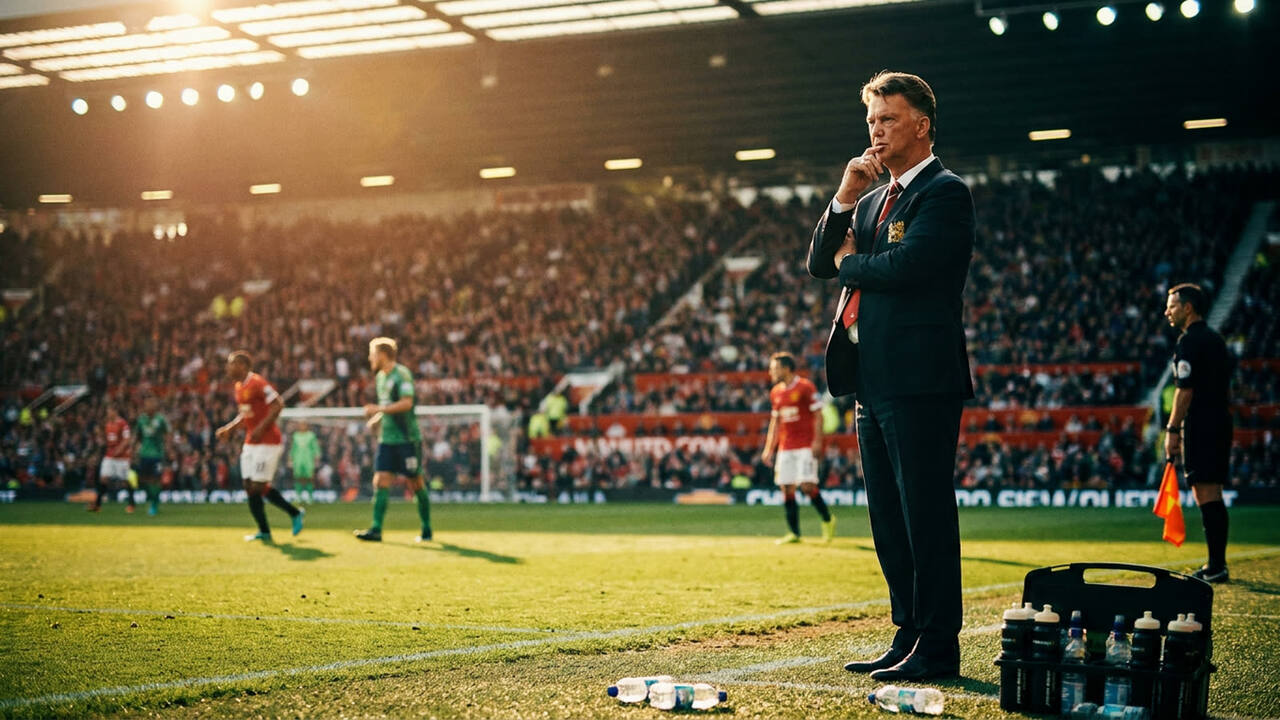
The move also broadcast van Gaal’s authorship. A visible, high‑stakes decision transfers pressure away from kickers and onto the manager’s plan. Players read that signal. A manager who has done his homework—lists prepared, orders fixed, contingency clear—quietly reduces chaos. Today it is normal to see set‑piece coaches, penalty notebooks, and even goalkeepers’ water bottles annotated with kick‑by‑kick reminders. The ritual is no longer a shrug at chance; it is a system with cues.
The copycats—and the limits
Others noticed. National teams and clubs have since used specialist keepers for shootouts, with mixed outcomes that prove the point: the process is the edge, not the mascot. Australia rode a late goalkeeping switch through an intercontinental playoff, complete with wavy‑armed distraction. Chelsea once summoned a penalty specialist in a domestic cup final only to watch the plan unravel at the last kick. And even van Gaal learned the constraint a match later, when a semifinal drained his substitutions and the Netherlands were stuck with the starter for another shootout. The trick is powerful, but it is not magic.
Rule changes nudged the tactic forward. The allowance of an extra substitution in extra time at major tournaments made late goalkeeper swaps more feasible. Meanwhile, stricter interpretations of the penalty law and the arrival of video review narrowed the room for old‑school gamesmanship at the line. Keepers must now keep part of one foot on or above the line and live with forensic replays, making timing and psychology cleaner, not louder. The theater persists, but it has better lighting.
What penalties became
Krul’s cameo accelerated a broader reframing: shootouts are a coached phase of play. Kicking first is widely seen as an edge, so the coin toss is a decision rather than a handshake. Orders are curated to blend temperament with technique. Keepers drill run‑ups as much as reflex. The best teams practice under noise, cameras, and time limits to mimic the cortisol of the real thing. And because everyone now studies everyone, marginal gains live in micro‑habits—the pause before the trot, the keeper’s first step, the subtle tell on the plant foot.
The fascination endures because the distance remains 12 yards and the distance remains infinite. Van Gaal’s call proved that managers can narrow it, if only a little, by preparing publicly and committing fully.
Our take
The Krul switch wasn’t a loophole; it was a manifesto. If penalties are theater, direct them. The lesson is not to chase a specialist for the headline, but to build the scaffolding—data, rehearsal, order, and a manager willing to own the moment. Everyone has a plan until the shootout; the smart ones make the plan the point.