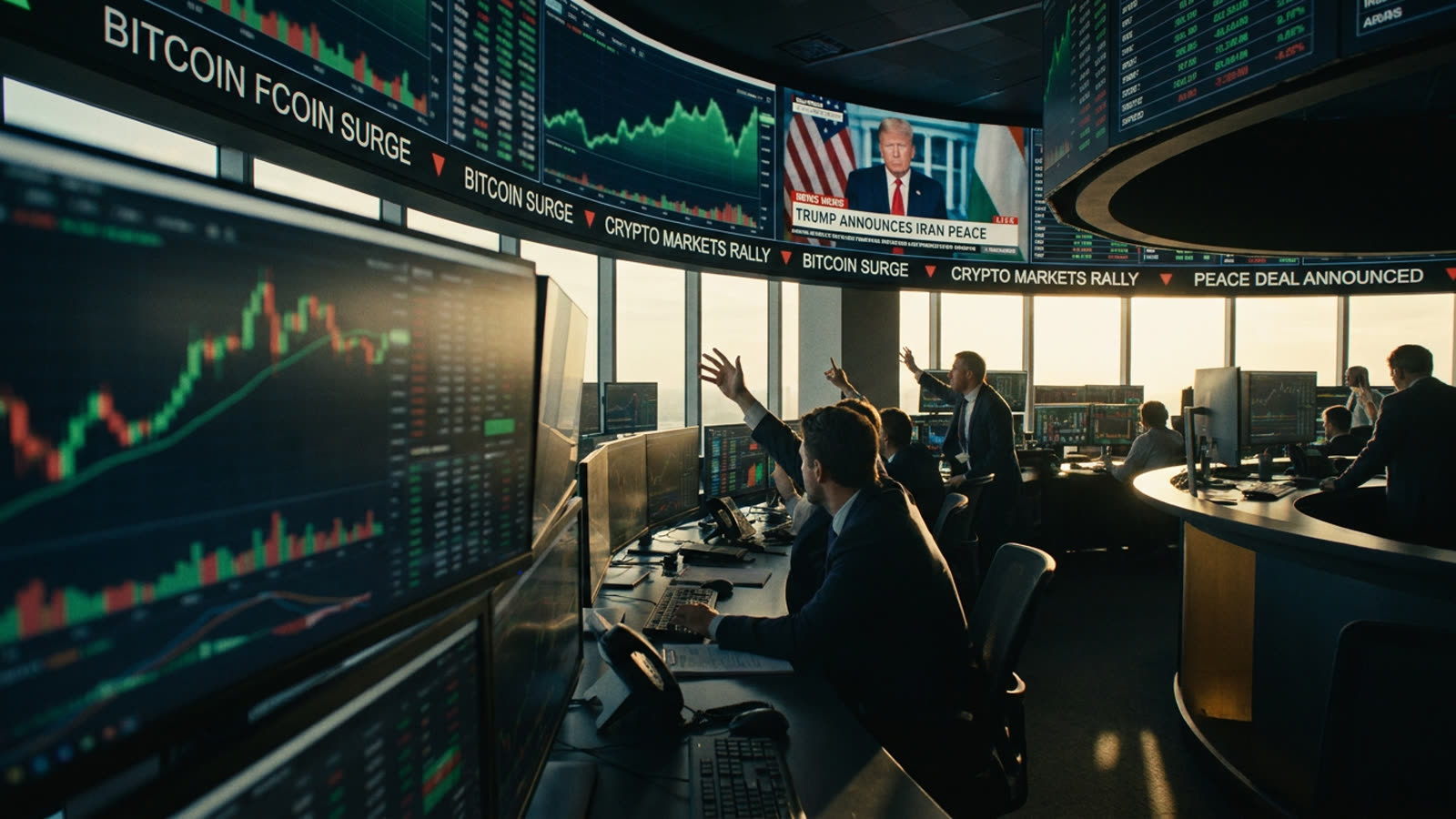
The Trump administration announced Friday evening that it has reached a peace agreement with Iran, a claim that, if substantiated, would mark the most significant American diplomatic achievement in the Middle East since the Camp David Accords. Within minutes, Bitcoin climbed past $112,000 and risk assets rallied globally. The speed of the market response underscores a curious dynamic: investors are betting the deal is genuine before anyone outside a small circle knows what it contains.
The announcement arrives after months of escalating tensions, including reported strike deliberations and hardline Iranian posturing. President Trump, speaking briefly from the Oval Office, called the agreement "historic" and "complete," but offered no details on verification mechanisms, sanctions relief, or the status of Iran's nuclear program. The Iranian government has not yet issued a formal statement, and European allies—normally briefed on such matters—appear to have been caught off guard.
What we know, and what we don't
The White House has released no text, no framework summary, and no timeline for implementation. This is unusual for agreements of this magnitude; even preliminary frameworks typically come with at least a fact sheet. The absence of detail invites skepticism. Previous Trump-era diplomatic spectacles—most notably the Singapore summit with North Korea—produced headlines that outpaced substance. Whether this follows that pattern or represents something more durable will depend entirely on what emerges in the coming days.
What we do know: the administration has been quietly signaling a willingness to negotiate for weeks, and Iranian interlocutors have reportedly been in Oman. The Gulf states, which have been pressing Washington to resolve the standoff, may have played a brokering role.
The market's leap of faith
Bitcoin's immediate surge is instructive. Crypto markets have increasingly functioned as a real-time sentiment gauge for geopolitical risk, and a de-escalation in the Gulf removes one of the larger tail risks that had been priced into global assets. But the rally also reflects something less rational: a Pavlovian response to Trump-era deal announcements, which have historically been good for short-term momentum regardless of long-term follow-through.
Equities in Asia opened higher, and oil futures dipped on the assumption that Iranian supply might eventually return to legal markets. These moves could easily reverse if the deal proves less than advertised.
Our take
The proper posture here is interested skepticism. A genuine, verifiable agreement with Iran would be a geopolitical earthquake—good for regional stability, good for energy markets, and, yes, good for the administration's legacy. But the Trump White House has a documented habit of announcing victories before the game is over. Until we see terms, verification protocols, and Iranian confirmation, this is a press release, not a peace. Markets may be celebrating prematurely; the rest of us should wait for the fine print.