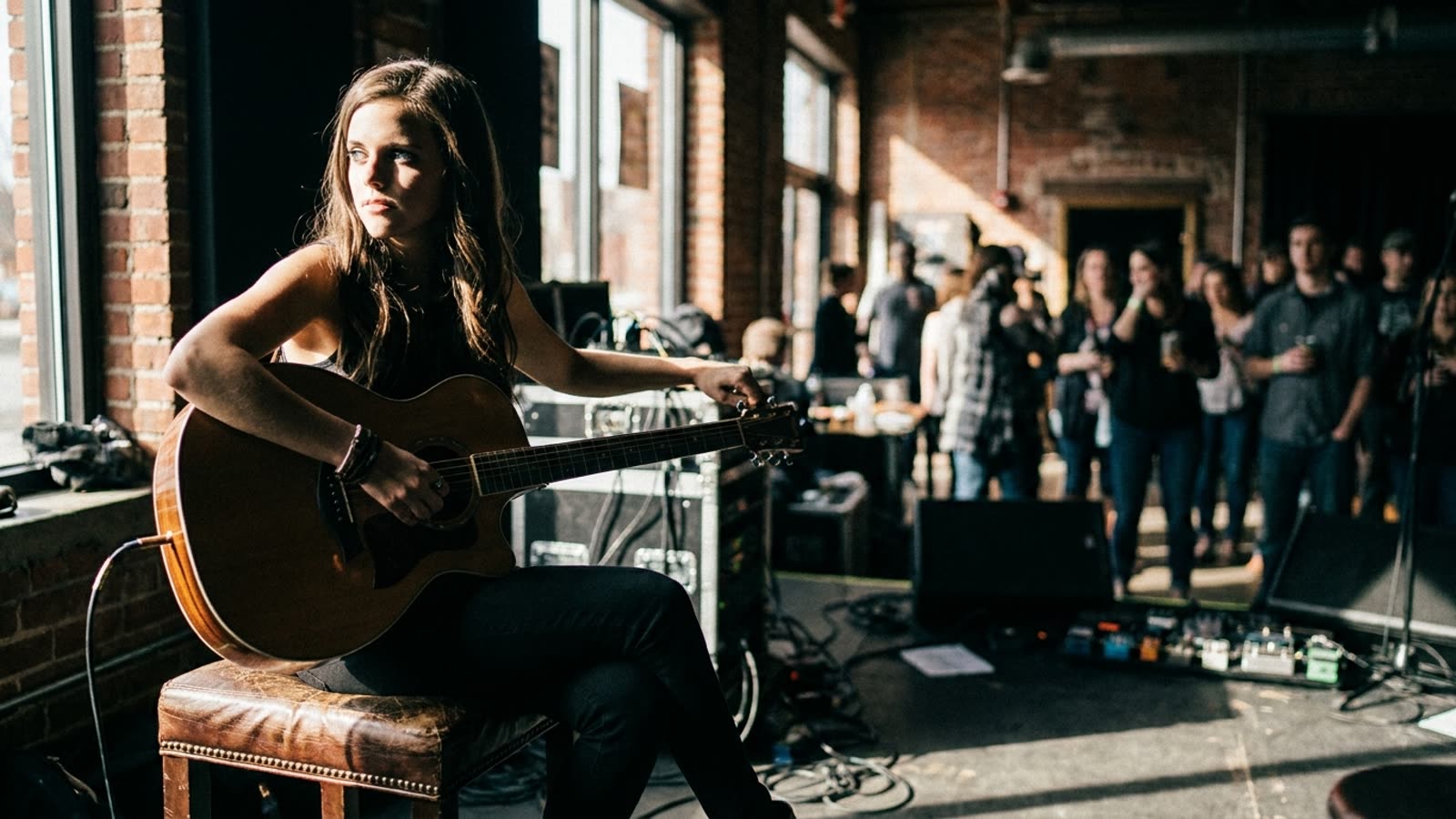
Before there was Olivia Rodrigo breaking streaming records or Billie Eilish emerging from SoundCloud bedrooms, there was Tiffany Alvord—a teenager from California who figured out, almost by accident, that a ring light and an acoustic guitar could bypass the entire music industry. By 2013, she had become one of the first YouTubers to hit a billion cumulative views, all without a label, a manager with real connections, or a single played on terrestrial radio.
That she is now largely forgotten by the platform's algorithm tells us more about the creator economy than any earnings report ever could.
The accidental blueprint
Alvord began uploading covers in 2008, when YouTube was still figuring out what it wanted to be. Her formula was disarmingly simple: take a chart hit, strip it to piano or guitar, sing it with genuine sweetness, post weekly. The consistency mattered as much as the talent. She became one of the first creators to prove that parasocial intimacy—the sense that viewers knew her personally—could convert to real commercial value.
Labels noticed. She signed with a small indie imprint and released original material, but the covers remained her traffic engine. At her peak, she commanded sponsorship rates that rivaled mid-tier television personalities and toured Asia to crowds who had never heard her on radio because radio was already irrelevant to them.
The algorithm giveth
What YouTube rewarded in 2012 it punished by 2018. The platform's successive algorithm changes—prioritizing watch time over views, then engagement over watch time, then whatever mysterious signals currently govern the recommendation engine—systematically disadvantaged the format Alvord had mastered. Three-minute acoustic covers couldn't compete with ten-minute vlogs or the dopamine architecture of short-form video.
She adapted, sort of. She pivoted harder toward original music, released albums that earned respectful if modest streams on Spotify, and maintained a loyal core audience. But the viral discovery machine that had built her career simply stopped feeding her new viewers. Her subscriber count, still north of four million, became a monument to a previous era rather than a living community.
Our take
Alvord's trajectory is the creator economy's version of a silent-film star watching talkies arrive. She did nothing wrong; the infrastructure beneath her simply shifted. The lesson isn't that YouTube is cruel—though it is—but that platform fame is a lease, not a deed. The creators who survive are the ones who treat virality as a down payment on something they actually own: a mailing list, a catalog, a brand that exists independent of any single feed. Alvord, now in her early thirties and still releasing music, seems to have made peace with smaller rooms and quieter metrics. Whether that counts as failure or wisdom depends entirely on what you thought the game was in the first place.