The Japanese kissaten asks almost nothing of you, which is precisely why it matters.
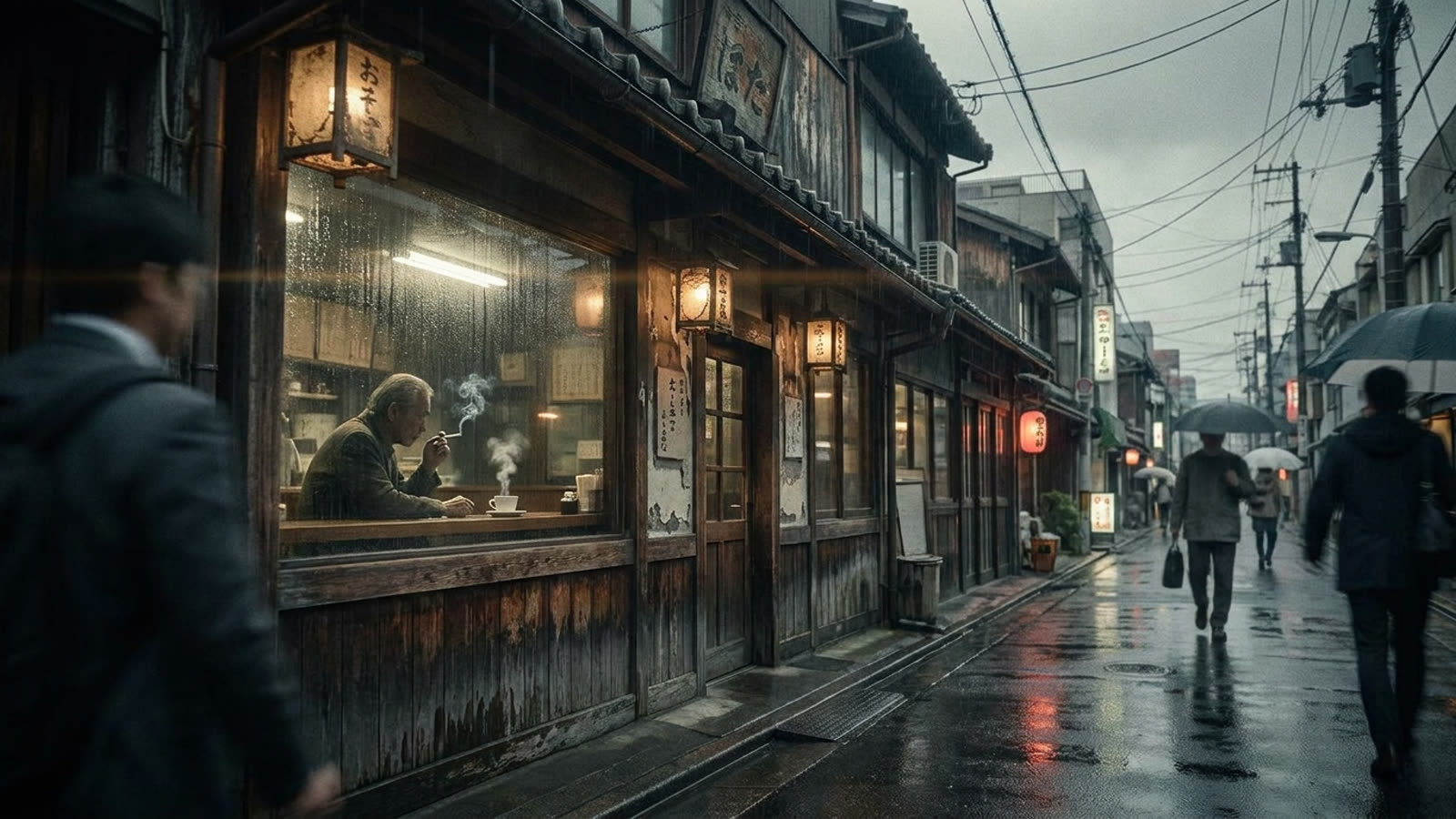
These dim, wood-paneled coffee shops—some unchanged since the 1960s, many still permitting cigarettes, all operating on the assumption that a customer might stay for hours over a single cup—represent something the modern hospitality industry has largely abandoned: the idea that a business can profit from leaving people alone. No WiFi passwords, no loyalty apps, no ambient playlist engineered for Instagram Reels. Just a bell when you enter, a ceramic cup of hand-dripped coffee, and the understanding that you are buying time as much as caffeine.
The word itself tells the story. Kissaten (喫茶店) literally means "tea-drinking shop," though coffee has dominated since American GIs introduced the habit during the postwar occupation. By the 1980s, Tokyo alone had more than 10,000 kissaten. Today, estimates suggest fewer than half remain, casualties of rising rents, aging proprietors without successors, and the Starbucksification of global coffee culture.
The economics of atmosphere
A kissaten makes no financial sense by contemporary standards. The typical owner roasts beans in small batches, employs the slow nel drip method (using a flannel filter that requires meticulous care), and charges prices that barely cover labor when a customer lingers for two hours with a newspaper. The business model assumes a certain density of regulars who return daily, a rhythm incompatible with the gig economy's fractured schedules.
Yet something keeps the survivors alive. In Shibuya, salarymen still descend basement stairs to escape open-plan offices. In Kyoto, university students draft dissertations in the same vinyl booths their professors once occupied. The kissaten endures not despite its inefficiency but because of it—the very absence of optimization creates the atmosphere that cannot be replicated.
What silence costs
The third-wave coffee movement, for all its virtues, operates on extraction in both senses: maximum flavor from the bean, maximum turnover from the seat. The kissaten inverts this logic. Its dim lighting discourages laptop work. Its elderly clientele establishes a social contract of quiet. Its smoke-stained walls and mismatched furniture signal that no one is trying to sell you an experience—you are simply permitted to have one.
This is not nostalgia. The kissaten was never fashionable; it was merely ordinary, which is different. What feels precious now is the ordinariness itself: the idea that a neighborhood could sustain a business whose primary product is the absence of demands.
Our take
Every city has its version of the kissaten—the diner that doesn't rush you, the pub where the bartender ignores you, the bookshop where no one asks if you need help. These places survive on margins that would make a venture capitalist weep, and they provide something no algorithm can replicate: the experience of being unremarkable, unmonetized, and unbothered. The kissaten is not dying because people stopped wanting coffee. It is dying because we have forgotten that sitting still is a skill worth paying for.