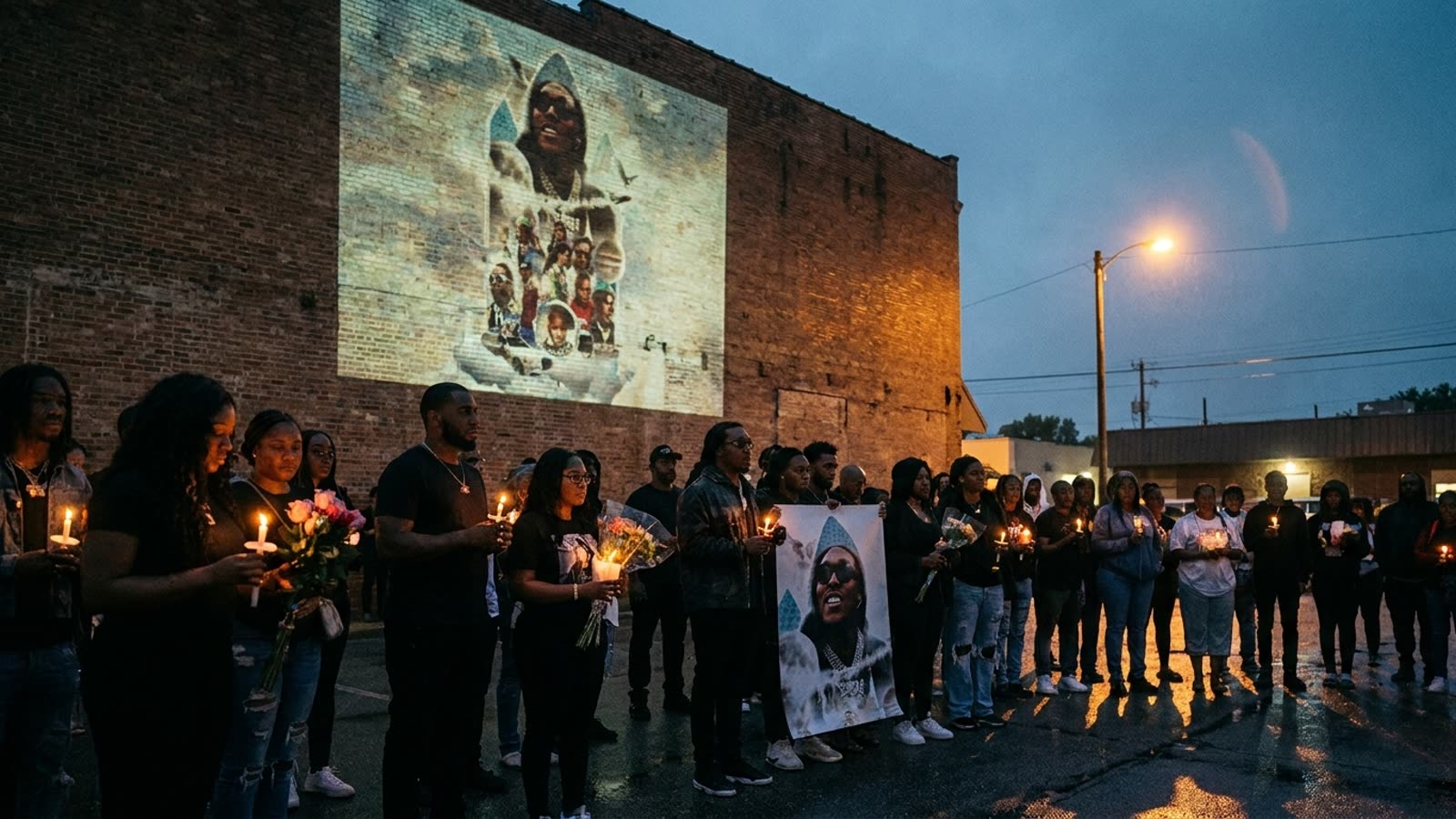
The quietest member of the loudest group in hip-hop has become, paradoxically, its most discussed. Takeoff—born Kirsnick Khari Ball—was shot and killed in Houston in November 2022 at twenty-eight, and the years since have only sharpened appreciation for what he brought to Migos: technical precision, rhythmic invention, and a refusal to chase the spotlight that made him indispensable to those who actually listened.
New tributes and previously unheard verses have begun circulating again this month, reigniting conversation about Takeoff's underrated catalogue and the creative vacuum his death created. For a generation raised on "Bad and Boujee" and "Versace," the renewed attention is overdue.
The architect in the background
Migos invented—or at least industrialised—the triplet flow that dominated the mid-2010s, and while Quavo's hooks and Offset's celebrity marriage generated tabloid ink, Takeoff was the group's most technically accomplished rapper. His verses were denser, his pocket deeper, his ad-libs stranger. Critics who dismissed Migos as interchangeable often hadn't bothered to isolate his contributions; those who did recognised a craftsman hiding in plain sight.
His 2018 solo album, "The Last Rocket," sold modestly but earned quiet respect for its cohesion—a rarity in an era of bloated tracklists. It suggested an artist capable of thriving outside the trio's formula, a promise that would never be tested.
A death that reshaped the group
Takeoff's murder—the result of a dice-game dispute, authorities concluded—did more than end a life; it effectively ended Migos as a creative unit. Quavo and Offset, already publicly feuding, have since pursued solo paths with uneven results. Neither has replicated the chemistry the trio once had, and neither seems likely to. The group's final album, "Culture III," now reads as an inadvertent farewell, its sprawling guest list masking the cracks that would soon become chasms.
Our take
Hip-hop has a complicated relationship with posthumous canonisation—too often, death inflates reputations that don't deserve it. Takeoff is the opposite case: an artist whose contributions were undervalued in life and are only now receiving proper accounting. The tributes surfacing nearly four years later aren't nostalgia; they're correction. Migos may have peaked commercially, but Takeoff's verses remain a masterclass in what happens when technical skill meets genuine humility. The genre could use more of both.