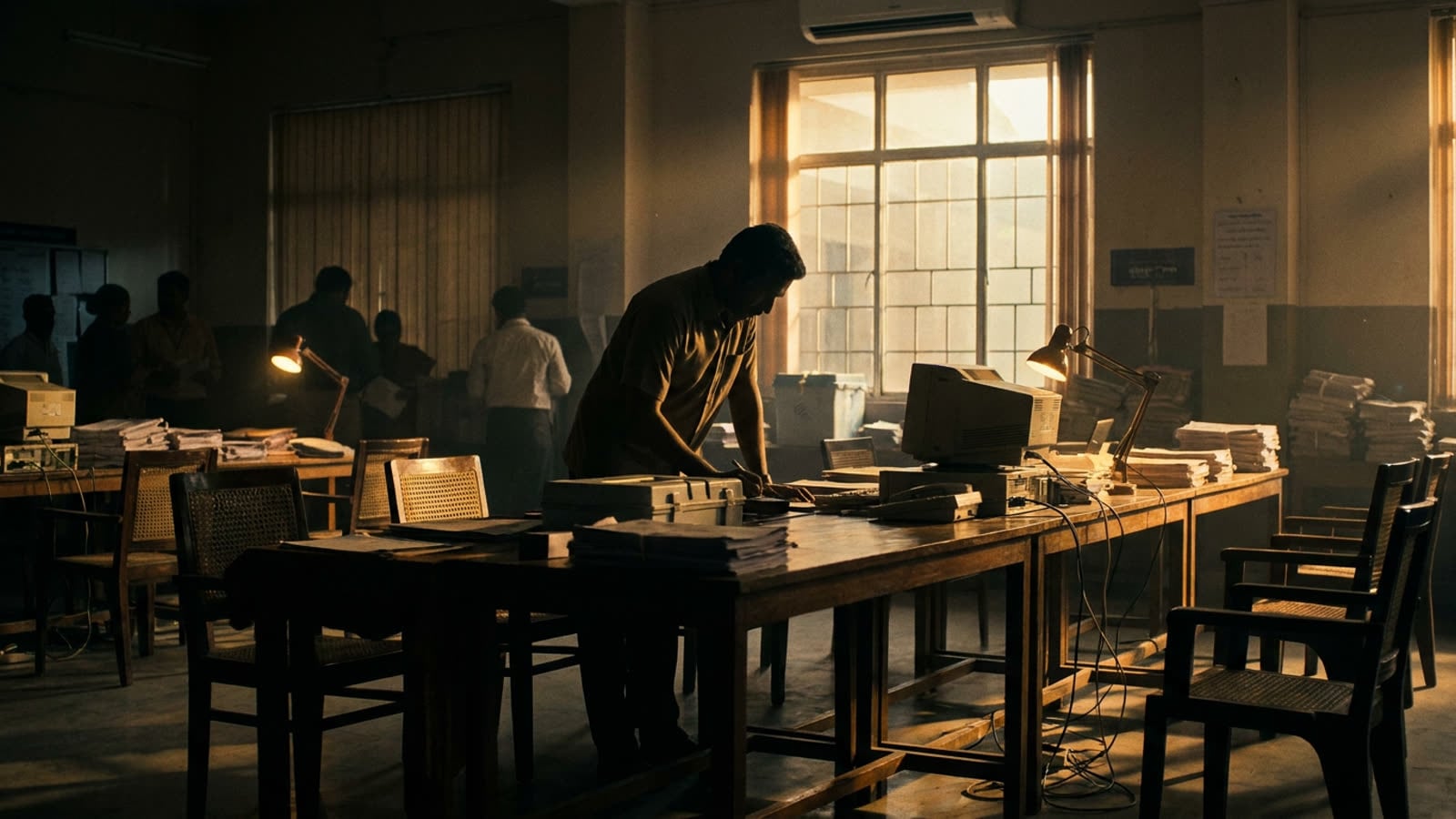
Every democracy has a moment between the vote and the victor — a procedural twilight where ballots become binding outcomes. This interregnum belongs to electoral commissions, the least glamorous and most consequential institutions in democratic governance. They certify results, adjudicate disputes, and occasionally disqualify candidates entirely. Yet most citizens could not name a single commissioner in their own country.
This anonymity is by design. Electoral commissions derive their legitimacy from appearing apolitical, even as they make decisions that are inescapably political. The tension between these imperatives explains why these bodies have become flashpoints in democratic backsliding worldwide.
The architecture of neutrality
Electoral commissions vary enormously in structure. Some, like India's Election Commission, operate as constitutional bodies with quasi-judicial powers and tenures that outlast governments. Others, like many American state election boards, are explicitly partisan — split evenly between party appointees, with tie-breaking mechanisms that invite deadlock by design.
The German model places electoral administration under the Federal Returning Officer, a civil servant who reports to the Interior Ministry but operates with considerable independence. France's Constitutional Council certifies presidential elections, blending judicial and administrative functions. Mexico's National Electoral Institute emerged from decades of one-party rule specifically to prevent the ruling party from counting its own votes.
Each model reflects a theory of how to insulate technical administration from political pressure. None has proven foolproof.
Where certification becomes contestation
The most consequential power electoral commissions hold is often the most mundane: certification. In stable democracies, certification is a formality. In contested ones, it becomes the entire battlefield.
Commissions must decide what constitutes a valid ballot, how to handle discrepancies between voter rolls and turnout, and when irregularities rise to the level of invalidation. These are judgment calls dressed as technical determinations. A commission that sets strict signature-matching requirements will reject more mail ballots. One that permits provisional voting with minimal documentation will include more marginal voters. Neither choice is neutral.
The power to delay certification can be equally significant. A commission that refuses to certify pending investigation creates uncertainty that courts, legislatures, or executives may exploit. In several post-Soviet states, delayed certification has provided pretexts for incumbent intervention.
The disqualification dilemma
Perhaps no power is more fraught than candidate disqualification. Electoral commissions in many jurisdictions can remove candidates from ballots for failing to meet eligibility requirements — residency, citizenship, criminal record, or paperwork compliance.
This authority exists for legitimate reasons: democracies need mechanisms to enforce their own rules. But the line between enforcing eligibility and eliminating opposition is perilously thin. Iran's Guardian Council routinely disqualifies reformist candidates on vague grounds. Venezuela's electoral authority has barred opposition figures through selective application of corruption statutes. Even in established democracies, disqualification battles over technical filing errors or constitutional interpretation have altered electoral outcomes.
The question is never whether commissions should have this power, but who watches the watchers.
Our take
Electoral commissions are democracy's referees, and like all referees, they are invisible when they perform well and infamous when they do not. The current global trend toward questioning electoral legitimacy has thrust these technocratic bodies into political combat they were never designed to survive. Reformers obsess over voting technology and campaign finance while ignoring the institutional architecture that actually converts votes into power. This is a mistake. The health of electoral commissions is the health of democracy itself — and right now, the patient is symptomatic.