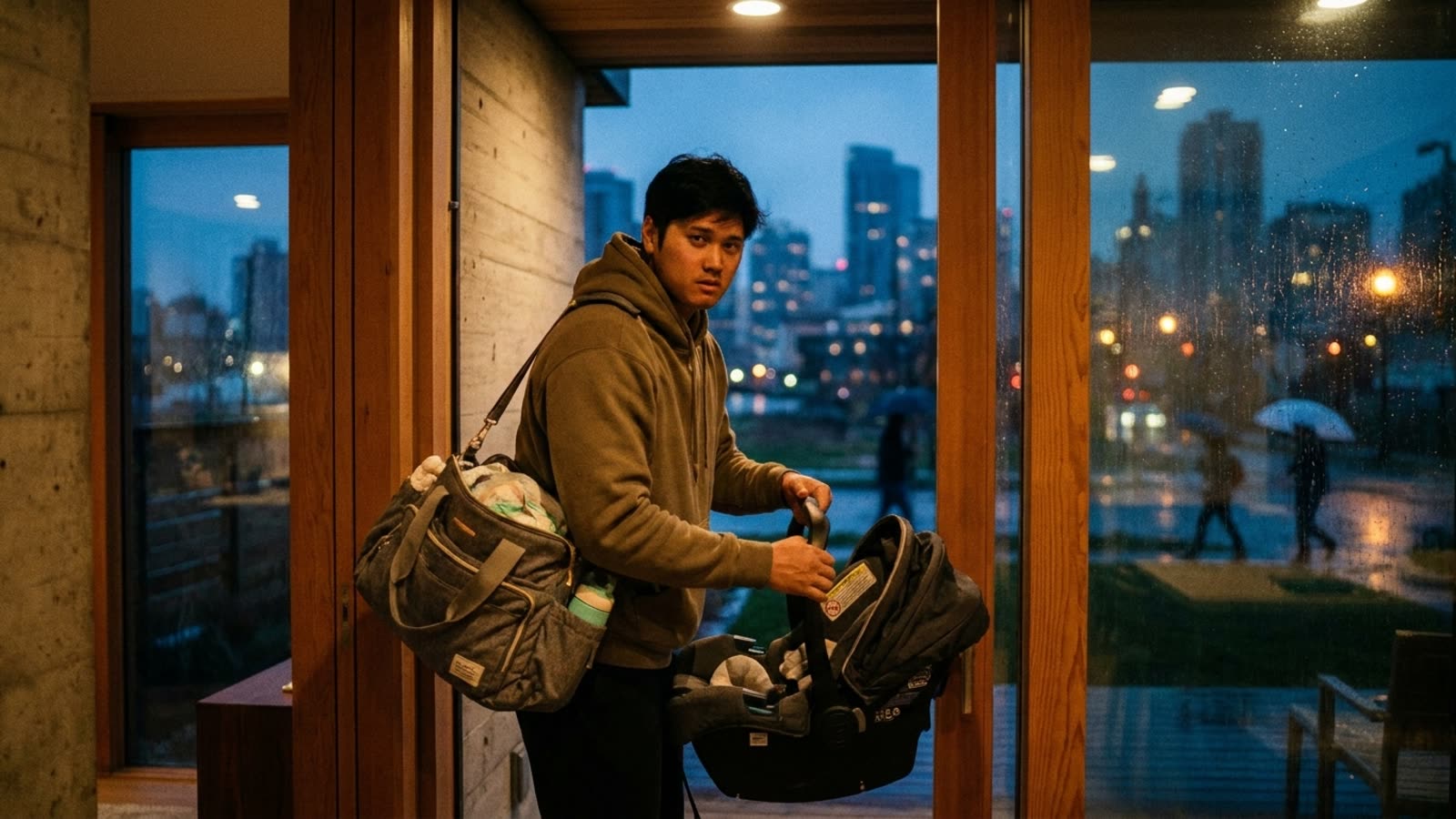
Shohei Ohtani has built the most remarkable athletic career of his generation while revealing almost nothing about himself. So when the Dodgers announced he would miss Saturday's game for personal reasons, and Ohtani subsequently confirmed the birth of his second child, it felt less like celebrity news and more like a rare atmospheric event—a brief clearing in the perpetual fog that surrounds his private life.
The timing, as with everything Ohtani does, was efficient. Miss the game, make the announcement, return to work. No elaborate gender reveal, no paparazzi-bait hospital exit, no carefully staged Instagram carousel. Just a fact, delivered with the same economy he brings to his swing.
The architecture of modern privacy
Ohtani's approach to fame represents something genuinely unusual in contemporary celebrity culture. He married his longtime partner Mamiko Tanaka in early 2024, and the world learned about it through a brief social media post featuring their dog. The pregnancy announcements have followed the same template: minimal information, maximum boundaries.
This is not the default setting for athletes of his stature. The modern sports-entertainment complex encourages—often demands—that stars monetize their personal lives through content partnerships, reality shows, and carefully managed glimpses of domesticity. Ohtani has opted out entirely, and his commercial value has only increased. His $700 million contract with the Dodgers suggests that mystery, properly deployed, can be worth more than access.
What silence communicates
The Japanese concept of honne and tatemae—the distinction between one's true feelings and the face presented to the world—offers some framework for understanding Ohtani's public persona. But reducing his privacy to cultural essentialism misses the point. He has made a choice that any public figure could make but almost none do: to treat his family as genuinely off-limits rather than as content waiting to be optimized.
His teammates have learned to respect these boundaries. Manager Dave Roberts offered only that Ohtani was attending to "a family matter" before the birth was confirmed. The organization protects him because he produces, certainly, but also because he has established that protection as a condition of the relationship.
Our take
There is something almost countercultural about Ohtani's refusal to perform fatherhood for public consumption. In an era when athletes routinely bring cameras into delivery rooms and announce baby names through brand partnerships, his approach feels like a quiet rebuke. The second Ohtani child will grow up with a famous father, but perhaps also with something increasingly rare: a childhood that belongs to the family rather than to the timeline. Congratulations are in order, and so is respect for the fact that we will learn nothing more until Ohtani decides otherwise.