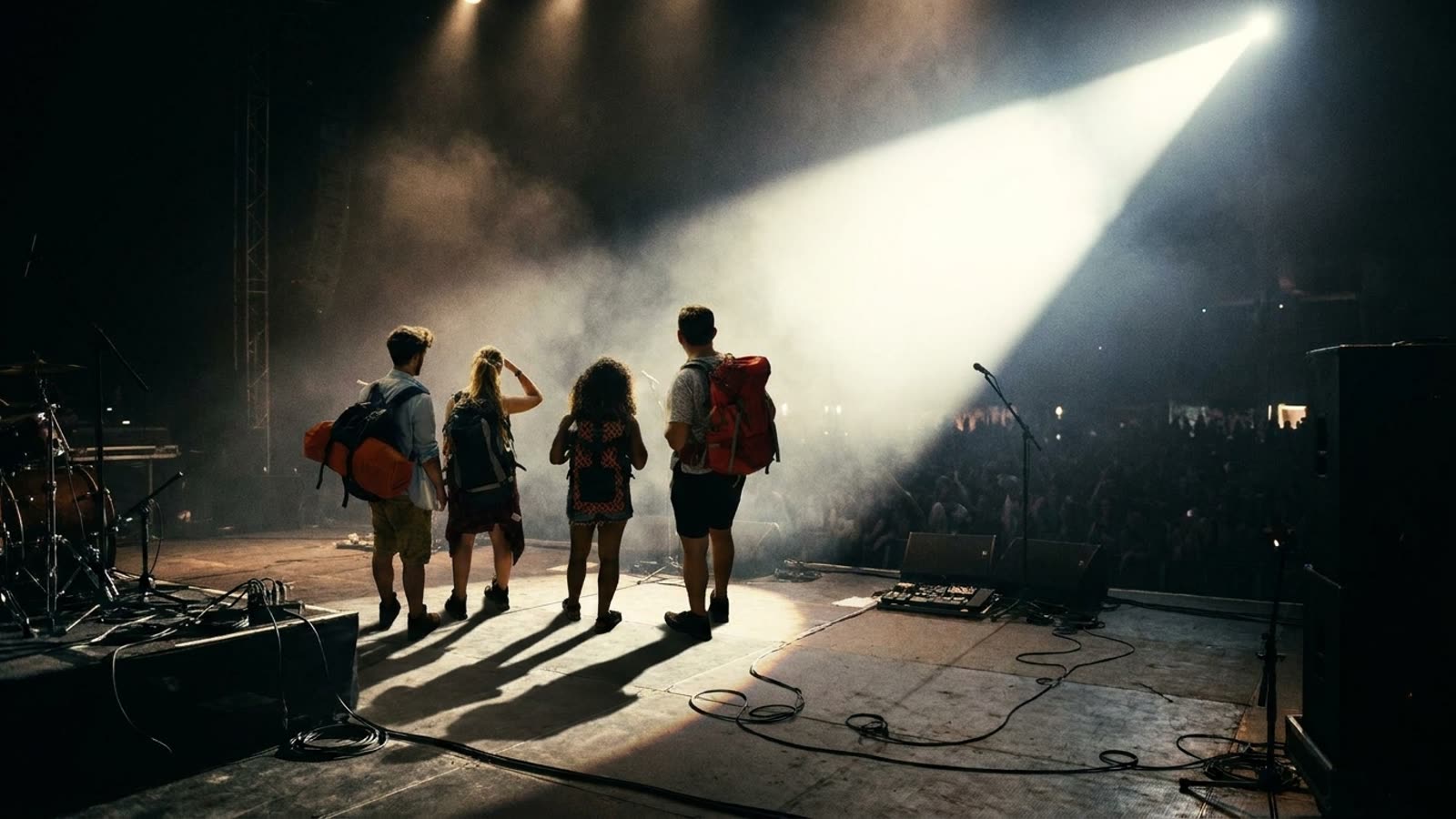
The idea that young people should wander before they work is so deeply embedded in affluent Western culture that we rarely pause to notice how strange it is. No other civilization has institutionalized the notion that adulthood requires a prelude of expensive aimlessness. Yet here we are, centuries after British nobles shipped their sons to Rome to gawk at ruins, still sending eighteen-year-olds abroad to "find themselves" — a phrase that would have baffled every generation before the Romantics.
The gap year, in its modern form, is the Grand Tour's direct descendant. Both rest on the same premise: that exposure to foreign places confers a kind of polish unavailable at home, and that this polish is worth considerable expense. What has changed is the packaging. Where Georgian aristocrats collected antiquities and contracted venereal diseases in Naples, today's gap-year cohort collects Instagram content and contracts parasites in Southeast Asia. The underlying transaction — money exchanged for cosmopolitan credentials — remains identical.
The economics of wanderlust
Gap years are expensive precisely because their value is positional. A year volunteering at an elephant sanctuary signals resources that a year stocking shelves does not. The industry that has grown up around this signaling is substantial: specialist travel companies, insurance products, curated itineraries designed to maximize both safety and the appearance of adventure. Parents pay for the assurance that their children will return with stories but without serious harm.
The democratization of gap years — or rather, the appearance of democratization — has only intensified the arms race. When backpacking Thailand became commonplace, the ambitious pivoted to Mongolia. When voluntourism attracted criticism, the discerning shifted to "impact travel" with better optics. The destination changes; the function persists.
What the gap year actually teaches
Defenders argue that travel broadens the mind, and this is not entirely false. Navigating a foreign city, managing a budget, encountering genuine difference — these experiences do build a kind of competence. But the competence is often narrower than advertised. The gap-year traveler learns to be a tourist with style, to extract services from unfamiliar systems, to perform openness while maintaining the safety net of a return ticket and a currency advantage.
What the gap year rarely provides is what its rhetoric promises: genuine immersion, lasting connection, transformed perspective. A year is not long enough to learn a difficult language properly. The traveler's relationship to place remains fundamentally extractive. This is not a moral failing; it is a structural feature. The gap year is designed to be temporary, a parenthesis before real life resumes.
Our take
The gap year endures because it solves a genuine problem — the abruptness of the transition from adolescence to adult obligation — while flattering everyone involved. Parents feel generous and worldly. Young people feel adventurous and independent. Universities and employers receive applicants with burnished narratives. That the experience is often shallower than claimed matters less than the social work it performs. The Grand Tour's original purpose was to prepare young men for leadership by showing them civilization's heights. Today's version prepares young people for professional life by teaching them to narrate experience compellingly. In an economy that rewards personal branding, this may be the most practical education of all.