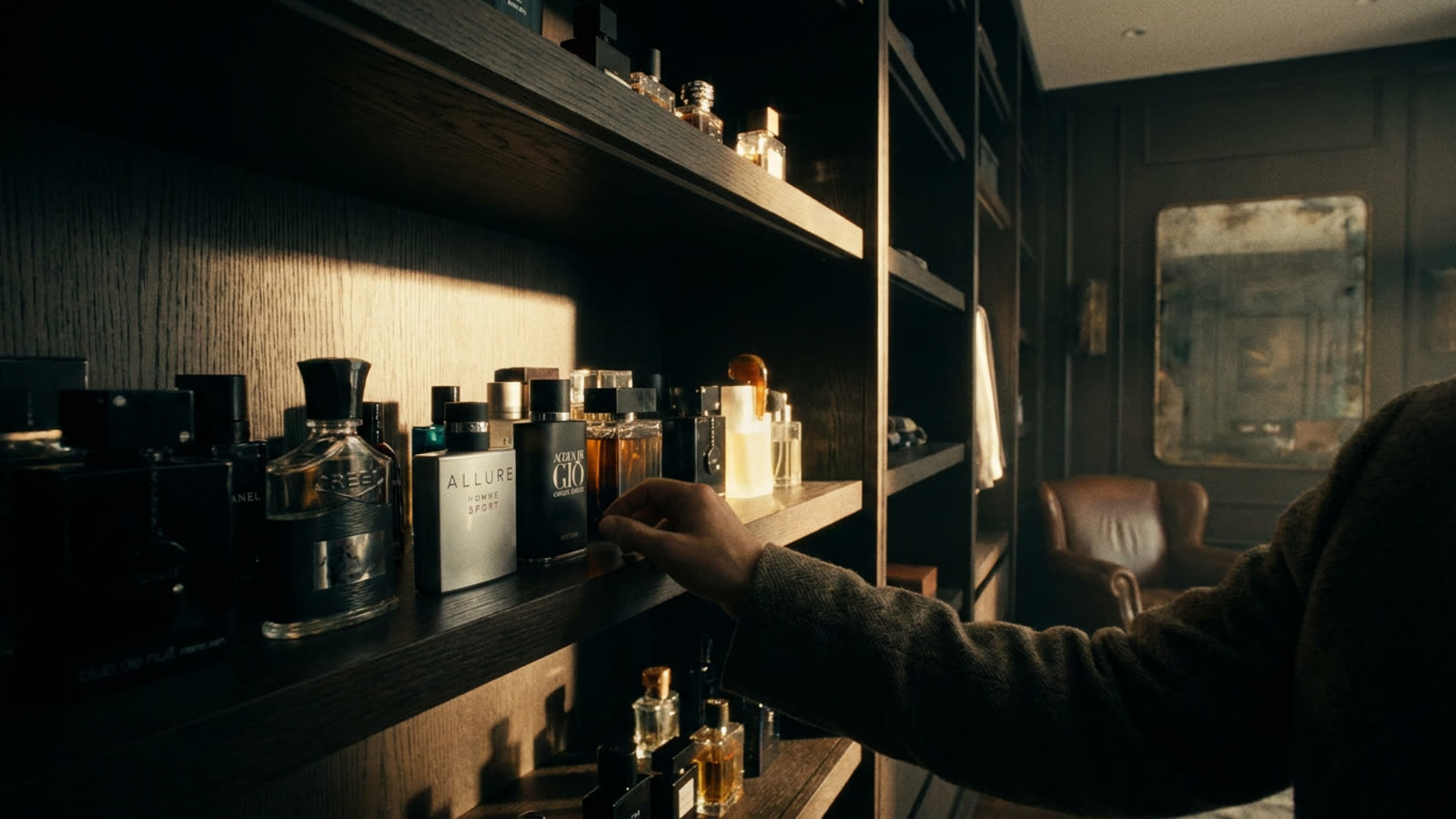
The wealthy have always collected things — art, cars, timepieces, wine. But the quiet revolution happening in luxury consumption involves something you cannot see, cannot resell, and cannot really show off at dinner parties: fragrance. The personal scent wardrobe, once the province of industry insiders and a few devoted enthusiasts, has become the thinking person's status symbol, a collection that says everything about who you are while remaining almost entirely invisible.
Unlike a Rolex or a Birkin, a perfume collection cannot be authenticated at a glance. It offers no resale value, no investment thesis, no obvious flex. And yet serious collectors now maintain dozens, sometimes hundreds, of bottles — a library of olfactory experiences curated as carefully as any art collection. The appeal lies precisely in what makes it impractical: fragrance is intimate, ephemeral, and fundamentally personal in a way that objects are not.
The economics of invisible luxury
The niche fragrance market has exploded over the past fifteen years, with houses like Frederic Malle, Byredo, Le Labo, and Maison Francis Kurkdjian commanding prices that would have seemed absurd a generation ago. A single bottle can cost several hundred dollars; limited editions and discontinued formulations trade for multiples of retail among collectors. The industry has responded by creating ever more rarefied offerings — bespoke services where perfumers create one-of-one compositions, numbered editions of a few hundred bottles, ingredients sourced from single farms in specific harvest years.
What drives someone to own thirty fragrances when they can only wear one at a time? The answer reveals something about how luxury has evolved. Scent collectors speak of "rotation" — matching fragrance to mood, season, occasion, even the specific social context of a day. A meeting calls for something different than a date; summer demands different molecules than winter. The practice transforms getting dressed into a more deliberate, almost ritualistic act.
Memory, identity, and the nose
Perfume sits uniquely at the intersection of chemistry and emotion. The olfactory bulb connects directly to the limbic system, the brain's seat of memory and feeling, which is why a scent can transport you to a specific moment decades past with an immediacy that photographs cannot match. Collectors understand this intuitively. They speak of fragrances the way others speak of music — this one reminds me of my grandmother's garden, that one of a particular trip to Kyoto, another of a person they once loved.
The scent wardrobe becomes, in this light, a kind of emotional archive. Each bottle represents not just an aesthetic preference but a version of the self, a mood one might want to inhabit, a memory one might want to carry. The collector is not hoarding products but curating possibilities.
Our take
In an age of algorithmic recommendation and mass personalization, the fragrance wardrobe represents something genuinely countercultural: a luxury that cannot be photographed for social media, cannot be verified by strangers, and offers no practical return on investment. It is consumption as pure private pleasure, status that exists only for the self. Perhaps that is why it appeals so strongly to people exhausted by the performance of contemporary life. The bottles on your shelf are a secret language, and you are the only one who needs to be fluent.