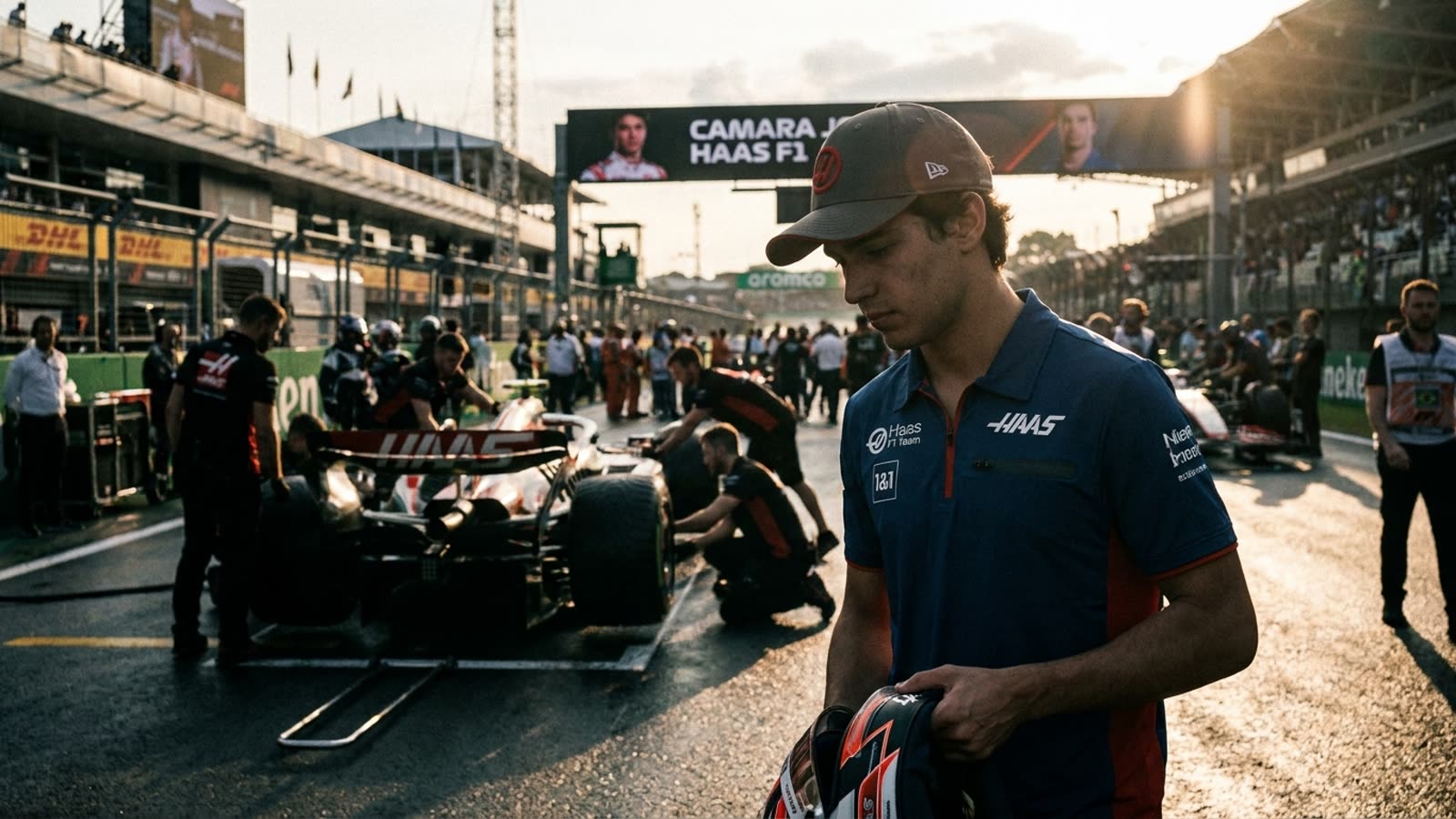
For a country that invented the racing driver as romantic hero, Brazil has spent the better part of a decade watching Formula 1 from the stands. That exile ends in 2027, when Rafael Camara straps into a Haas chassis and becomes the first Brazilian to contest a grand prix since Felipe Massa's final bow at Abu Dhabi in 2017.
The announcement, confirmed Thursday, is more than a feel-good story about a promising 21-year-old getting his shot. It is the belated correction of an anomaly that had grown embarrassing for a sport that owes so much of its mythology to São Paulo and the green-and-gold helmet.
The weight of the canary yellow
Brazil has produced three world champions—Emerson Fittipaldi, Nelson Piquet, and Ayrton Senna—plus a generation of quick, fearless drivers who made Interlagos one of the calendar's emotional peaks. Yet the pipeline ran dry after Massa, and a succession of pay-driver schemes and academy near-misses left the grid without a Brazilian presence for longer than at any point since the 1960s.
Camara, a Ferrari Driver Academy product who won the Formula 3 title in 2024 and has spent the past two seasons honing his craft in Formula 2, arrives with credentials that suggest he is no token appointment. His junior record is strong, his technical feedback praised by engineers, and his temperament—calm under pressure, media-savvy without being slick—fits the modern mould.
Why Haas, why now
The American team has made a habit of blooding young talent, from Kevin Magnussen's early stints to Oliver Bearman's graduation last year. Camara slots into a seat vacated by the retiring Nico Hülkenberg, giving Haas a driver who brings genuine pace, a massive new fanbase, and—crucially—Ferrari's continued technical partnership. The Maranello connection is no accident: Ferrari wants a Brazilian in the fold, and Haas provides the runway.
For Camara, the risk is real. Haas has never been a front-running team, and the gap to the midfield leaders can be punishing. But the opportunity to learn without the crushing expectation of a top seat may prove ideal for a driver still accumulating mileage.
Our take
Formula 1 has spent years courting new markets—Las Vegas, Saudi Arabia, Miami—while neglecting one of its spiritual homelands. Camara's arrival does not guarantee a Brazilian renaissance, but it gives the sport a story it desperately needs: a young driver carrying a nation's hopes, racing under the same yellow helmet that once belonged to Senna. The grid is richer for it, and Interlagos will be louder than it has been in years.