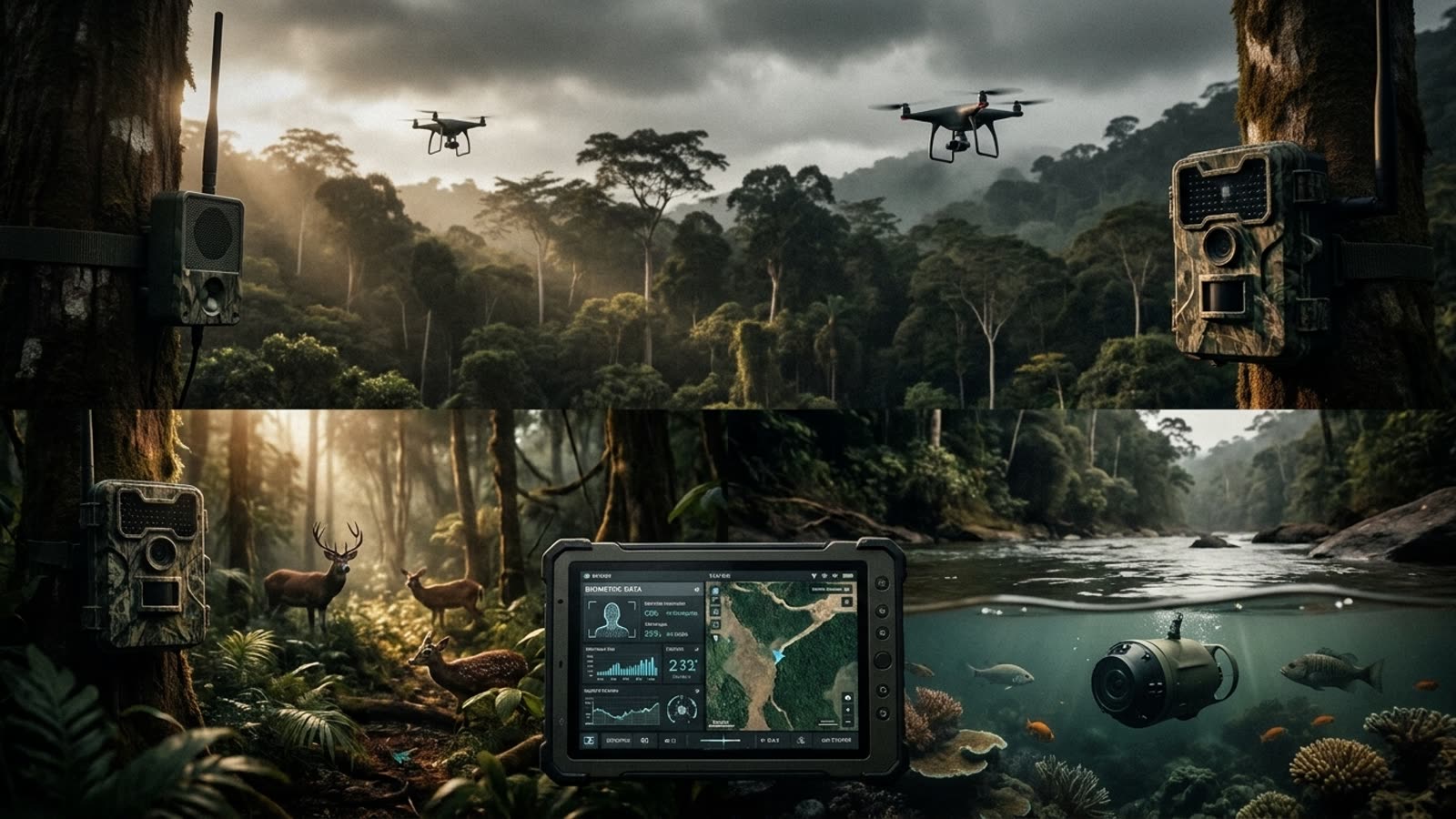
The artificial intelligence boom has created a peculiar infrastructure paradox: the industry racing to simulate human intelligence is simultaneously draining the resources that sustain actual human life. Data centers now consume roughly 2 percent of global electricity, and their water usage — for cooling the processors that power large language models — has become a quiet scandal in drought-prone regions from Arizona to Ireland.
Omen AI, a startup emerging from stealth this month, believes the solution lies not in incremental efficiency gains but in a technology that predates the AI era entirely: liquid immersion cooling.
The physics of the problem
Traditional data centers cool their servers with air — massive HVAC systems that push cold air across hot chips, then exhaust the heat outside. This approach worked tolerably when servers ran search algorithms and email. It becomes absurd when those same racks house GPUs running inference at 700 watts per chip.
The math is unforgiving. Air conducts heat roughly 25 times less efficiently than water, and specialized dielectric fluids perform even better. Omen's pitch is to submerge entire server racks in non-conductive liquid, eliminating fans entirely and allowing heat to transfer directly from chip to coolant to heat exchanger. The company claims this reduces cooling energy consumption by 40 percent and enables far denser server configurations — critical when prime real estate near power substations commands premium prices.
Why now, and why this team
Liquid immersion is not new. Cray supercomputers used it in the 1980s. But the approach never scaled commercially because traditional computing rarely generated enough heat to justify the complexity. AI training and inference changed that calculus.
Omen's founding team includes veterans from Google's data center operations and two former engineers from GRC, the Texas company that pioneered modern immersion systems. Their insight is that the technology's previous commercial failures stemmed from poor integration with standard server hardware. Omen claims to have developed modular immersion tanks that accept off-the-shelf Nvidia and AMD server configurations without modification — a significant engineering challenge if true.
The startup has raised seed funding, though it has not disclosed the amount, and is piloting with two unnamed hyperscalers.
The skeptic's view
Immersion cooling's critics point to maintenance complexity — technicians cannot simply swap a failed drive when it is submerged in fluid — and the upfront capital costs of retrofitting existing facilities. There are also questions about the environmental profile of the synthetic fluids themselves, some of which contain fluorinated compounds under increasing regulatory scrutiny.
Omen argues that the total cost of ownership favors immersion once energy savings compound over a facility's lifespan, and that biodegradable fluid alternatives are maturing rapidly.
Our take
The AI industry's environmental reckoning is overdue, and liquid cooling represents one of the few interventions that addresses physics rather than optics. Whether Omen specifically succeeds matters less than whether its approach forces hyperscalers to abandon the increasingly absurd practice of air-cooling chips that run hotter than stovetops. The wettest data center might, counterintuitively, be the most sustainable one.