The architectural profession has survived technological disruption before. The shift from hand drafting to computer-aided design in the 1980s and 1990s was supposed to commoditize the discipline, turning spatial poets into software operators. Instead, it liberated architects from the tedium of repetitive linework and opened new formal possibilities that would have been unbuildable—or at least un-drawable—a generation earlier. Now a similar transformation is underway, though its contours remain less visible to anyone outside the studio.
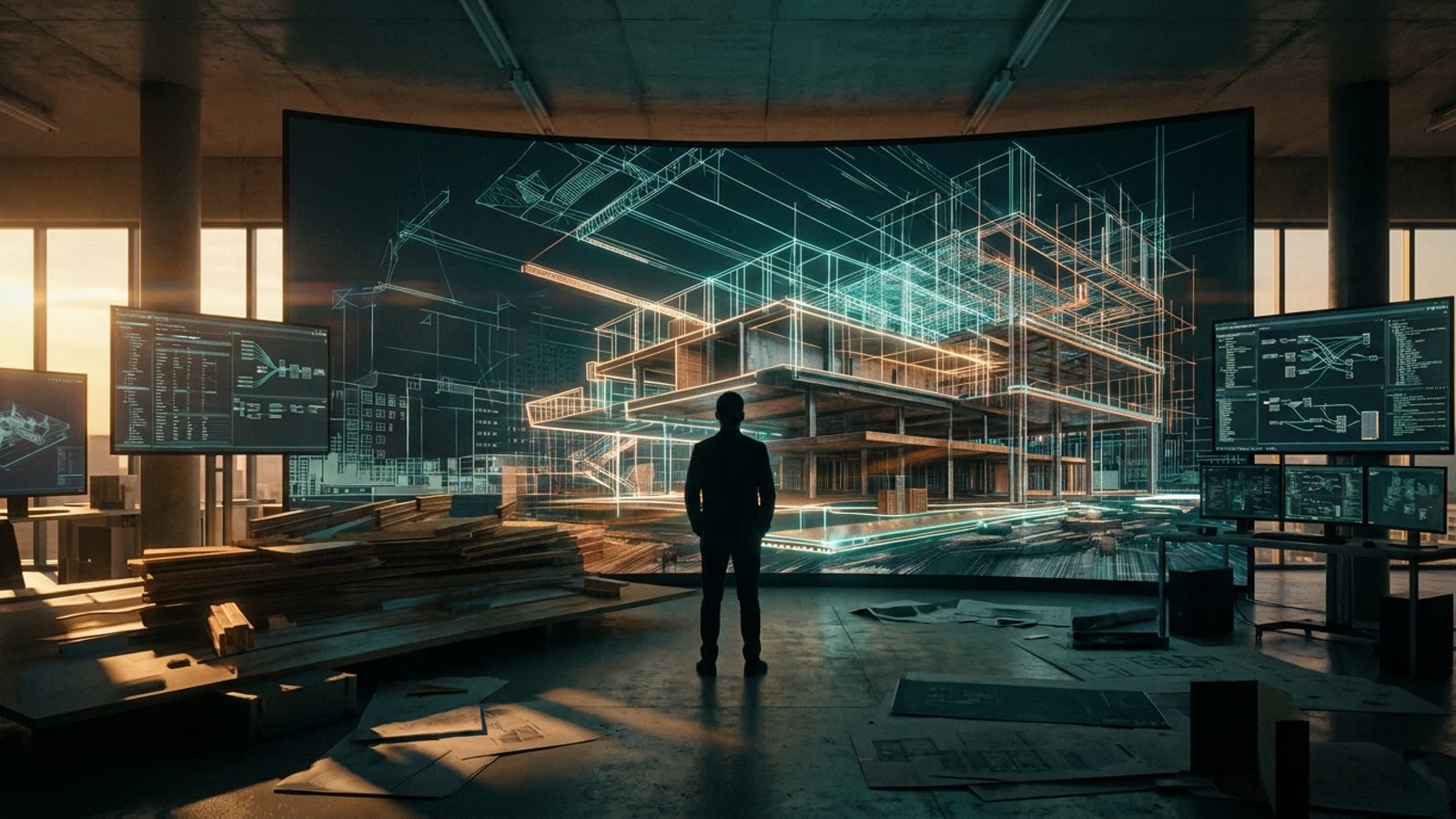
Artificial intelligence has not replaced the architect. What it has done is compress the exploratory phase of design from weeks into hours. Where a team might once have developed three or four schematic options for a client presentation, they can now generate dozens of variations, each responsive to site constraints, zoning envelopes, and programmatic requirements that would have taken days to model manually. The software does not design the building. It proposes geometries that a human then evaluates, refines, or discards.
The New Division of Labor
The practical effect has been a redistribution of cognitive effort. Junior architects, who traditionally spent years learning the craft through the grinding work of documentation and iteration, now find themselves thrust earlier into evaluative roles. They must develop critical judgment faster, because the machine can produce options faster than anyone can thoughtfully assess them. Some firms report that this has accelerated professional development; others worry it has hollowed out the apprenticeship model that once gave young designers time to internalize spatial intuition through repetition.
Senior architects, meanwhile, have become curators of possibility. Their value lies not in generating ideas—the bottleneck has shifted—but in recognizing which generated ideas are worth pursuing. This is a subtle but profound change in what architectural expertise means. The premium now attaches to taste, judgment, and the ability to articulate why one massing strategy serves a client's needs better than another superficially similar alternative.
What the Machine Cannot See
For all its speed, current AI remains blind to dimensions of architecture that practitioners consider essential. It cannot walk through a space and feel whether the proportions are right. It cannot understand that a hospital corridor should not feel like a prison corridor, even if both satisfy the same dimensional requirements. It cannot read the social dynamics of a neighborhood and intuit how a new building will be received by people who have lived there for decades.
These limitations are not bugs to be fixed in the next software update. They reflect something fundamental about what buildings are: not just optimized solutions to functional problems, but cultural artifacts that shape how people experience their lives. The architect's irreducible role is to hold that experiential dimension in mind while navigating the technical constraints that AI handles with increasing competence.
Our take
Architecture offers a preview of how AI will reshape many knowledge professions: not through dramatic displacement, but through a gradual redefinition of what expertise means. The danger is not unemployment but de-skilling—a generation of practitioners who can evaluate machine output without ever having developed the muscle memory of making things from scratch. The opportunity is liberation from drudgery and more time for the genuinely human work of imagining places worth inhabiting. Which future arrives depends less on the technology than on how firms choose to deploy it.