For most of human history, counting wild animals meant boots on the ground and binoculars in hand. A census of elephants required weeks of aerial surveys. Monitoring bird populations demanded armies of volunteers waking before dawn. The fundamental constraint was always the same: you could only study what you could directly observe, and observation was expensive, slow, and incomplete.
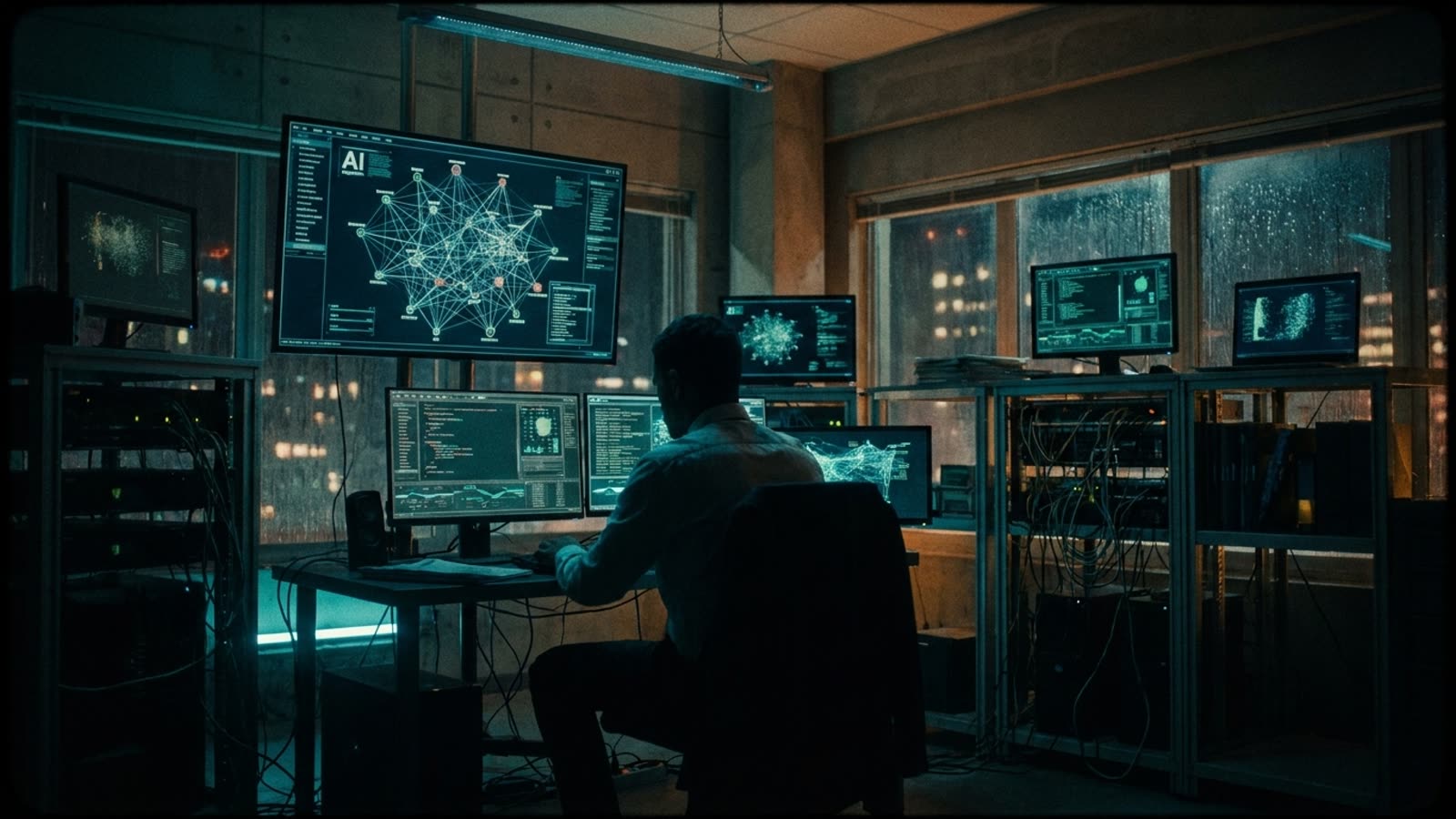
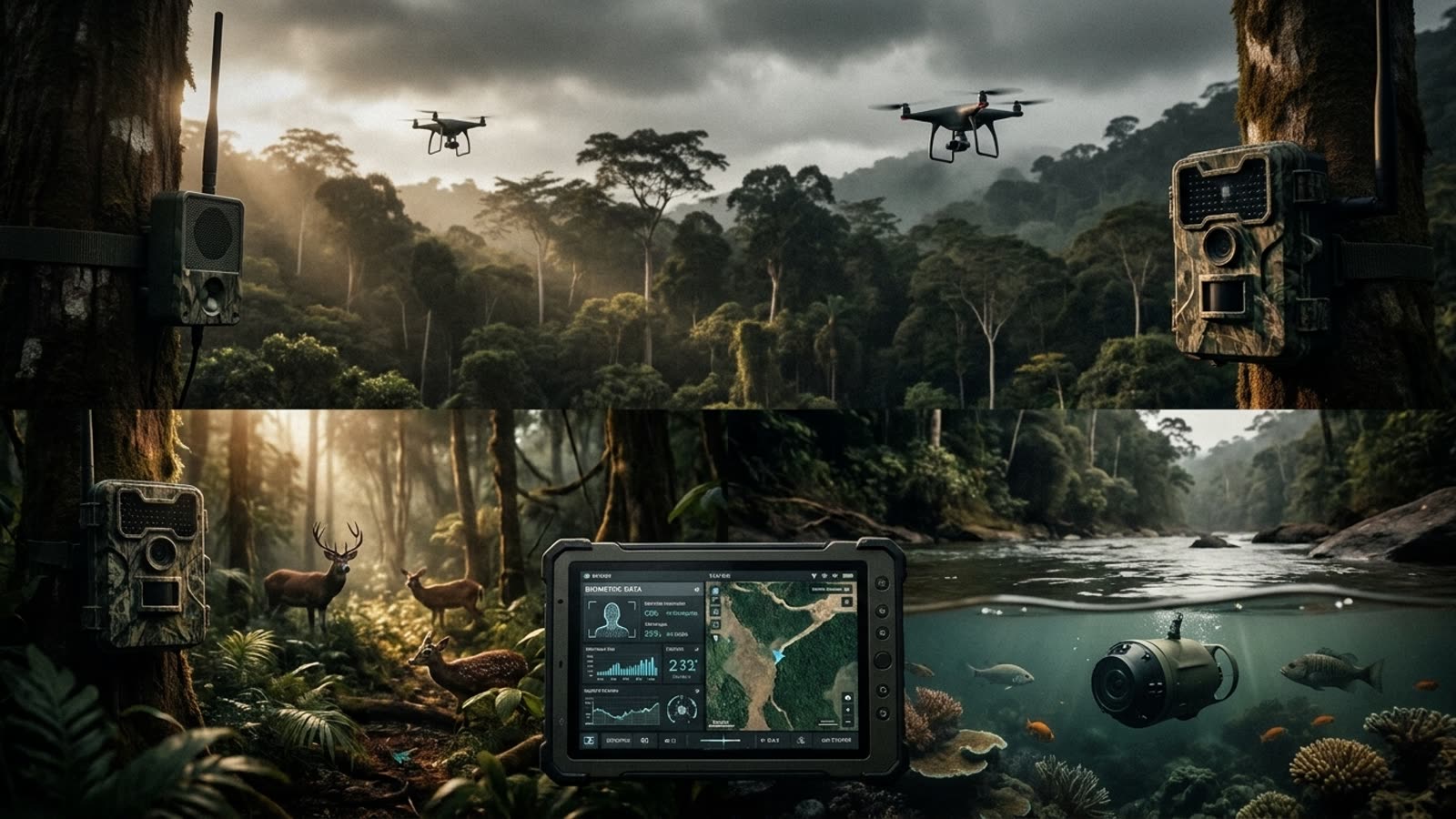
That constraint is dissolving. Across rainforests, savannas, and coral reefs, conservation biologists are deploying networks of cheap sensors — microphones, camera traps, satellite receivers — that generate torrents of data no human team could process. The bottleneck has shifted from collection to interpretation, and that is precisely where machine learning excels.
The acoustic revolution
The transformation is most dramatic in bioacoustics. A single recording device in a tropical forest captures thousands of hours of audio annually — birdsong, insect choruses, the ultrasonic clicks of bats, the infrasonic rumbles of elephants. Until recently, analyzing such recordings required experts to listen through them manually, an obviously impossible task at scale.
Neural networks trained on spectrograms can now identify hundreds of species from their vocalizations with accuracy that matches or exceeds human specialists. More importantly, they can do so continuously, across dozens of sites simultaneously, for years. The result is not just efficiency but entirely new categories of knowledge: researchers can track how soundscapes change across seasons, detect the arrival of invasive species before they become established, and monitor nocturnal animals that were previously almost unstudied.
What the machines reveal
The insights emerging from these systems often surprise the scientists deploying them. Camera trap networks in African reserves, processed by image-recognition models, have revealed that many species are far more nocturnal than previously believed — a behavioral shift that appears linked to human activity during daylight hours. Acoustic monitoring in marine environments has documented whale communication patterns that suggest social structures more complex than researchers had assumed.
Perhaps most valuably, AI-assisted monitoring can detect absence. Knowing that a species has vanished from a location is often harder than confirming its presence, yet it is precisely this negative information that conservation planning requires. Continuous automated monitoring makes silence legible.
The human element remains
The technology's limitations are instructive. Machine learning models require training data, which means they are only as good as the expert annotations that teach them. A model trained on North American birdsong struggles with Amazonian species. Systems optimized for one ecosystem may fail in another. The field still depends on taxonomists, field biologists, and indigenous knowledge-holders who can identify species the algorithms have never encountered.
There is also the question of what to do with the knowledge these systems generate. Conservation has never been primarily limited by information — it is limited by political will, funding, and the economic pressures that drive habitat destruction. Knowing exactly which species are declining, and where, does not automatically produce the resources to save them.
Our take
The AI transformation of wildlife monitoring is real and significant, but it is best understood as a force multiplier for human expertise rather than a replacement for it. The technology excels at the tedious, scalable work of detection and classification. The harder tasks — deciding what to protect, persuading governments and communities to act, addressing the root causes of biodiversity loss — remain stubbornly human problems. The forest may have ears now, but whether we choose to listen to what it tells us is another matter entirely.