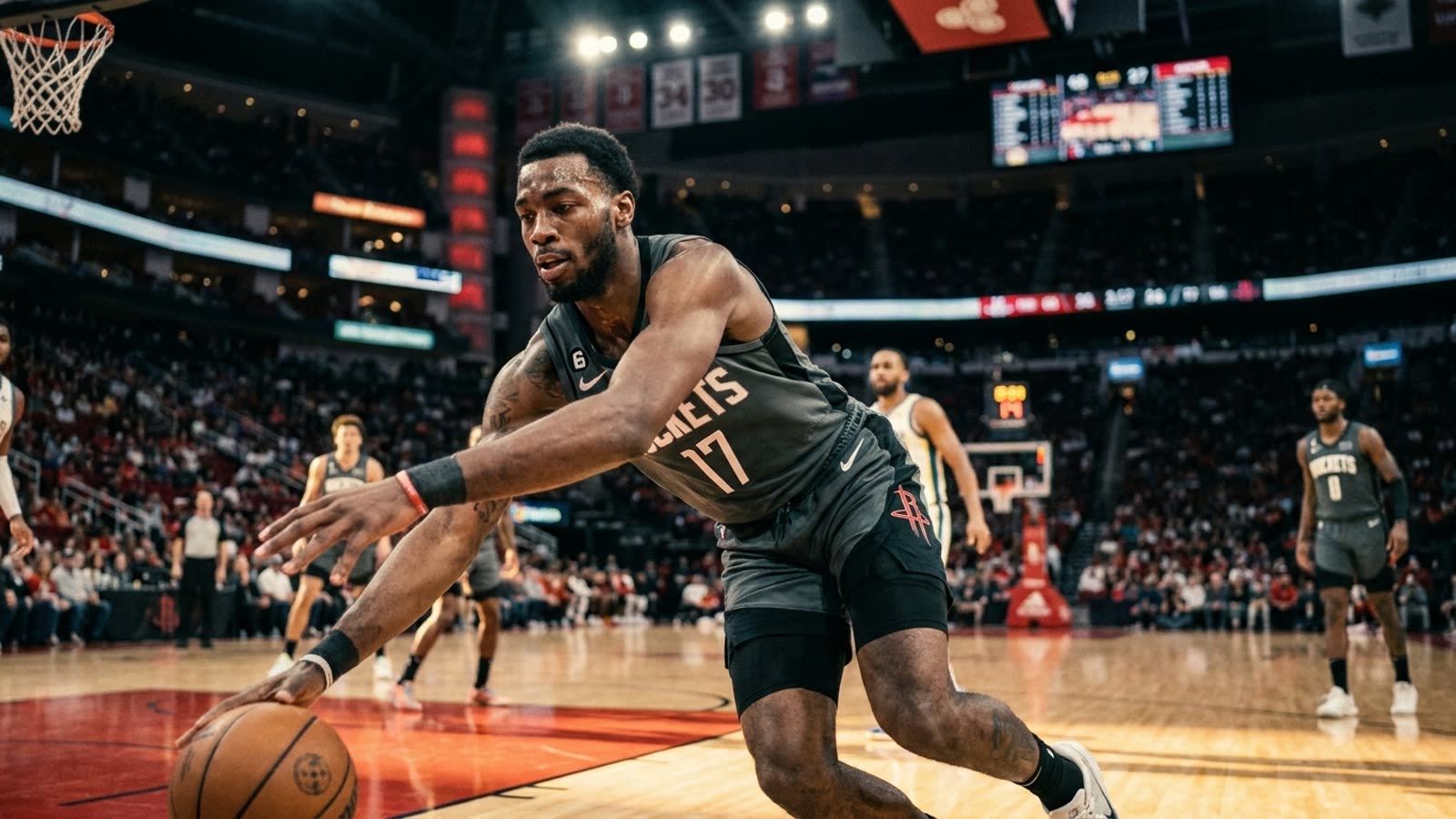
In an NBA offseason defined by nine-figure gambles and franchise-altering trades, the Houston Rockets made the kind of move that rarely generates headlines but often wins championships: they paid a young, versatile defender before the market forced them to pay more.
Tari Eason's five-year, $81.5 million extension—roughly $16.3 million annually—represents the unsexy arithmetic that separates competent front offices from desperate ones. The 24-year-old forward averaged modest counting stats last season, but his defensive impact metrics placed him among the league's most disruptive wings. Houston's general manager Rafael Stone, who has quietly assembled one of the youngest and deepest rosters in basketball, recognized what the box score obscures: Eason's combination of length, motor, and switchability is precisely what playoff basketball demands.
The defensive premium
The modern NBA has become a three-level scoring exhibition, which has paradoxically increased the value of players who can guard multiple positions without fouling. Eason fits the archetype perfectly. At 6'8" with a 7'2" wingspan, he can credibly defend point guards on switches and contest shots at the rim. His steal rate and deflection numbers suggest an instinctive playmaker on the ball, the kind of defender who creates transition opportunities simply by existing in passing lanes.
The Rockets already possess one of the league's most promising young cores—Jalen Green, Alperen Şengün, Jabari Smith Jr.—but lacked the connective defensive tissue that transforms talented rosters into cohesive units. Eason provides that glue at a salary that preserves Houston's flexibility for future moves.
Why the price matters
Context is everything in contract evaluation. The NBA's salary cap continues its upward trajectory, meaning today's $16 million player becomes tomorrow's $20 million player in real terms. By extending Eason now, Houston avoided the restricted free agency dance that often forces teams to match inflated offer sheets or lose assets for nothing.
Compare Eason's deal to the contracts being handed to players with similar or lesser track records this summer. The gap between his extension and the market rate for competent wing defenders could easily reach $30-40 million over the life of the contract. That's not just savings—it's a future trade asset, a pathway to keeping the core together, or simply the margin that allows a team to add a missing piece at the deadline.
Our take
The Rockets have been patient to the point of frustrating their fanbase, accumulating young talent while the rest of the league chased immediate gratification. Eason's extension suggests the patience is evolving into purpose. Houston isn't ready to contend for championships tomorrow, but they're building the kind of roster depth and defensive identity that ages well. In a summer of overpays and desperation moves, paying a 24-year-old defender $16 million annually looks less like a commitment and more like a heist.