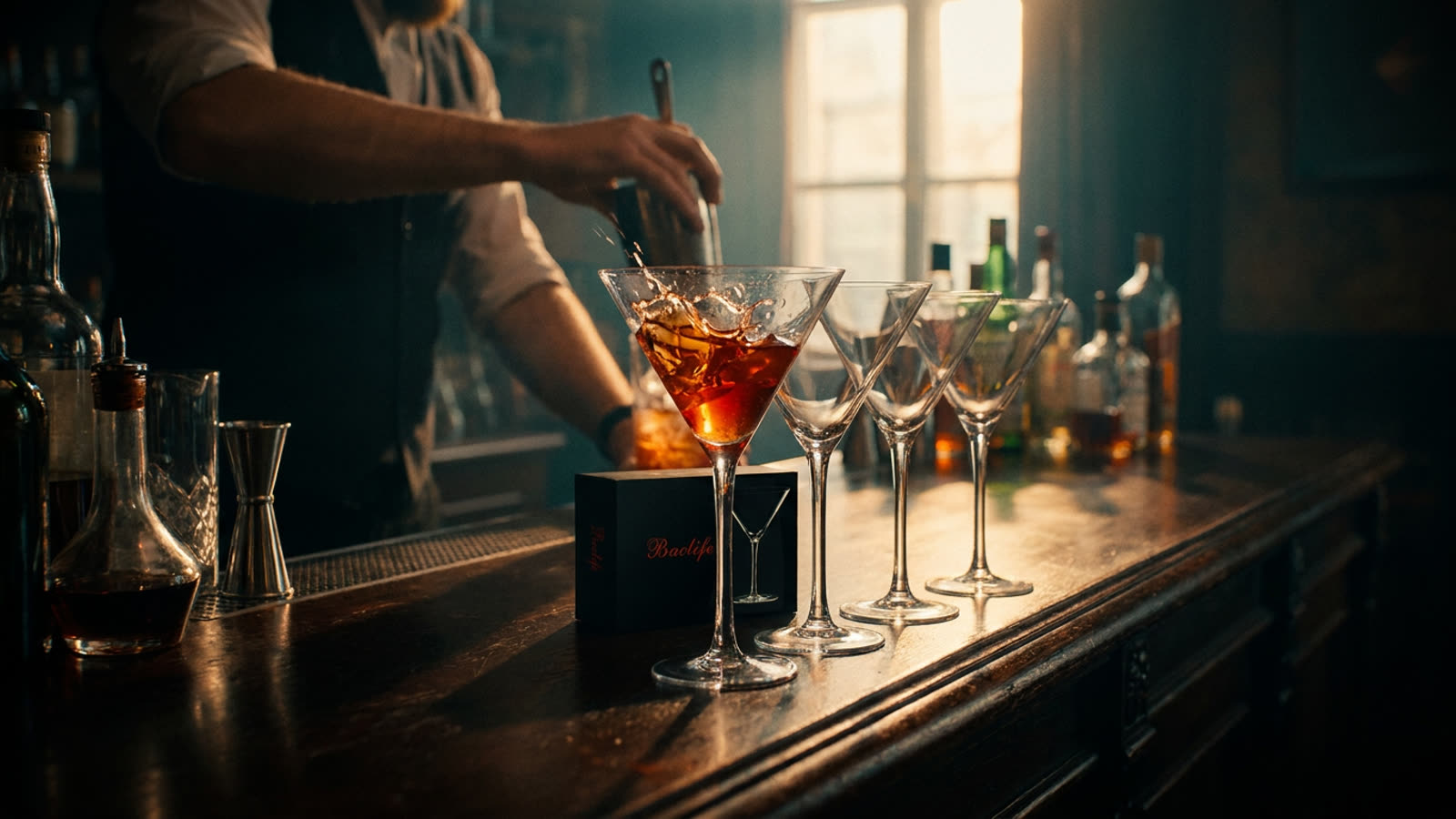
No piece of glassware has inspired more devotion, more parody, and more spilled gin than the V-shaped martini glass. It is ergonomically absurd: top-heavy, impossible to carry through a crowded room, and engineered to slosh its contents at the slightest tremor. Bartenders have spent decades trying to retire it in favor of the coupe or the Nick and Nora. Yet the martini glass persists, because it was never really designed for drinking. It was designed for looking like you drink.
The accidental icon
The stemmed cocktail glass with a conical bowl emerged in the early twentieth century, but its cultural ascent began during Prohibition—or rather, immediately after. When legal drinking returned to America, the martini became the drink of the aspirational class, and its glass became a visual shorthand for urbane adulthood. The shape was distinctive enough to read from across a room, across a movie screen, across a magazine page. It photographed beautifully. It caught light like a prism. That it also warmed your drink with your palm heat and invited catastrophic spillage was beside the point.
Hollywood cemented the association. The martini glass appeared in the hands of everyone from William Powell to James Bond, always held with a certain theatrical precision that suggested the drinker had mastered not just alcohol but civilization itself. The glass demanded posture. It punished carelessness. In an era when cocktails were returning to respectability, the martini glass functioned as a sobriety test you administered to yourself.
The bartender's nemesis
The craft cocktail revival that began in the early 2000s brought with it a quiet campaign against the V-glass. Serious bartenders pointed out that the coupe—that shallow, rounded bowl supposedly modeled on Marie Antoinette's anatomy—kept drinks colder and reduced spillage. The Nick and Nora, a smaller, more elegant stemmed glass, offered similar advantages with art deco charm. Both were historically accurate to the pre-Prohibition era that mixologists were romanticizing.
The public remained unmoved. Customers continued to request martinis in martini glasses, because the glass was the point. A martini served in a coupe is just a cold, strong drink. A martini served in that iconic V is a statement of intent. The glass says: I am not in a hurry. I am not practical. I have chosen to make my evening slightly more difficult in exchange for looking extremely good doing it.
Our take
The martini glass endures because it understands something about human nature that ergonomics cannot capture. We do not always want our tools to be efficient. Sometimes we want them to be theatrical, to impose a small discipline, to transform a mundane act into a minor ritual. The martini glass is a prop in the best sense—it helps us perform a version of ourselves that is more deliberate, more composed, more cinematic. Every bartender who tries to hand you a coupe is technically correct. But correctness has never been the point of a martini.