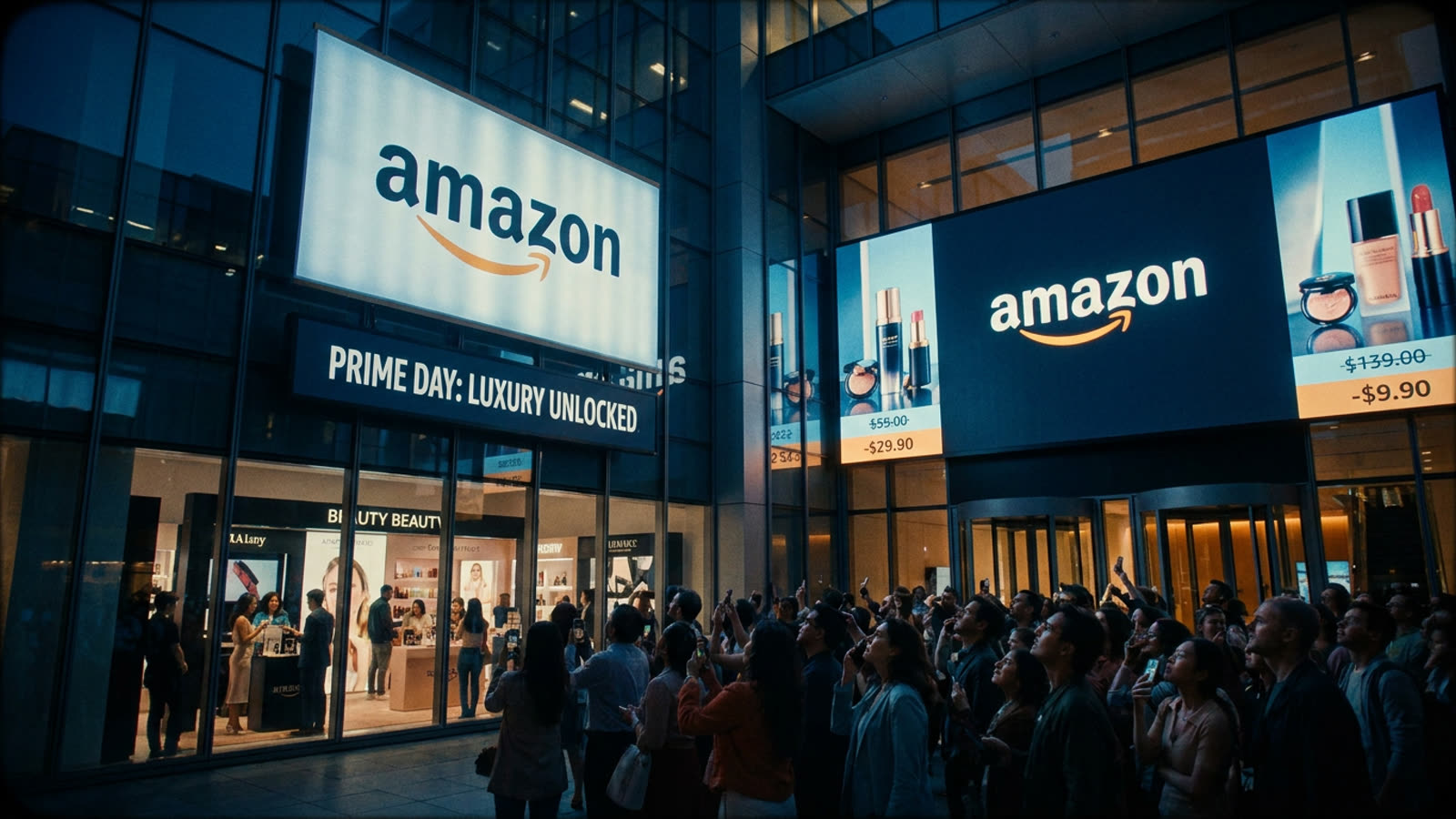
The annual ritual of Prime Day beauty deals has evolved from a simple shopping event into a fascinating cultural barometer, exposing the increasingly awkward dance between luxury positioning and mass-market distribution that defines contemporary skincare.
This week, as Amazon rolls out its signature summer sale, the beauty segment has emerged as the event's most psychologically complex category. Brands that spend eleven months cultivating an aura of exclusivity—through minimalist packaging, clinical language, and strategic scarcity—suddenly find themselves jostling for attention alongside toilet paper and phone chargers. The cognitive dissonance is the point.
The prestige paradox
What makes Prime Day's beauty segment particularly revealing is how it exposes the fiction at the heart of contemporary skincare marketing. Products positioned as quasi-medical interventions, sold through the language of dermatological science and ingredient percentages, are suddenly available at the same discounts as commodity goods. The serum that costs what it costs because of "proprietary delivery systems" turns out to have the same margin flexibility as a kitchen appliance.
The brands navigating this most successfully are those that have abandoned the pretense entirely. They participate openly, treating the discount as a customer acquisition cost rather than a brand dilution risk. The ones struggling are legacy prestige names still clinging to department store positioning while their products sit in Amazon warehouses.
The influencer arbitrage
Prime Day has also created a peculiar micro-economy in the beauty content space. Creators who spend most of the year reviewing products at full price pivot to affiliate-link aggregation, essentially becoming discount brokers for their audiences. The economics are straightforward: a 3% commission on a surge of discounted purchases often exceeds what they earn from brand partnerships during normal periods.
This has produced an interesting inversion where the most commercially successful beauty content of the year is also the least creative—simple lists of deals, updated in real-time, optimised for search rather than engagement.
Our take
Prime Day beauty deals are less about skincare than about the slow collapse of traditional luxury positioning in an age of radical price transparency. When every product's manufacturing cost is a Reddit search away, and when the same item appears on Amazon, Sephora, and the brand's own site at three different prices, the mystique that once justified premium pricing becomes increasingly difficult to maintain. The brands that will thrive are those that stop pretending discounts are exceptional and start building business models that account for them.