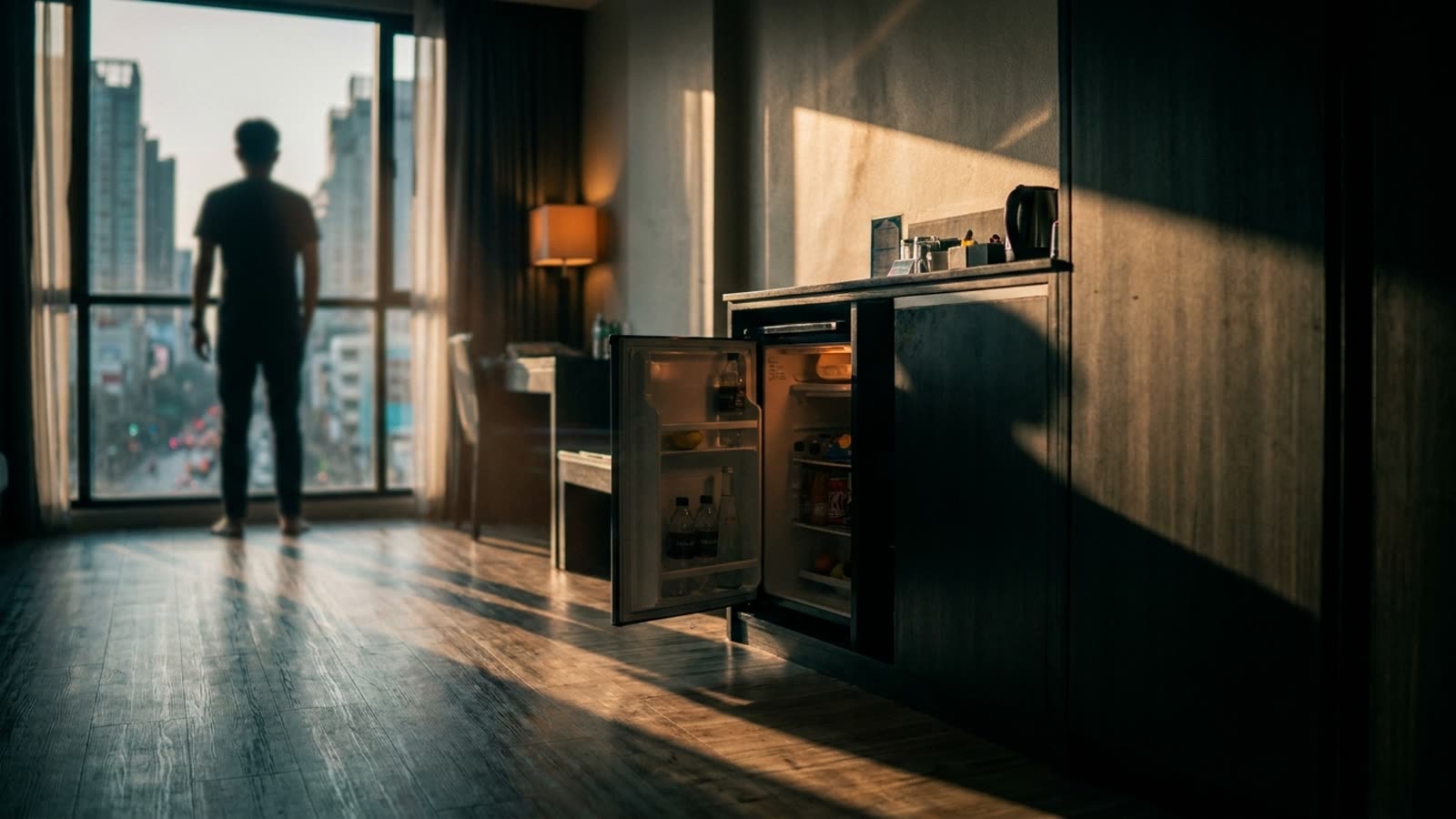
The minibar was never about convenience. It was about theater — the illusion that a tiny refrigerator stocked with Toblerone and split bottles of champagne represented the good life. For decades, hotels charged extravagant markups on items guests could buy for a fraction of the price in the lobby shop, banking on a combination of captive-audience economics and the vague embarrassment of asking for a receipt. Now, after years of declining revenue and guest complaints, the minibar is finally being shown the door.
The economics never made sense
Hotel industry analysts have long noted that minibars generate surprisingly little profit relative to the operational headaches they create. Staff must inventory each room daily, restock items that have been moved but not consumed, and manage billing disputes from guests who insist they never touched the macadamia nuts. The sensor-based systems introduced in the early 2000s — designed to automatically charge guests the moment an item was lifted — created more problems than they solved, triggering erroneous charges and generating ill will. Many properties found that the labor costs of maintaining minibars approached or exceeded the revenue they produced.
Luxury pivots to generosity
The more interesting shift is philosophical. High-end hotels have discovered that removing the minibar and replacing it with complimentary offerings actually enhances the guest experience and encourages spending elsewhere. Properties from Tokyo to London now stock rooms with free soft drinks, premium snacks, and curated local products — treats that feel like gifts rather than traps. The psychology is simple: guests who feel welcomed rather than nickel-and-dimed spend more freely at the hotel bar, restaurant, and spa. The minibar's disappearance reflects a broader hospitality reckoning with the false economy of petty charges.
What replaces the tiny fridge
Some hotels have converted minibar space into coffee stations with proper espresso machines. Others offer empty refrigerators for guests to stock themselves, acknowledging that travelers often arrive with their own provisions. A growing number provide curated "raid the pantry" experiences — communal snack stations where guests can take what they like without charge. The shift mirrors changes in airline premium cabins, where complimentary champagne and meals have replaced the à la carte menus that briefly proliferated in business class.
Our take
The minibar deserved its death. It represented the worst instincts of hospitality — the assumption that a captive customer is a customer to be exploited. Its replacement with genuine generosity, or at least honest pricing, marks a small but meaningful victory for travelers who always knew that $9 for a can of Pringles was an insult dressed up as room service. The tiny fridge will not be missed.