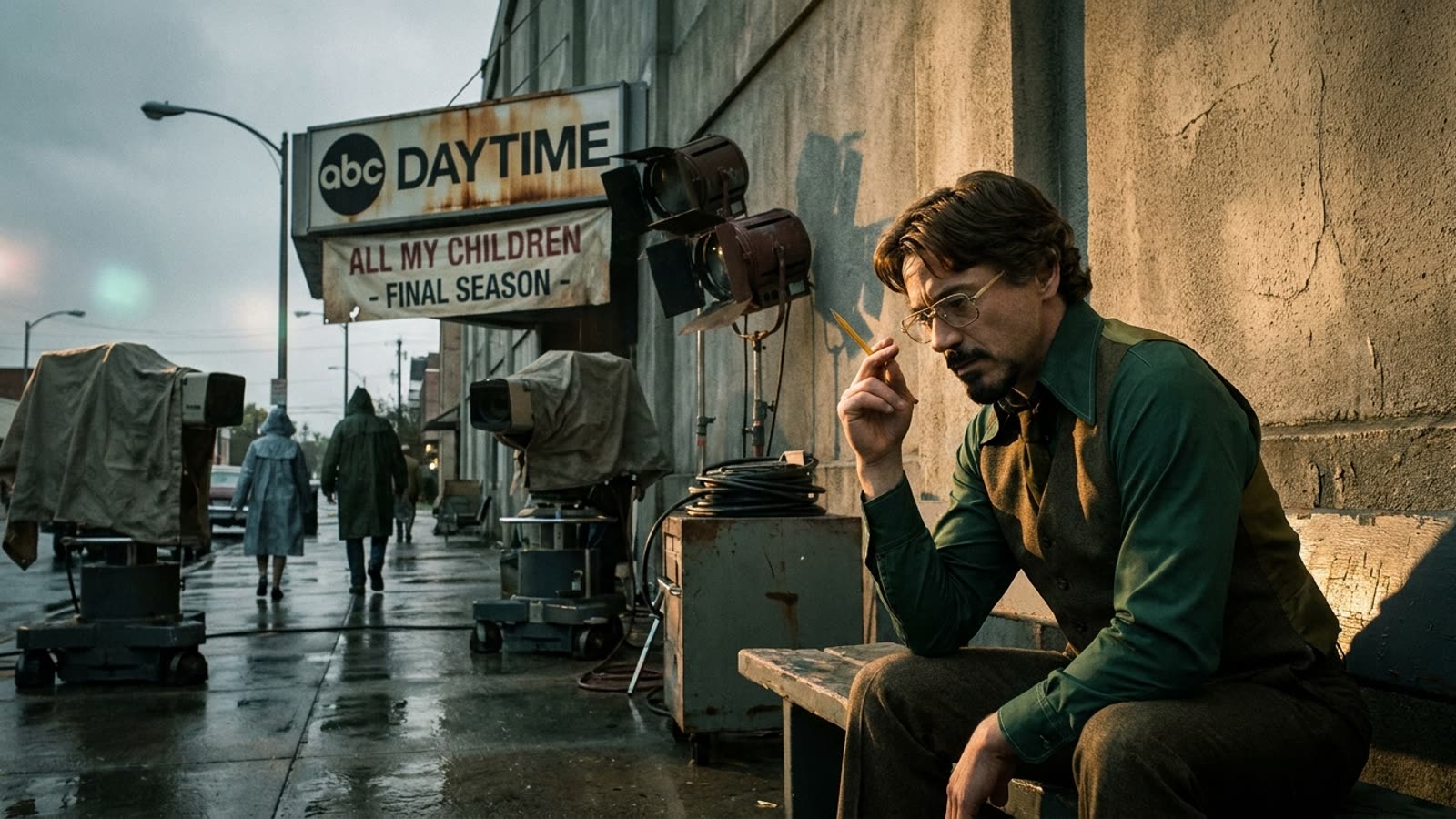
The death of Paul Avery, the veteran actor best known for his work on ABC's All My Children, prompts a familiar ritual: tributes from co-stars, clips circulating on social media, fans of a certain age remembering where they were when his character did whatever it was that made them gasp. But Avery's passing also serves as an occasion to note that the entire world he inhabited—the daytime soap opera—has become something closer to hospice care than entertainment industry.
All My Children itself went off the air in 2011, one of several beloved soaps that networks quietly euthanized as ratings collapsed and advertisers fled to cheaper programming. The show that launched Susan Lucci's forty-one Emmy nominations and gave early screen time to everyone from Sarah Michelle Gellar to Amanda Seyfried simply stopped existing, replaced by a talk show nobody remembers.
The arithmetic of decline
At their peak in the 1980s, American networks aired more than a dozen daytime dramas. Today, precisely four remain: General Hospital, The Bold and the Beautiful, The Young and the Restless, and Days of Our Lives, the last of which was exiled to Peacock streaming in 2022. The combined audience for all four would have been a cancellation-worthy number for a single soap in 1990.
The genre's collapse was overdetermined. Women entered the workforce in numbers that made afternoon television viewing a luxury. DVRs eliminated the appointment-viewing urgency that soaps depended on. Younger audiences discovered that reality television offered the same emotional manipulation with less commitment. The advertising model that sustained hour-long daily dramas—cheap to produce, sold to detergent companies targeting housewives—became an anachronism.
What the soaps built
Yet the form's influence persists in ways its critics never anticipated. The serialized storytelling that now dominates prestige television owes an unacknowledged debt to Pine Valley and Genoa City. The cliffhanger, the slow-burn romance, the villain redemption arc, the shocking return from the dead—these were soap innovations, refined over decades of five-episodes-a-week production schedules that would destroy a modern writers' room.
Avery belonged to a generation of actors who built entire careers within this ecosystem, appearing in hundreds of episodes, known intimately by millions of viewers who would never recognize them on the street. It was a strange kind of fame: enormous within its niche, invisible outside it.
Our take
Paul Avery's death is sad in the ordinary way that any death is sad. But it also marks another small subtraction from a cultural form that American television has largely abandoned. The soaps taught a generation of women—and more men than would admit it—how serialized storytelling worked. That lesson got absorbed into the prestige-TV boom, the streaming wars, the binge-watch era. The teachers, meanwhile, have mostly been forgotten, their shows canceled, their casts dispersed into guest spots and Hallmark movies. Avery deserves his tributes. So does the genre that made him.