When a mixed martial artist prepares for a bout by sparring at the J. Edgar Hoover Building, we have officially exhausted the irony reserves of American public life.
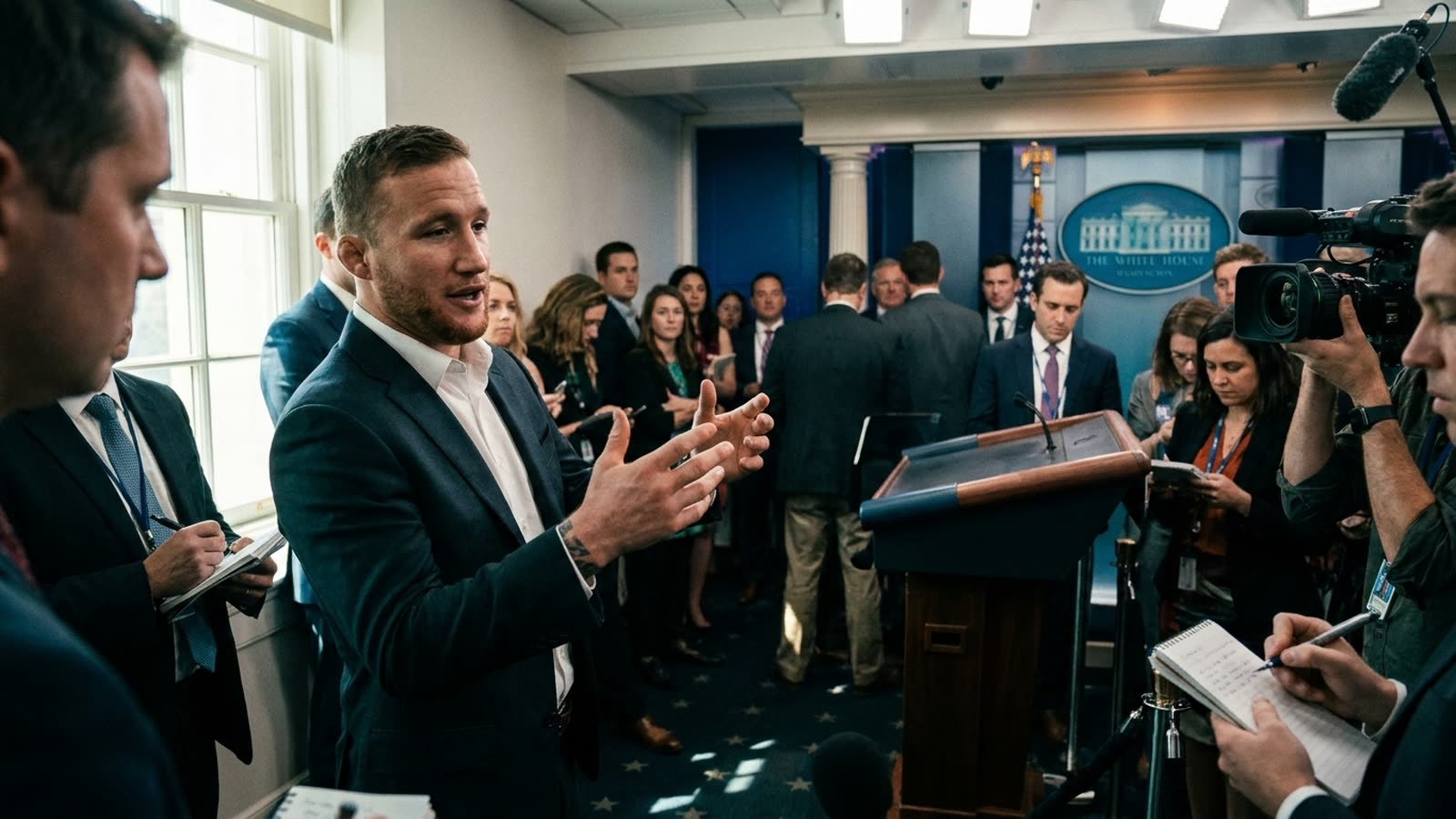
Justin Gaethje, the UFC lightweight known for his granite chin and willingness to absorb punishment that would hospitalize most humans, has been training at FBI headquarters ahead of what is being billed as a "White House fight" — a phrase that would have read as satire in any previous decade. The details remain characteristically murky, but the symbolism is crystalline: combat sports, federal power, and executive branch entertainment have collapsed into a single, undifferentiated mass of content.
The venue is the message
Gaethje, 37, has built his career on a fighting style that prioritizes violence over strategy — he throws leg kicks that sound like baseball bats hitting sides of beef and has never met a firefight he wouldn't wade into. That the FBI would open its doors to such a figure suggests either an aggressive public relations pivot or a fundamental misunderstanding of what mixed martial arts training actually involves. Federal agents, one imagines, do not typically volunteer to be taken down and submitted by professional fighters.
The White House fight itself represents the logical endpoint of a trend that began when Donald Trump hosted UFC events at his casinos in the 1990s. Combat sports have always flirted with political power — Muhammad Ali and Nixon, Mike Tyson and Don King's Republican connections — but previous generations at least maintained the pretense of separation between the arena and the state. Now the arena is the state.
The fighter as political prop
Gaethje makes for an interesting choice of protagonist. Unlike Colby Covington, who has built an entire persona around MAGA enthusiasm, Gaethje has kept his politics relatively private. He is a throwback fighter, more interested in discussing leg kick technique than culture war positioning. His presence at FBI headquarters suggests he is either being cultivated as a more palatable face of the administration's combat sports enthusiasm or simply accepted an invitation without considering the optics.
The UFC, for its part, has spent years positioning itself as the unofficial sport of a certain strain of American conservatism. Dana White spoke at the Republican National Convention. Fighters regularly appear at political rallies. The promotion's audience skews male, young, and politically engaged in ways that make it valuable real estate for anyone seeking to project toughness.
Our take
There is something almost admirable about the shamelessness of it all. Previous administrations would have staged a state dinner or a Rose Garden ceremony; this one is hosting cage fights and training camps at law enforcement facilities. The symbolism — controlled violence, federal imprimatur, executive branch spectacle — is so on-the-nose that it circles back around to a kind of honesty. If American politics is entertainment and entertainment is combat, why not make the subtext text? Gaethje, at least, will show up and throw hands. That is more than most political performers can claim.