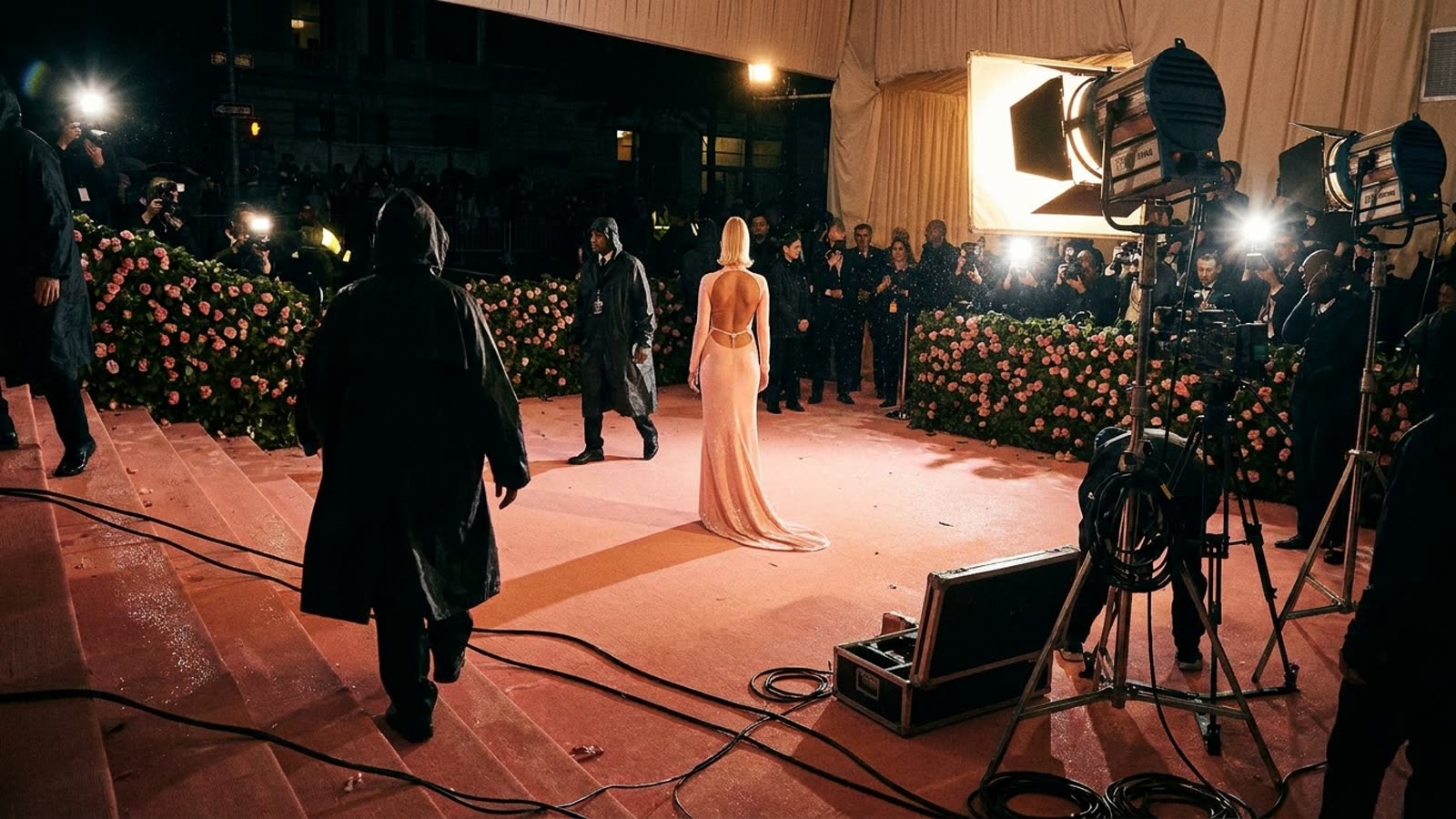
The whale tail—that unmistakable arc of thong strap cresting above low-slung waistbands—has completed its journey from tabloid punchline to runway staple in under eighteen months, and the speed of its rehabilitation tells us more about fashion's memory than any trend report could.
What Paris Hilton and Britney Spears wore with abandon in 2003, what Anna Wintour's Vogue spent the 2010s pretending never happened, is now appearing on celebrities with the careful deliberation of a styling choice rather than a wardrobe malfunction. The difference is intent, and intent changes everything.
The mechanics of revival
Fashion's twenty-year cycle is well documented, but the whale tail's return required more than mere temporal distance. It needed a generation of consumers who experienced the look only through archival images—filtered through the gauzy nostalgia of early-internet aesthetics—rather than through the body-shaming tabloid coverage that accompanied it originally.
Brands from Miu Miu to Skims have quietly lowered rises over the past two seasons, creating the architecture for the look without explicitly naming it. The thong itself has been rehabilitated by the shapewear revolution: what was once coded as purely sexual is now understood as functional, the invisible line beneath everything from cycling shorts to slip dresses.
The body politics question
Critics argue the whale tail's return represents a regression—another impossible standard dressed up as liberation. The original era coincided with size-zero aspirations and tabloid circles drawn around celebrity midsections. Can the same silhouette mean something different when the cultural context has shifted?
Proponents point to the diversity of bodies now wearing the look, and to the agency involved in choosing visibility over concealment. The whale tail of 2026 is less about catching someone unaware and more about announcing one's comfort with a particular aesthetic vocabulary.
Our take
Fashion has always been a negotiation between provocation and acceptance, and the whale tail's rehabilitation is simply the latest chapter. What makes this iteration interesting is not the exposed elastic itself but the confidence with which it is being worn—a confidence that suggests the shame industrial complex of early-2000s celebrity coverage may have finally, mercifully, lost its grip. Whether the look persists beyond a few seasons matters less than what its return reveals: we are no longer embarrassed by the recent past, which means we might finally be ready to learn from it.