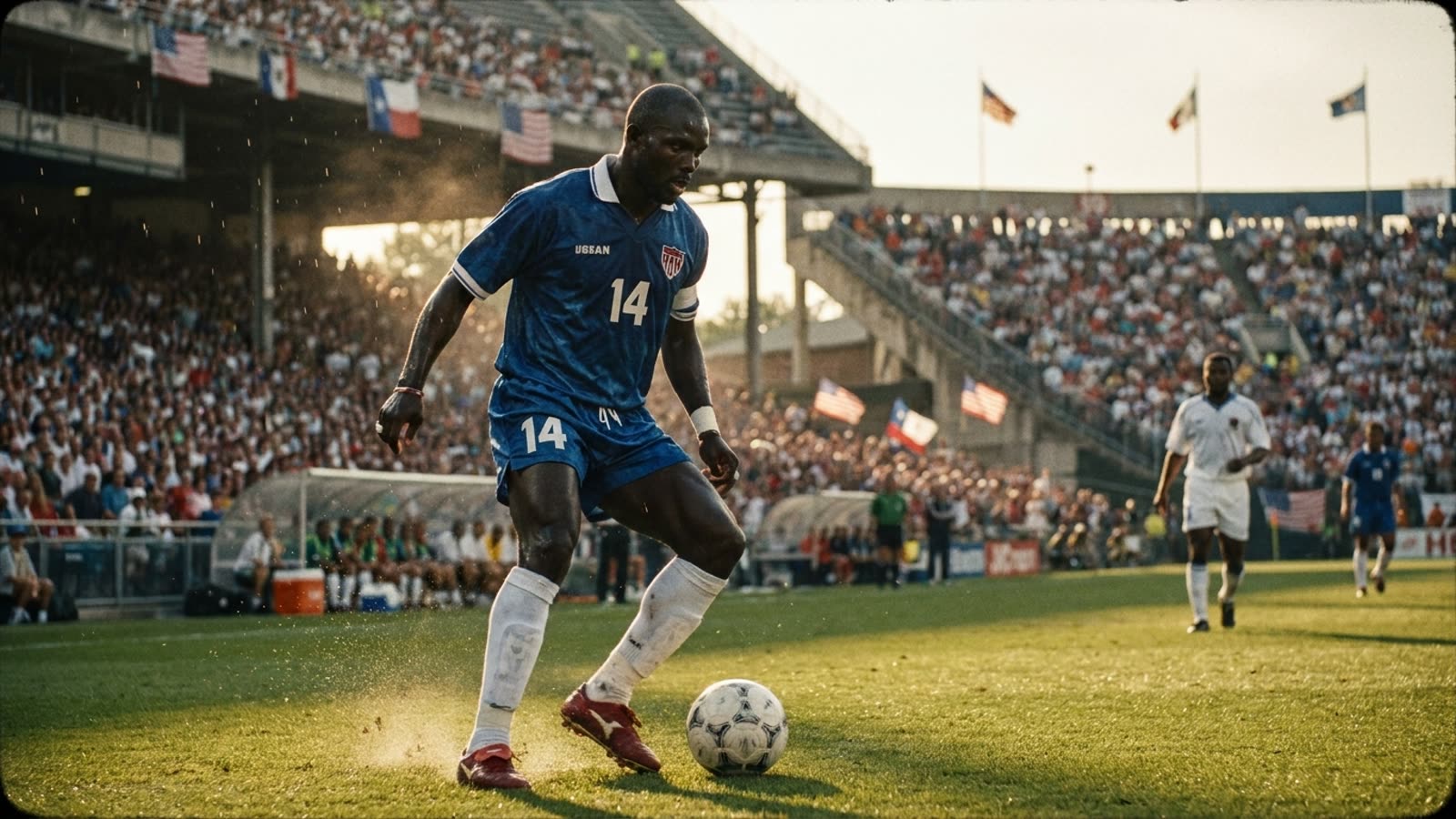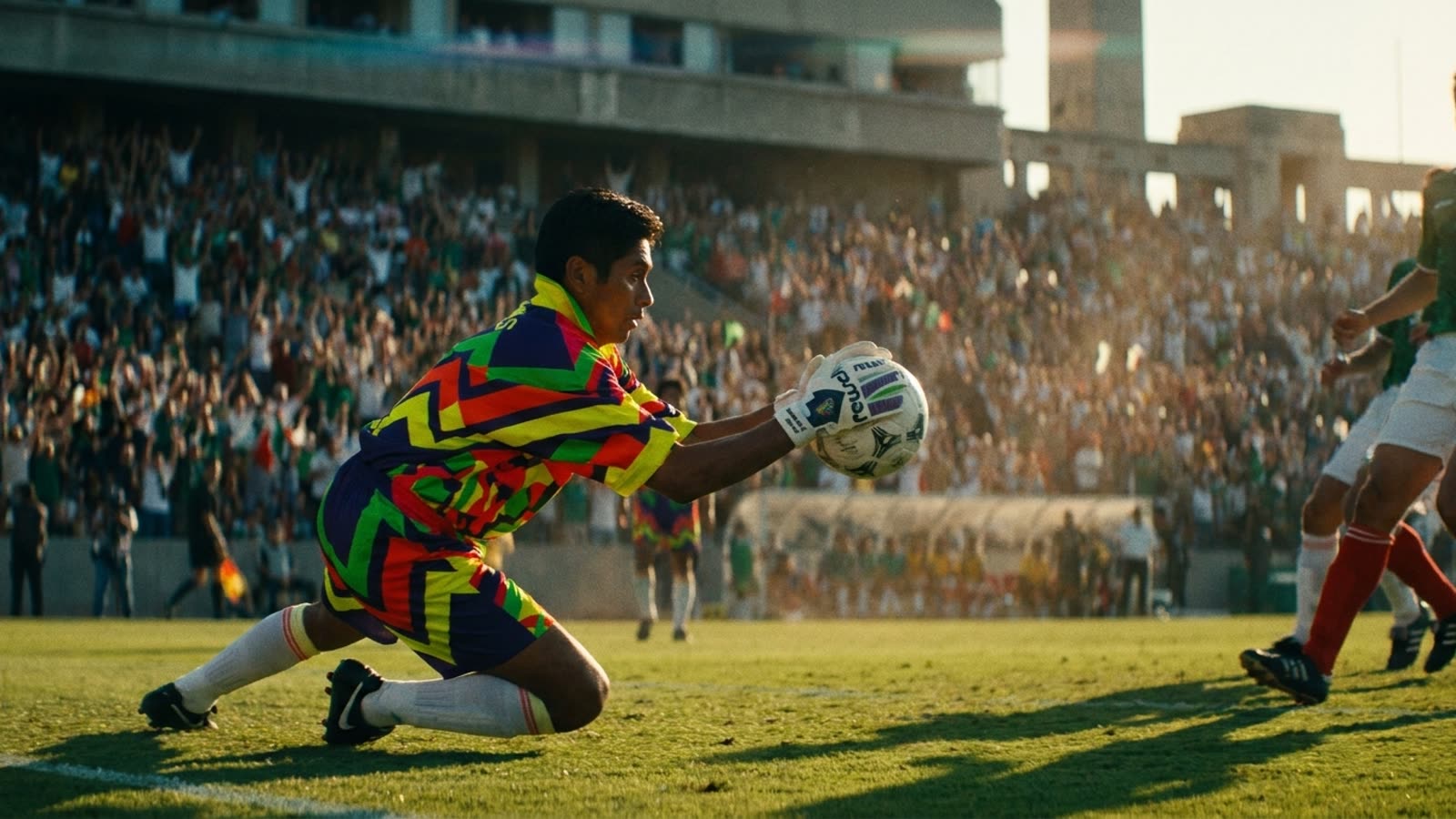
At five-foot-six, Jorge Campos had no business being a professional goalkeeper. He knew it, his coaches knew it, and every striker who lined up against him in the 1990s knew it too. What they discovered, often too late, was that Campos had reimagined the position from first principles, compensating for his lack of reach with anticipation so uncanny it looked like clairvoyance.
But what everyone remembers first are the shirts. Those eye-searing explosions of pink, green, orange, and yellow that Campos designed himself, turning the goalkeeper's traditional black into a canvas for what can only be described as athletic psychedelia. In an era when footballers dressed like accountants, Campos dressed like a rave.
The method behind the madness
The flamboyant kits were not mere vanity. Campos understood something about visual perception that sports science would later confirm: bright, complex patterns make it harder for strikers to pick out the edges of a goalkeeper's body, complicating split-second decisions about where to place the ball. He was essentially running an optical illusion at the goal line.
More substantively, Campos pioneered the sweeper-keeper role that would later become standard at elite clubs. His lack of height forced him to play aggressively off his line, intercepting through balls and acting as an auxiliary defender. He read the game like a midfielder because, in fact, he often was one—Campos regularly played as a forward for his club teams, occasionally switching positions mid-match. He scored more than thirty goals in his career, an absurd figure for someone whose primary job was preventing them.
Mexico's beloved contradiction
For Mexican football, Campos represented something beyond tactics. His three World Cup appearances made him the face of El Tri during a period when the national team was establishing itself as a consistent qualifier but perpetual underachiever on the global stage. Campos brought joy to that frustration. Even when Mexico exited in the round of sixteen, as they did with metronomic regularity, there was Campos in his homemade neon, diving at impossible angles, occasionally sprinting upfield to join attacks.
His influence on Mexican sporting culture extended beyond football. The kits became collector's items. His willingness to be simultaneously excellent and eccentric gave permission to a generation of athletes to express personality in a sporting culture that often prized conformity.
Our take
Modern football has absorbed Campos's tactical innovations while forgetting his aesthetic ones. Every top club now demands a goalkeeper comfortable with the ball at his feet, capable of initiating attacks and sweeping behind a high defensive line. Manuel Neuer, Ederson, and Alisson are his spiritual descendants, even if they would never admit it. But they all dress like they are attending a funeral. Campos understood that sport is entertainment, and entertainment benefits from spectacle. The game is poorer for forgetting that lesson.