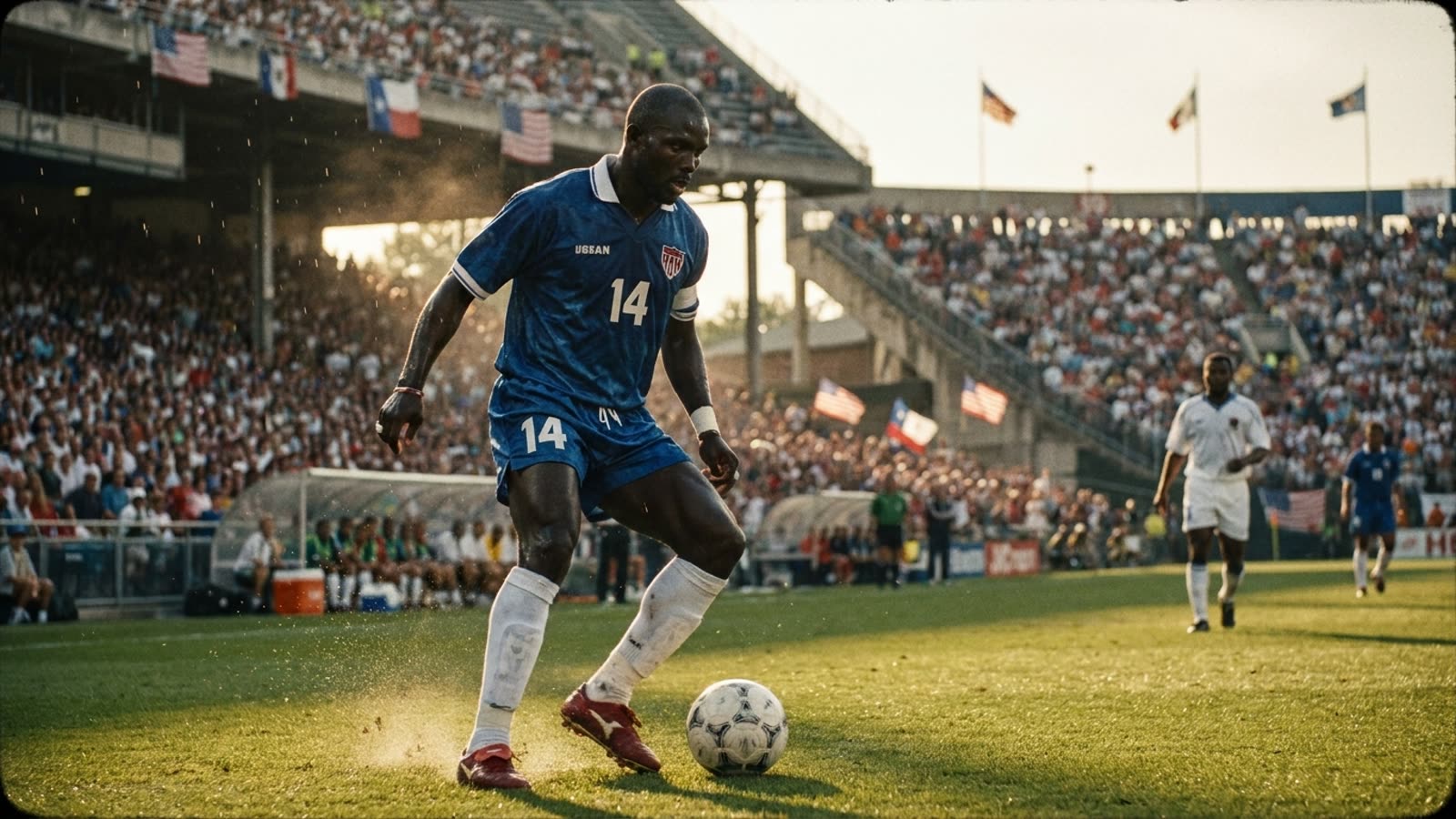
The 1995 Ballon d'Or ceremony was, in retrospect, a minor earthquake disguised as an awards show. George Weah of Liberia—a country with no professional league, no football academy system, and a population smaller than most European cities—had beaten the continent's finest to claim the prize. No African-born player had done it before. None has done it since.
Weah's victory was not a fluke of a weak year. He had just led AC Milan to a Serie A title, scoring goals that combined the power of a center forward with the grace of a winger. He finished ahead of Jürgen Klinsmann and Jari Litmanen in the voting. But the trophy itself mattered less than what it symbolized: that the infrastructure of European football development was not, in fact, the only path to the summit.
The road from Monrovia
Weah grew up in Clara Town, a slum in Liberia's capital where football was played on dirt and concrete. There was no youth academy, no coaching pathway, no scouts from European clubs prowling the touchlines. He played for local clubs, then moved to Cameroon, then to France with Monaco and Paris Saint-Germain, before reaching Milan at twenty-eight. By the standards of modern player development, he started a decade late and took the scenic route.
What he possessed was something that cannot be coached: an understanding of space that seemed almost precognitive, combined with physical attributes that made him nearly impossible to contain. At his peak, Weah could collect the ball in his own half and simply run through entire defenses, not because he was faster than everyone—though he was fast—but because he knew where the gaps would open before they existed.
The absence that defined him
Liberia never qualified for a World Cup during Weah's career. He dragged them close, often funding the national team's travel and expenses from his own pocket, but the mathematics of African qualification and the chaos of his homeland's civil war made it impossible. He won the Ballon d'Or without ever appearing on football's biggest stage.
This absence has become central to how Weah is remembered—as a what-if, a player whose greatness was somehow incomplete. But this framing misunderstands what he achieved. Weah proved that individual brilliance could emerge from anywhere, that the sport's hierarchies were more fragile than they appeared. Every African teenager who dreams of European football is, in some sense, dreaming in the language Weah invented.
Our take
Football has become more professionalized since 1995, more systematized, more predictable in where its stars emerge. The academies of Western Europe and South America produce talent with industrial efficiency. But Weah's Ballon d'Or remains a rebuke to the idea that greatness requires the right passport or the right postcode. He was the best player in the world because he was the best player in the world—and the sport's infrastructure had nothing to do with it.