The United Nations Security Council has been called ineffective, outdated, and morally bankrupt, often by people who fundamentally misunderstand its purpose. The veto power held by its five permanent members—the United States, Russia, China, France, and the United Kingdom—is not a flaw in an otherwise functional system. It is the system, the original price of admission that made the UN possible at all.
The architects of the post-World War II order learned a brutal lesson from the League of Nations: an international body that major powers can ignore is worse than no body at all. The League had no mechanism to compel compliance from great powers, and when Japan, Italy, and Germany simply walked away from it, the institution collapsed into irrelevance. The men drafting the UN Charter at Dumbarton Oaks in 1944 were determined not to repeat that mistake. Their solution was elegant in its cynicism: give the most powerful nations a permanent stake in the institution by guaranteeing they could never be overruled.
The mathematics of legitimacy
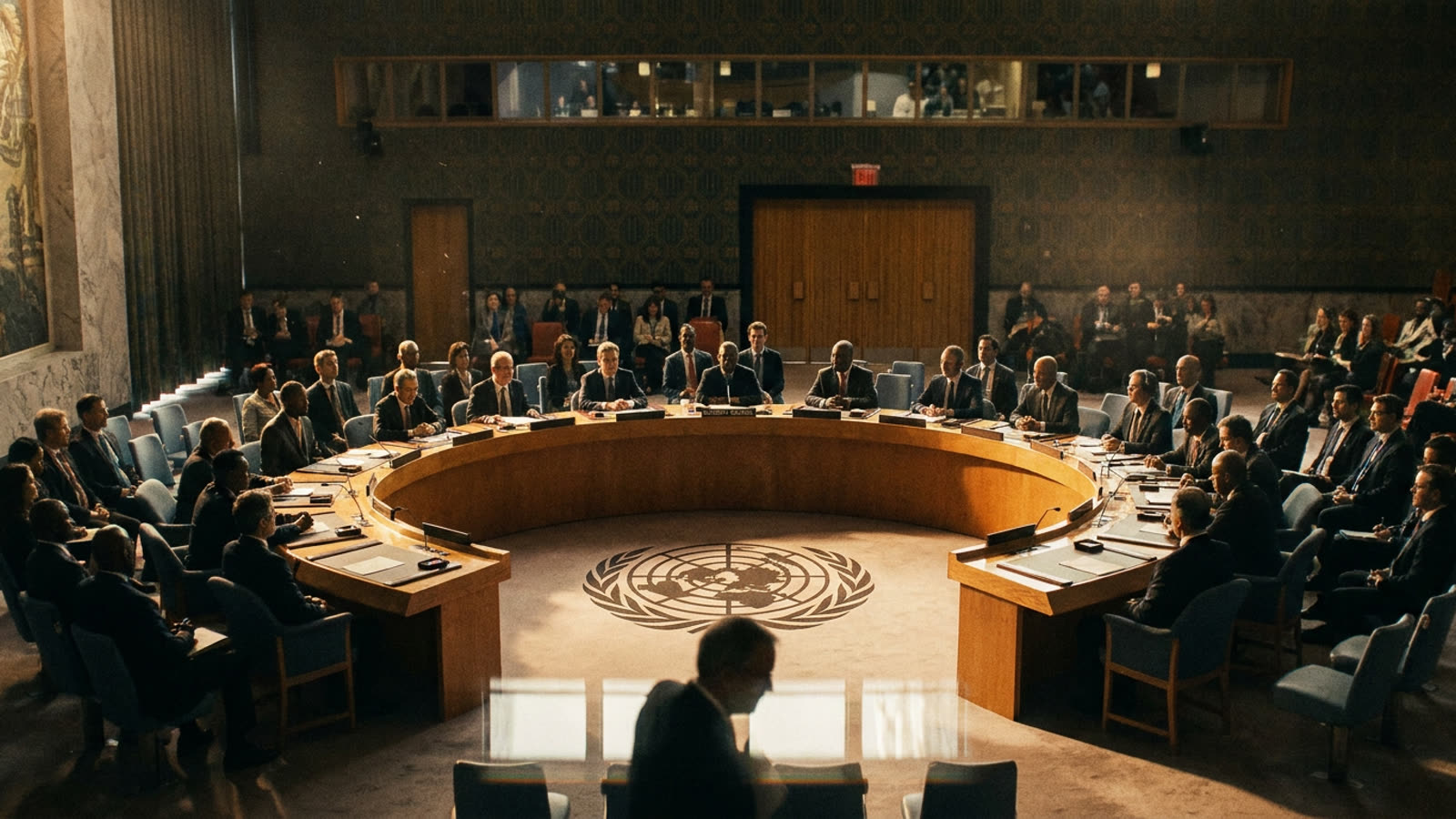
The Security Council's fifteen members include ten rotating seats elected by the General Assembly, but real authority rests with the permanent five. Any substantive resolution requires nine affirmative votes and the absence of a veto from any P5 member. This means a single country representing a small fraction of the world's population can block action supported by the overwhelming majority of nations. Critics call this undemocratic, which it manifestly is. But the UN was never designed to be a democracy of nations—it was designed to prevent great-power war.
The veto has been exercised hundreds of times since 1946. The Soviet Union used it prolifically during the Cold War, blocking dozens of resolutions in its first decade alone. The United States has deployed it most frequently to shield Israel from censure. Russia and China have combined to block action on Syria repeatedly. Each use generates outrage, but each use also confirms the system is working as intended: no P5 member has ever been forced to choose between accepting an adverse UN resolution and abandoning the institution entirely.
The reform that cannot happen
Proposals to reform the Security Council are perennial and futile. Expanding permanent membership to include Germany, Japan, India, or Brazil would require amending the UN Charter, which itself requires ratification by all five current permanent members. No P5 nation has any incentive to dilute its own power. Abolishing the veto would require the same impossible consensus. The structure is self-reinforcing: the very nations who could change it are the ones who benefit most from keeping it unchanged.
This does not mean the Security Council accomplishes nothing. Peacekeeping operations, sanctions regimes, and international tribunals have all emerged from its resolutions. When P5 interests align—or at least do not actively conflict—the Council can act with remarkable speed and authority. The problem is that the most urgent crises often occur precisely where great-power interests diverge.
Our take
The Security Council is not broken; it is working exactly as designed for a world that no longer exists. The 1945 settlement froze power relations at a moment when Europe lay in ruins and most of Africa and Asia remained under colonial rule. That five nations—three of them European—should hold permanent authority over international security in 2026 is historically absurd. But absurdity is not the same as dysfunction. The veto keeps nuclear-armed rivals inside the tent, preferring paralysis to exit. Whether that bargain remains worth making is the question the UN's founders never had to answer, and the one their successors keep deferring.