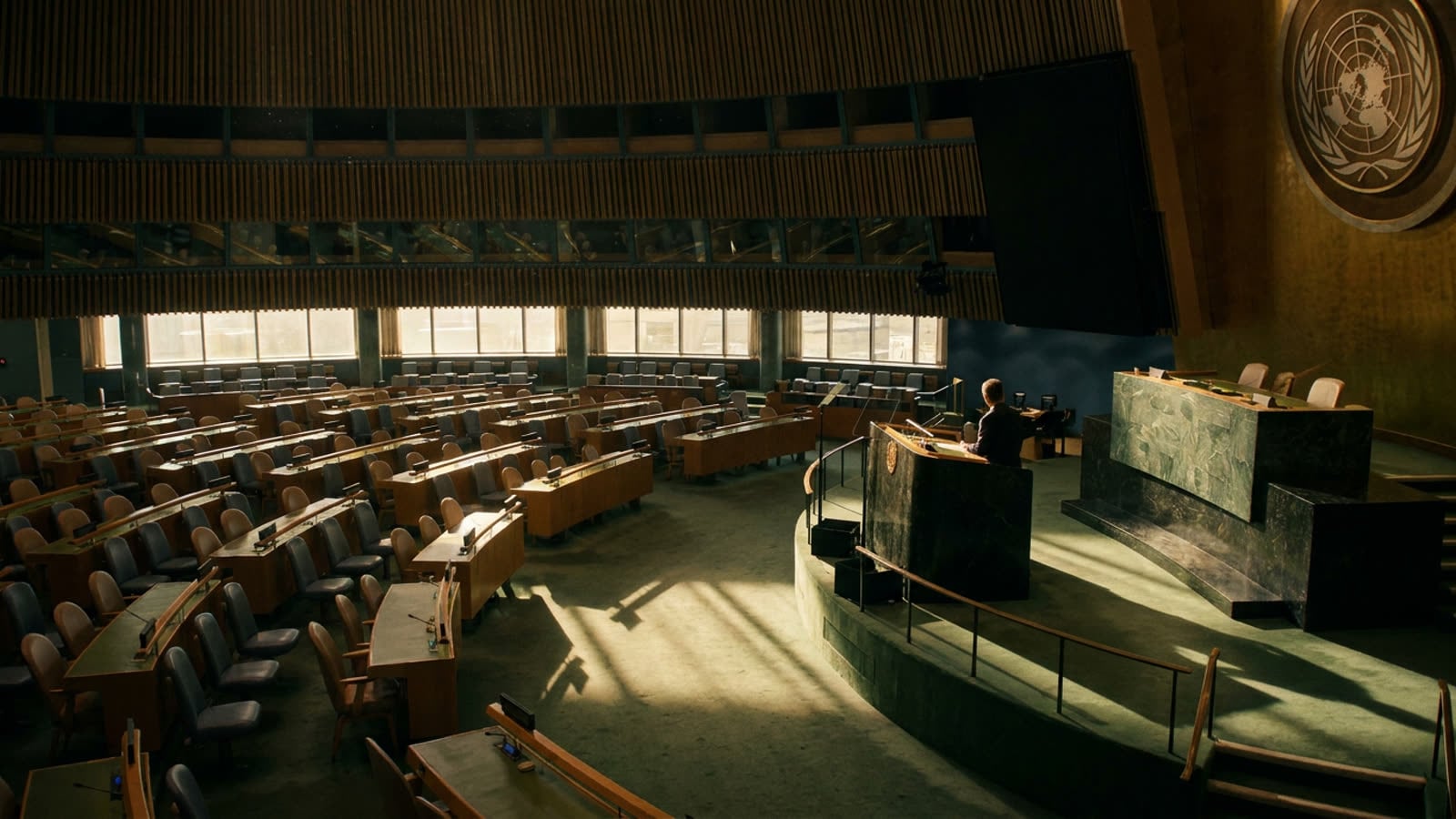
The veto is the most despised feature of international governance, and that is precisely the point.
When critics denounce the United Nations Security Council as paralyzed, captured, or morally bankrupt, they are usually pointing at the same culprit: the power of five nations—the United States, Russia, China, France, and the United Kingdom—to kill any substantive resolution with a single negative vote. No override exists. No appeal is possible. One raised hand from a permanent member, and the matter dies.
This looks like an architectural flaw. It is actually the architecture itself.
The founding bargain
The UN Charter was drafted in 1945 by statesmen who remembered the League of Nations, which had collapsed partly because major powers walked away when they disliked its decisions. The architects at San Francisco faced a choice: create an organization with real enforcement power that the great powers would refuse to join, or create one with a built-in escape valve that kept them inside the tent. They chose the latter.
The veto was never meant to produce justice. It was meant to prevent World War III. By guaranteeing that no binding Security Council action could proceed against the core interests of a nuclear-armed state, the system ensured that great-power confrontation would happen in conference rooms rather than on battlefields. The logic is coldly transactional: better a paralyzed council than a council that triggers catastrophic war by demanding compliance from a state that will never comply.
How the veto actually operates
Procedurally, the mechanism is straightforward. Any of the five permanent members can block a draft resolution on non-procedural matters. Abstention does not count as a veto; only an explicit negative vote does. This distinction matters: permanent members sometimes abstain to signal displeasure without killing a resolution outright, preserving diplomatic flexibility.
The veto's real power, however, operates before any vote occurs. Most vetoes are never cast because they do not need to be. Draft resolutions are negotiated extensively in advance, and sponsors routinely water down or withdraw texts when a permanent member signals opposition. The threat of the veto shapes outcomes invisibly, which is why counting formal vetoes understates the mechanism's influence by an enormous margin.
Why reform never arrives
Proposals to abolish or limit the veto surface regularly, particularly after humanitarian catastrophes where council deadlock prevented intervention. None have succeeded, for a simple reason: amending the UN Charter requires ratification by two-thirds of member states, including all five permanent members. Asking veto-holders to vote away their own veto is asking them to diminish their power voluntarily—a request that has never, in the history of international relations, been granted.
Alternative workarounds exist. The General Assembly can pass non-binding resolutions under the "Uniting for Peace" procedure when the Security Council is deadlocked, though these carry moral weight rather than legal force. Regional organizations sometimes act without council authorization, as NATO did in Kosovo in 1999, though this sets uncomfortable precedents. None of these mechanisms replaces the council's unique authority to mandate binding action.
Our take
The veto is indefensible if you believe the Security Council should function as a global legislature dispensing impartial justice. It becomes comprehensible if you accept that the council was designed as a great-power management forum first and a humanitarian body second. The founders were not naive idealists; they were survivors of two world wars who prioritized preventing the third over achieving perfect equity. Whether that bargain remains acceptable in an era of mass atrocity documentation and real-time global witness is a legitimate question. But reformers should understand what they are asking: not to fix a broken system, but to replace its foundational logic entirely. That is a revolution, not a repair, and revolutions require power that reform coalitions have never assembled.