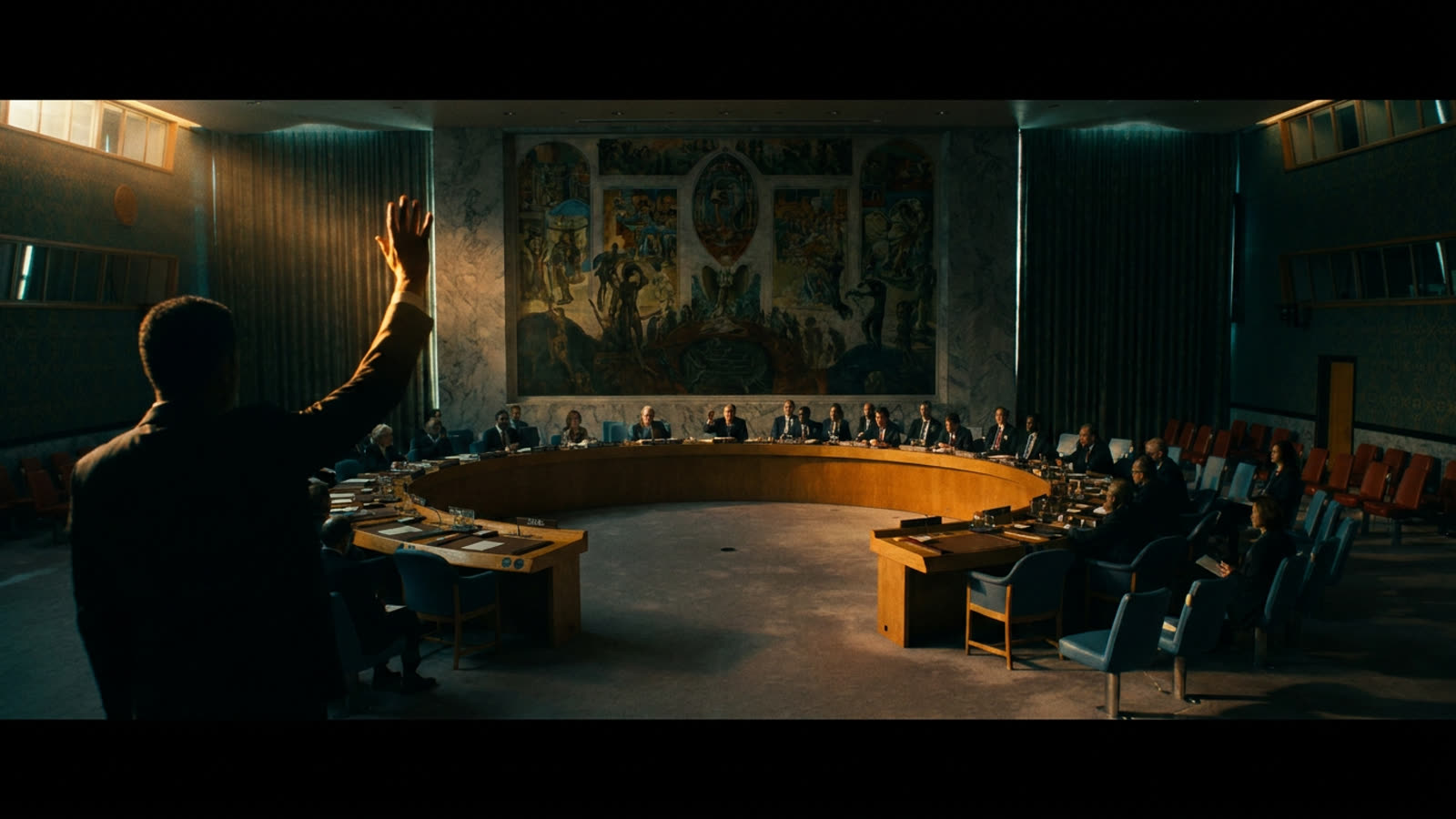
The United Nations Security Council has failed to act on virtually every major conflict of the past three decades, from Rwanda to Syria to the current wars reshaping Europe and the Middle East. Critics call this dysfunction. They are wrong. The Council is functioning exactly as its architects intended—as a mechanism to prevent great-power war, not to stop smaller ones.
The veto power held by the five permanent members—the United States, Russia, China, France, and the United Kingdom—is routinely described as an anachronism, a relic of the post-World War II order that prevents the international community from responding to atrocities. This framing misunderstands the institution's purpose entirely. The Security Council was never designed to be a global police force. It was designed to be a forum where the world's most dangerous states could talk instead of fight.
The logic of institutionalized paralysis
The League of Nations collapsed because it lacked enforcement power and because major powers abandoned it when collective action conflicted with national interest. The UN's founders, meeting in San Francisco in 1945, understood that any successor organization would face the same problem. Their solution was elegant and cynical: give the most powerful states a permanent stake in the system by guaranteeing they could never be overruled.
The veto ensures that the Security Council can never authorize action against the vital interests of a permanent member. This is not a flaw to be corrected; it is the foundational bargain that keeps nuclear-armed states inside the institution rather than outside it. When Russia vetoes resolutions on Ukraine, it is exercising precisely the power it was promised in exchange for participating in the UN system at all.
The mathematics of reform
Proposals to abolish or limit the veto founder on a simple problem: any change to the UN Charter requires ratification by all five permanent members. Asking Russia or China to voluntarily surrender their veto is asking them to accept a system where they could be legally targeted by international force. No rational actor would agree. France has proposed that permanent members voluntarily refrain from using the veto in cases of mass atrocity, but voluntary restraint is not structural reform, and the proposal has gained no traction with the members most likely to use the veto.
Expanding permanent membership—adding India, Brazil, Germany, Japan, or African representation—faces similar obstacles. Current permanent members have little incentive to dilute their exclusive status, and regional rivalries (Pakistan opposing India, Argentina opposing Brazil, Italy opposing Germany) create blocking coalitions against any specific candidate.
What the Council actually accomplishes
The Security Council's real function is not passing resolutions but providing a permanent channel for great-power communication during crises. Even when vetoes block action, the debates themselves serve diplomatic purposes: signaling intentions, testing alliances, and creating records that shape future negotiations. The Council authorized the Korean War intervention only because the Soviet Union was boycotting sessions at the time—a mistake Moscow never repeated. That single absence demonstrated the veto's value more clearly than any textbook.
Peacekeeping operations, sanctions regimes, and international tribunals all require Security Council authorization, and these have proliferated even as headline-grabbing vetoes dominate coverage. The Council approves what the permanent members collectively tolerate, which is more than nothing but less than justice.
Our take
The permanent members designed a system that serves their interests, and they have no intention of redesigning it. Calls to abolish the veto are not serious policy proposals; they are expressions of frustration dressed as reform. The Security Council will remain paralyzed on any issue where great-power interests diverge, because paralysis was the price of keeping great powers at the table. Anyone who wants the UN to function differently must first answer a harder question: would a system that could overrule nuclear-armed states be more stable, or less?