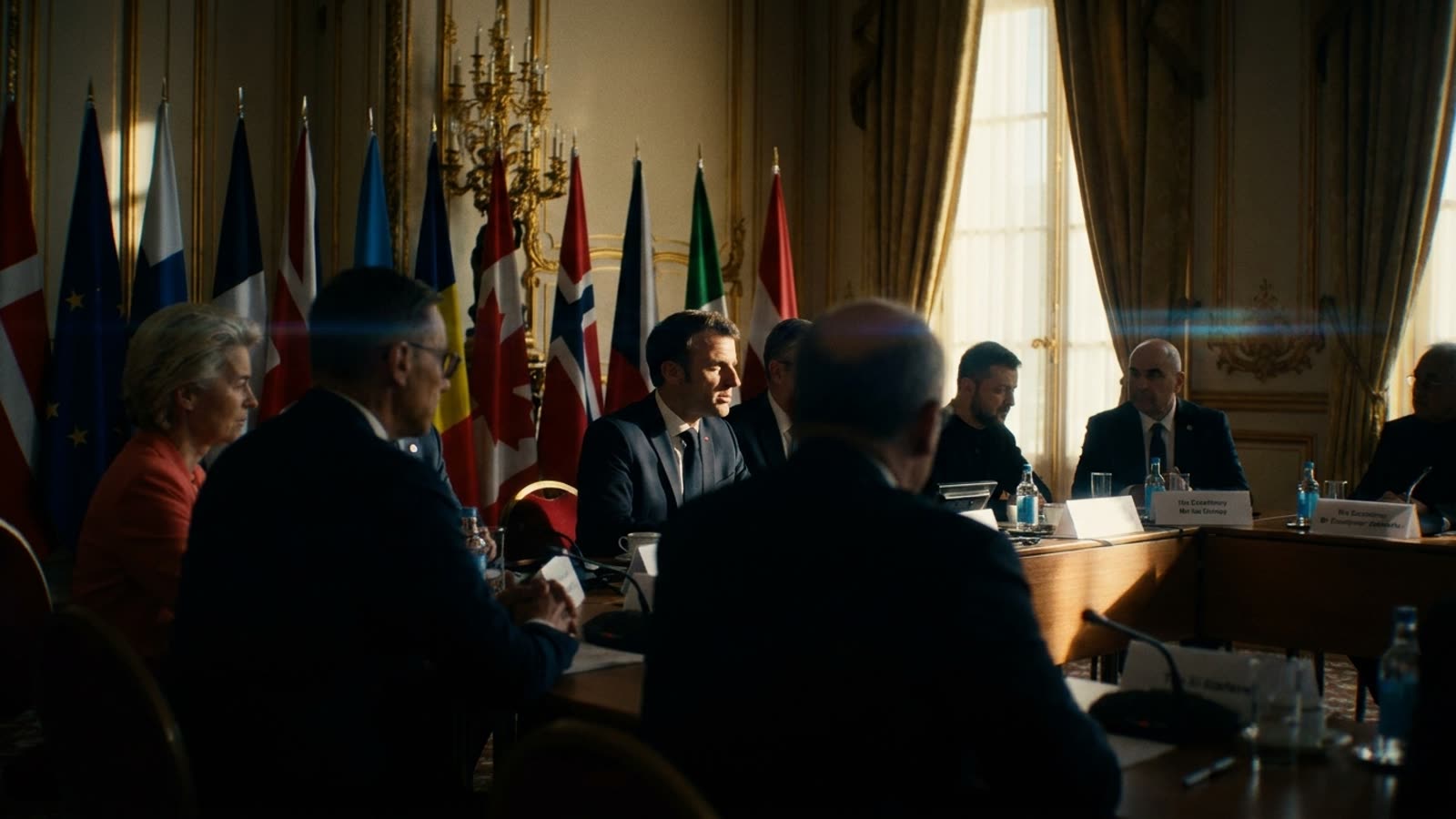
For more than two years, Europe has oscillated between cheerleader and bystander in the Ukraine conflict, supplying weapons and rhetoric while Washington and, intermittently, Beijing shaped the diplomatic calendar. That posture is now officially over. A joint statement from Paris, Berlin, and Warsaw on Saturday announced a formal invitation to both Kyiv and Moscow for "structured ceasefire consultations" in a neutral European venue, with the three governments offering themselves as guarantors of any preliminary agreement.
The timing is not accidental. With the White House consumed by domestic spectacle and the Middle East aflame, European capitals sense both a vacuum and an opportunity.
Why this moment matters
The initiative arrives as the frontlines in eastern Ukraine have barely moved in eighteen months. Neither side possesses the combat power to achieve a decisive breakthrough; both are bleeding manpower and treasure at rates their publics increasingly question. Polling in Germany and France shows war fatigue climbing even among voters who supported early intervention. In Kyiv, President Zelensky faces a summer of difficult conscription decisions. In Moscow, the Kremlin has signaled, through back-channels reported by European intelligence services, a willingness to discuss "security arrangements" short of full Ukrainian capitulation—language that would have been unthinkable in 2023.
Europe's gambit is to convert exhaustion into negotiation before the autumn, when energy prices and election cycles could harden positions on all sides.
The obstacles remain formidable
Russia has historically dismissed European mediation as a proxy for NATO, and there is no indication the Kremlin will treat this offer differently. Ukraine, meanwhile, has insisted it will not negotiate from a position of territorial loss, a red line that any realistic ceasefire would test. Poland's inclusion in the troika is strategically clever—Warsaw's hawkish credentials give the effort credibility in Kyiv—but also complicates messaging to Moscow, which views Poland as among its most hostile neighbors.
Then there is the American factor. The Biden and now second Trump administrations have both publicly endorsed European leadership on the file while privately preferring to keep the levers in Washington. A successful European-brokered deal would represent a significant realignment of transatlantic influence, something not every faction in the State Department welcomes.
Our take
Europe deserves credit for finally acting like a principal rather than a spectator. Whether the initiative succeeds is almost beside the point at this stage; the signal matters. A continent that spent decades outsourcing its security to Washington is asserting, haltingly, that it can shape outcomes on its own doorstep. The odds remain long, the pitfalls obvious, and the cynics plentiful. But diplomacy, unlike war, costs relatively little to attempt. If Paris, Berlin, and Warsaw can keep both belligerents at a table through the summer, they will have earned something rarer than a treaty: relevance.