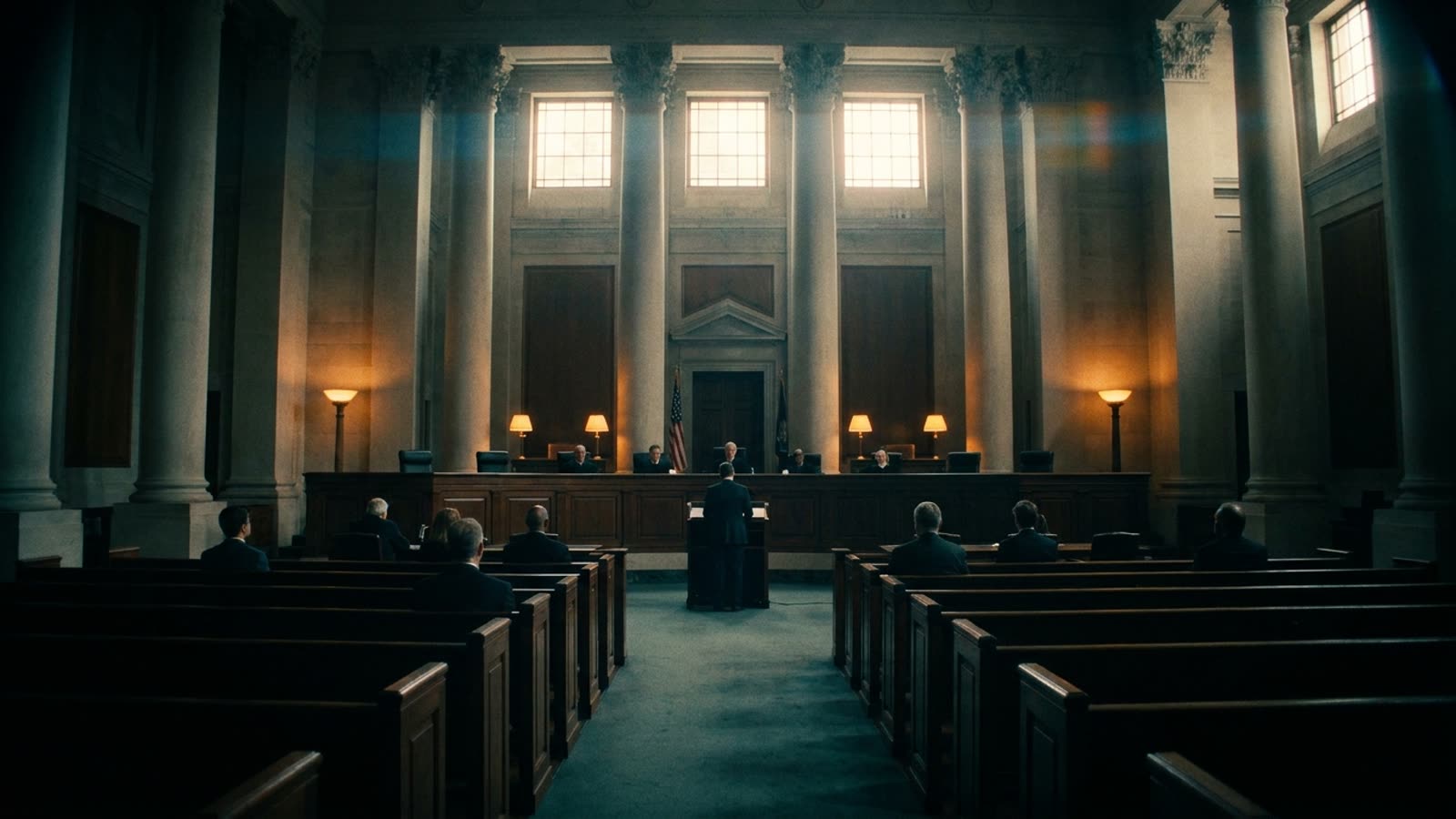
The popular image of Supreme Court deliberation involves robed sages weighing constitutional text against precedent, arriving at conclusions through dispassionate legal reasoning. The reality is messier, more political, and considerably more interesting. The Court functions as a nine-member legislature that writes its own rules, sets its own agenda, and faces no electoral accountability whatsoever.
This is not a criticism but a description. Recognizing the Court's essentially legislative character clarifies why its decisions so often track ideological lines and why confirmation battles have become existential political warfare.
The certiorari game
Before any case receives the Court's attention, it must survive the certiorari process—and this is where the justices exercise their most consequential power. Of the roughly seven thousand petitions filed each term, the Court accepts fewer than eighty. The Rule of Four governs: if four justices vote to hear a case, it proceeds. This means a minority of the Court controls the docket.
The strategic implications are profound. Justices can decline cases where they fear losing, accept cases where they sense an opportunity to shift doctrine, or time their grants to coincide with favorable Court compositions. None of this appears in written opinions. The certiorari vote is secret, unreviewable, and requires no explanation.
Conference and the assignment power
After oral argument, the justices meet in complete privacy. No clerks, no recordings, no leaks—a remarkable feat in contemporary Washington. The Chief Justice speaks first and votes last, framing the discussion. If in the majority, the Chief assigns who writes the opinion. If not, the senior associate justice in the majority assigns.
This assignment power shapes law as much as the votes themselves. A narrowly written opinion assigned to a moderate justice produces different doctrine than a sweeping one assigned to an ideological pole. Chiefs have historically used assignments to build coalitions, reward allies, and marginalize rivals. The written opinion emerges from negotiation, not revelation.
The clerk economy
Each justice employs four law clerks, typically recent graduates from elite schools who served on prestigious appellate clerkships. These thirty-six young lawyers draft most first opinions, research most memoranda, and filter most certiorari petitions. Their influence varies by chambers—some justices edit heavily, others delegate substantially—but the clerk economy ensures that Supreme Court jurisprudence reflects the sensibilities of a remarkably narrow educational pipeline.
The clerkship-to-partnership trajectory also creates a feedback loop. Former clerks populate major law firms and the academy, arguing future cases and training future clerks. The institution reproduces its assumptions across generations.
Our take
None of this delegitimizes the Court, but it should demystify it. The justices are political actors operating within legal constraints, not oracles channeling constitutional truth. Their power derives from institutional prestige and the voluntary compliance of coordinate branches—both more fragile than the marble facade suggests. Citizens who understand the Court as a peculiar legislature will make better sense of its outputs than those who imagine philosopher-kings in robes.