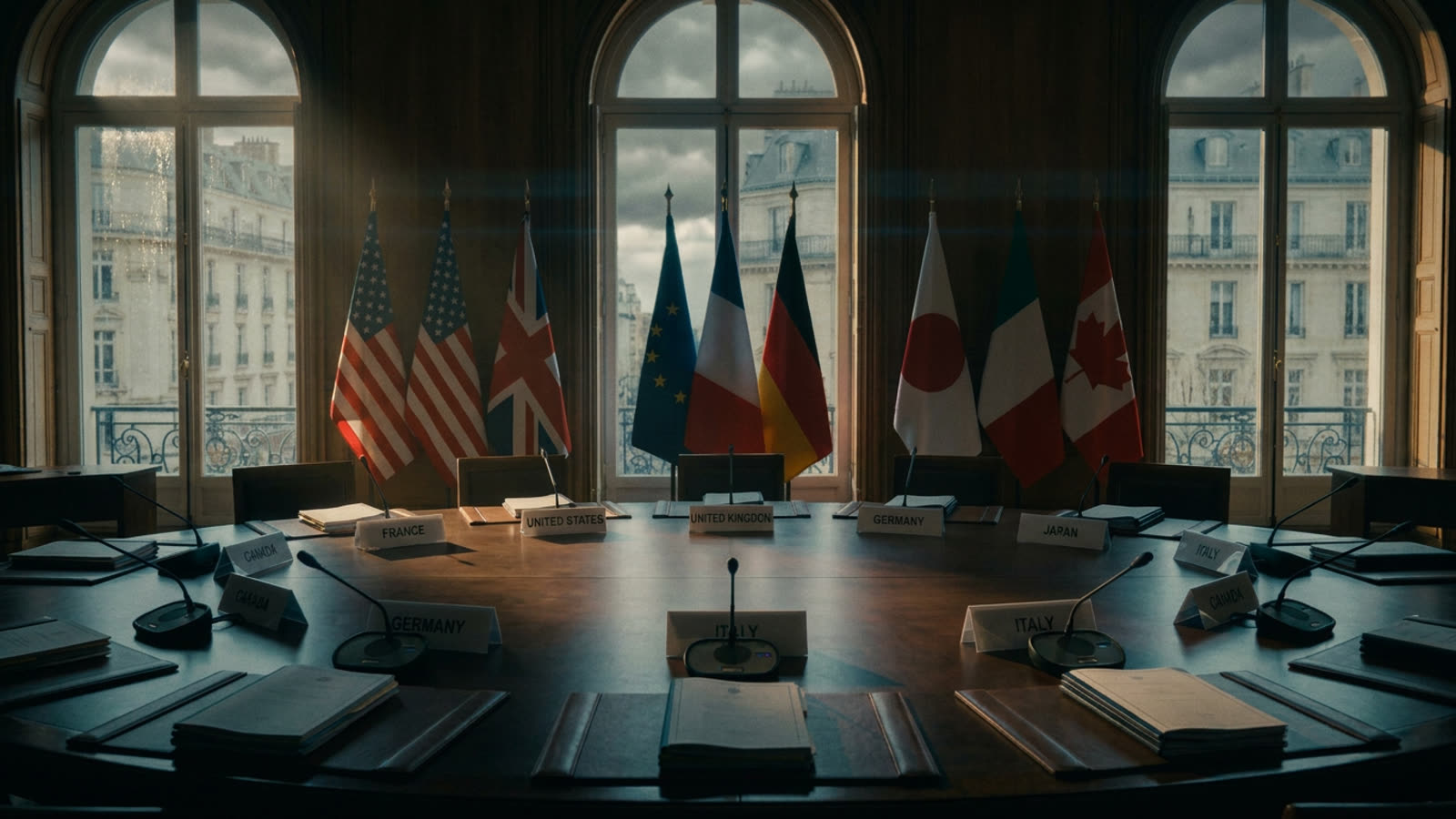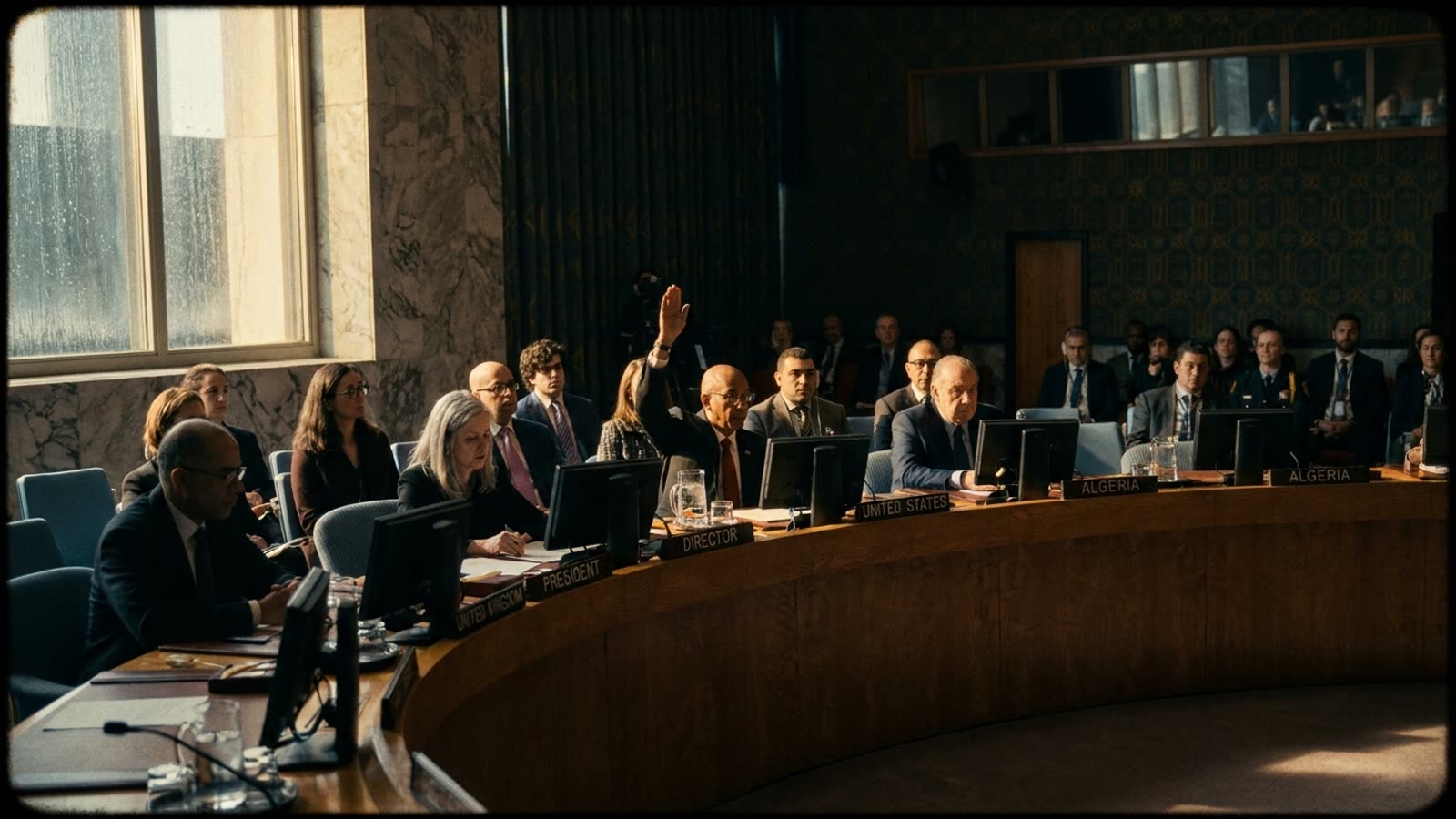
The United Nations Security Council meets in a chamber designed to evoke collective resolve, yet its most consequential moments are acts of solitary negation. A single raised hand from China, France, Russia, the United Kingdom, or the United States can nullify months of diplomacy, override the preferences of the other fourteen members, and consign a draft resolution to oblivion. The veto is routinely denounced as an anachronism, a relic of great-power arrogance incompatible with modern norms. This critique is correct on the merits and utterly irrelevant to the veto's survival. The power exists not despite its unfairness but because of it.
The bargain that built the system
The architects of the UN Charter understood something their critics often forget: the organization's predecessor, the League of Nations, collapsed not from excessive great-power privilege but from insufficient buy-in by the states capable of waging major war. The League required unanimity for substantive decisions, which sounds egalitarian until you recall that the United States never joined, the Soviet Union was expelled, and Germany, Italy, and Japan simply walked out when resolutions displeased them. By 1939 the League was a talking shop presiding over a world at war.
At Dumbarton Oaks and San Francisco in 1944-45, Franklin Roosevelt, Winston Churchill, and Joseph Stalin agreed on a different architecture. The Security Council would have enforcement teeth—the authority to mandate sanctions, authorize force, and bind all member states—but only if the major powers retained an escape hatch. The veto was that hatch. It guaranteed that no resolution could compel a permanent member to act against its core interests, which in turn guaranteed that the permanent members would stay inside the tent rather than tear it down.
How the veto actually operates
Procedurally, the veto applies only to "substantive" matters, not procedural ones, though the distinction is itself subject to dispute. A permanent member need not explain its vote; the word "no" suffices. In practice, the mere threat of a veto shapes outcomes long before any formal vote. Draft resolutions are negotiated, diluted, or abandoned in private consultations once a P5 member signals opposition. The visible vetoes—roughly three hundred since 1945—represent only the fraction of cases where sponsors pressed ahead despite certain defeat, usually to make a political point.
Russia and its Soviet predecessor have cast the most vetoes, often on Middle Eastern and Eastern European matters. The United States has used its veto overwhelmingly to shield Israel from censure. China historically abstained rather than vetoed, preserving its image as a developing-world champion, though its veto activity has increased in recent years on issues touching sovereignty and human rights. France and the UK veto rarely, partly because their interests often align with Washington's and partly because their post-imperial influence depends on multilateral legitimacy.
Why reform is a mirage
Proposals to abolish or constrain the veto surface after every humanitarian catastrophe the Council fails to prevent. Some suggest expanding the P5 to include regional powers like India, Brazil, or Germany—though existing members are unenthusiastic about diluting their privilege. Others advocate a code of conduct under which P5 members would voluntarily refrain from vetoing resolutions addressing mass atrocities, a norm France has championed without binding effect. The fundamental obstacle is Article 108 of the Charter: any amendment requires ratification by all five permanent members. Asking a great power to vote away its own insurance policy is asking it to trust that future geopolitical rivals will show reciprocal restraint. No serious strategist in Beijing, Moscow, or Washington believes that.
Our take
The veto is indefensible in principle and indispensable in practice. It offends democratic sensibilities, privileges historical victors, and regularly permits atrocities to proceed unchecked. Yet the alternative—a Security Council that could mandate action against a nuclear-armed permanent member—would either be ignored, triggering institutional collapse, or obeyed, triggering great-power war. The veto is not a bug in the system; it is the load-bearing wall. Critics who demand its removal should first explain what structure they propose to erect in the rubble.