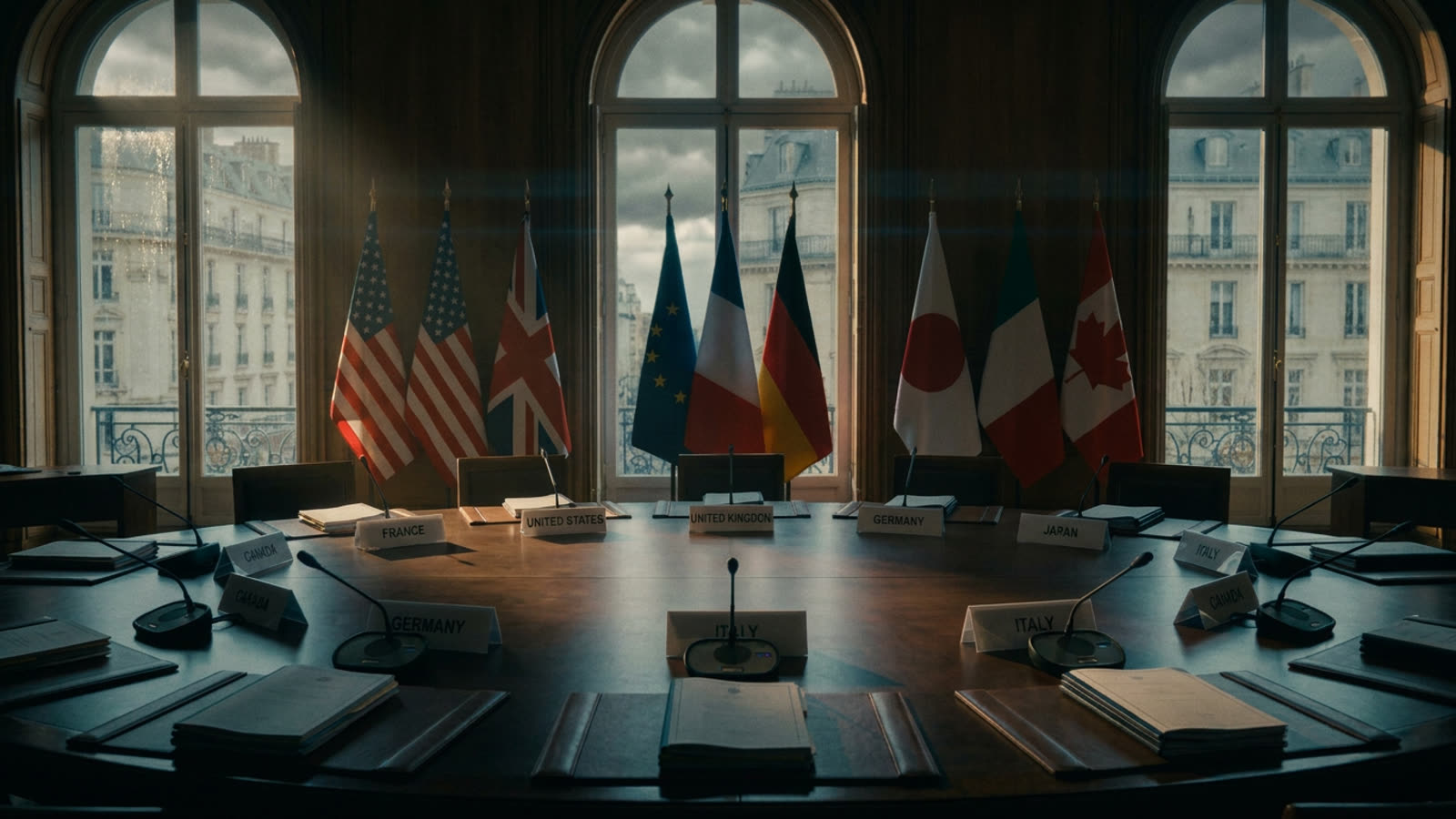
The Group of Seven summit opening in Biarritz this weekend was supposed to be a victory lap. President Trump, fresh off announcing a nuclear deal with Iran that has sent oil prices tumbling and global markets soaring, arrives in France with genuine diplomatic capital for the first time in his second term. Instead, the gathering has become an exercise in collective anxiety, as America's closest allies brace for what comes next: a renewed tariff offensive that could fracture the Western economic order just as it celebrates a rare moment of geopolitical success.
The timing is exquisite in its awkwardness. Trump's Iran breakthrough — the Strait of Hormuz reopening Friday, sanctions relief in exchange for nuclear concessions — represents exactly the kind of dealmaking the G7 was designed to coordinate. Yet the same president who delivered this win has spent recent weeks threatening 25 percent tariffs on European automobiles and hinting at new levies on Japanese electronics. The allies have noticed.
The two-track Trump problem
French President Emmanuel Macron, hosting his second G7 with Trump in attendance, has adopted a strategy of aggressive hospitality: lavish dinners, bilateral meetings, public praise for the Iran achievement. Behind the scenes, European officials describe something closer to triage. The working assumption in Paris, Berlin, and Brussels is that Trump views the Iran deal not as the foundation for renewed transatlantic cooperation but as proof that maximum pressure works — and that the same approach should be applied to trade.
This reading is not paranoid. Trump's own advisers have drawn explicit parallels between the Iran negotiations and trade talks with the EU, arguing that the president's willingness to absorb short-term pain (in Iran's case, elevated oil prices and regional instability) ultimately forced adversaries to the table. The implication for European automakers and Japanese semiconductor firms is not subtle.
Japan's quiet pivot
Prime Minister Ishiba Shigeru arrives in Biarritz with perhaps the most delicate brief. Japan has been a reliable American ally on Iran, supporting sanctions and providing diplomatic cover. Tokyo expected reciprocity. Instead, Japanese officials have watched Trump's trade team float tariffs on Japanese cars and electronics while simultaneously demanding greater Japanese defense spending. The cognitive dissonance is producing a subtle but significant shift: Japanese diplomats are now actively exploring deeper trade ties with the EU, accelerating talks that had languished for years.
This is the paradox of the Trump G7. American hard power remains indispensable — no Iran deal happens without it — but American economic policy has become something allies must hedge against rather than coordinate with. The result is a Western alliance that functions on security matters while fragmenting on economics.
Our take
Trump genuinely deserves credit for the Iran breakthrough, which may prove the most consequential diplomatic achievement of his presidency. But the man who just demonstrated that patient, pressure-based negotiation can yield results seems constitutionally incapable of applying the same patience to allies. The G7 this weekend will produce warm communiqués and handshake photos. It will also produce, in quieter rooms, the architecture of a post-American trade order that European and Asian leaders hope they never need to activate — but are no longer willing to leave unbuilt.