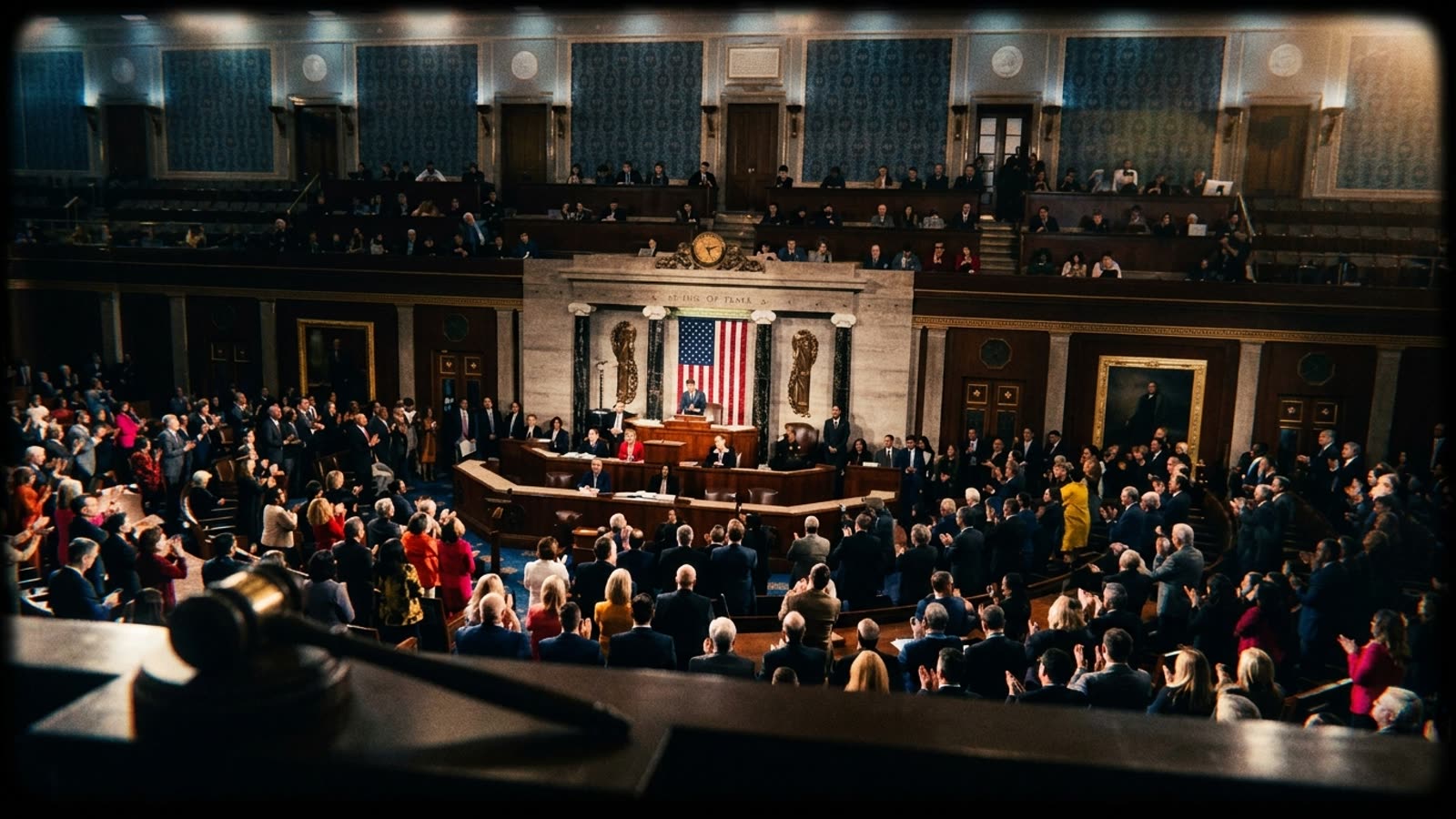
The Speaker of the United States House of Representatives is simultaneously the most visible and least understood figure in American government. Presidents get biographies; Speakers get footnotes. Yet the person holding that gavel exercises a form of power that, in certain respects, exceeds that of the Oval Office — the unilateral ability to determine what the nation's legislature will and will not consider.
This is not hyperbole. A president can propose legislation but cannot force a vote. A Speaker can kill a bill by simply refusing to schedule it, a procedural veto that requires no explanation, no override mechanism, and generates almost no public outcry. The technical term is "negative agenda control," and it is the Speaker's superpower.
The mechanics of legislative life and death
The Speaker's formal powers are deceptively modest on paper: presiding over debate, recognizing members to speak, maintaining order. The real authority flows from informal prerogatives accumulated over two centuries. The Speaker determines which bills reach the floor through control of the Rules Committee, a body that sets the terms of debate for every piece of legislation. Unlike other committees, the Rules Committee operates as an arm of leadership, its majority members handpicked by the Speaker.
This means a Speaker can not only block legislation but dictate how surviving bills are debated — whether amendments are permitted, how long discussion lasts, and what procedural traps await opponents. A "closed rule" prohibits amendments entirely. A "structured rule" permits only leadership-approved changes. These arcane designations determine whether legislation passes in its intended form or gets carved up on the floor.
The Speaker also controls the House's physical and human infrastructure: office assignments, parking spaces, committee slots, campaign funds. These sound trivial until you're a freshman representative assigned to a basement closet with no committee assignment of consequence. Loyalty is rewarded; defiance is remembered.
The Hastert Rule and the tyranny of the majority's majority
Perhaps no informal norm better illustrates the Speaker's peculiar power than the so-called Hastert Rule, named for former Speaker Dennis Hastert. The rule — really more of a guideline — holds that the Speaker should not bring legislation to the floor unless it has the support of a majority of the majority party. This means a bill backed by all minority-party members and a substantial minority of majority-party members — potentially a true majority of the House — can be blocked indefinitely.
The Hastert Rule has no constitutional basis and has been violated by multiple Speakers when convenient. But its persistence reveals a deeper truth: the Speaker's primary constituency is not the House as a whole but the party caucus that elected them. A Speaker who routinely passes legislation over majority-party objections won't remain Speaker for long.
The fragility beneath the power
For all this authority, the Speakership is remarkably precarious. The Speaker serves at the pleasure of the majority caucus and can be removed through a "motion to vacate the chair" — a procedural guillotine that requires only a simple majority vote. Recent history has demonstrated that narrow majorities make Speakers hostage to their most extreme members, who can threaten the motion as leverage for policy concessions.
This creates a paradox: the Speaker is simultaneously the most powerful legislative actor in American government and among the most vulnerable to internal revolt. The job demands the ruthlessness of a party boss and the patience of a diplomat, often within the same afternoon.
Our take
The Speakership's opacity serves incumbents of both parties. When legislation dies without a vote, no fingerprints remain. When popular bills never reach the floor, the Speaker can blame "the process" rather than their own decision. Americans who wonder why Congress seems incapable of addressing obvious problems would benefit from understanding that inaction is often a deliberate choice made by a single individual wielding powers the Founders never explicitly granted. The Speaker's gavel doesn't just call the House to order — it decides what order means.