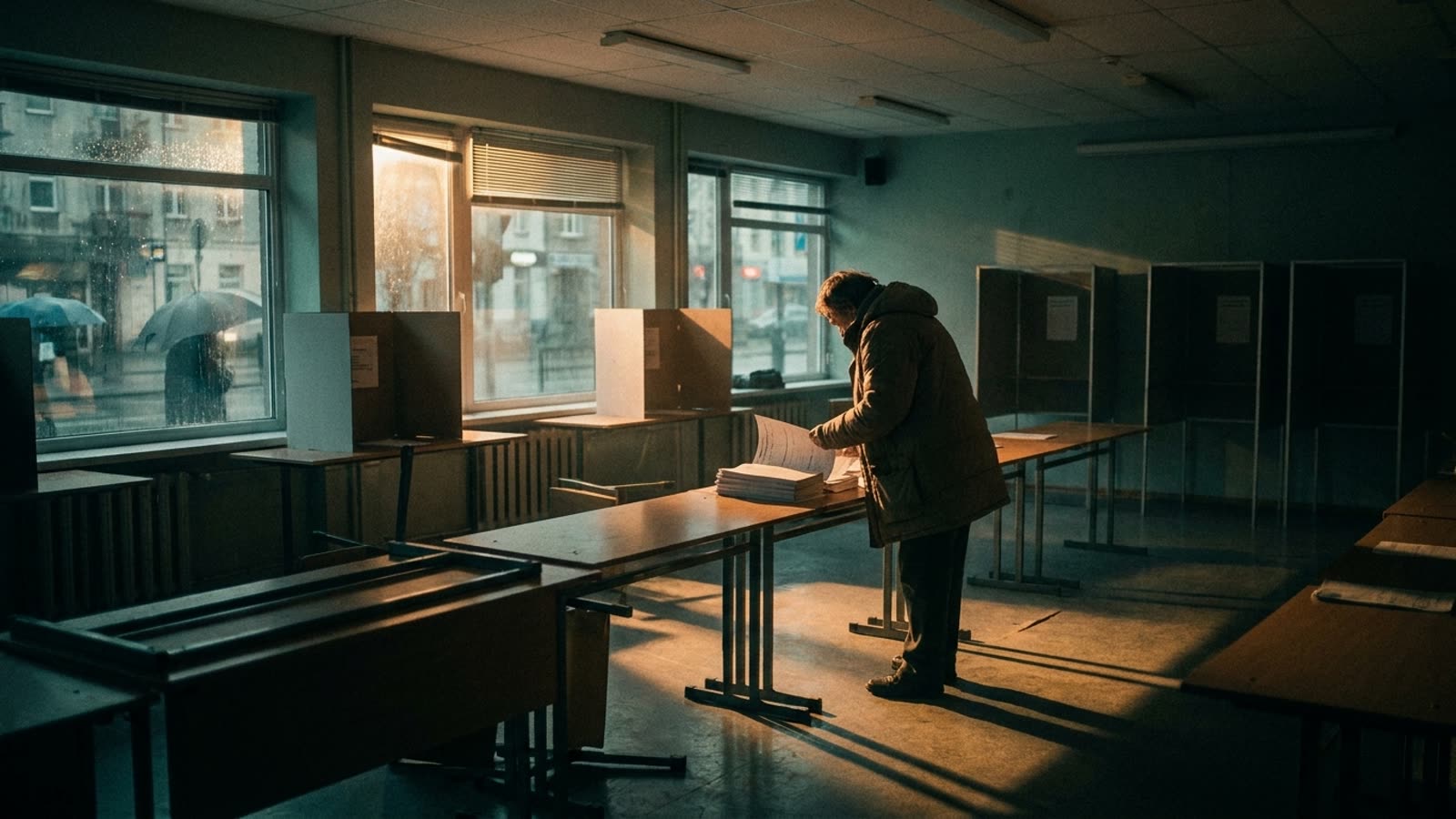
The paradox of democratic primaries is that they were invented to take power away from party bosses and give it to ordinary citizens, yet they have produced a political class increasingly disconnected from the preferences of ordinary citizens. This is not a bug in the system but a predictable consequence of its architecture.
Primary elections emerged in the early twentieth century as a Progressive Era reform, designed to break the grip of smoke-filled rooms where party machines handpicked nominees. The logic seemed unassailable: let the people decide. What the reformers did not anticipate was that "the people" who actually show up to primaries would be a highly unrepresentative slice of the electorate.
The turnout trap
General elections in competitive democracies routinely draw more than half the eligible population. Primary elections, by contrast, typically attract between fifteen and twenty-five percent of registered party members, and those who participate skew heavily toward the ideologically committed. They are older, wealthier, more politically engaged, and far more likely to hold views at the poles of their party's spectrum than the median voter who will decide the general election.
This creates a structural incentive for candidates to campaign to the edges rather than the center. A Republican seeking nomination must survive a primary electorate substantially more conservative than the general electorate; a Democrat must appeal to a primary electorate substantially more progressive. The general election then becomes a contest between two candidates who have spent months proving their ideological bona fides to their respective bases, often taking positions that become liabilities in November.
Closed versus open systems
The severity of this effect varies by design. Closed primaries, which restrict participation to registered party members, tend to produce the most ideologically extreme nominees. Open primaries, which allow any voter to participate regardless of registration, dilute the influence of committed partisans but introduce strategic voting, where supporters of one party cross over to sabotage the other's nomination process.
Some jurisdictions have experimented with nonpartisan blanket primaries, where all candidates appear on a single ballot and the top two finishers, regardless of party, advance to the general election. California and Washington adopted this model, and early evidence suggests it modestly increases the competitiveness of general elections in safe districts. But it has not fundamentally altered the ideological composition of legislatures, in part because voter behavior is sticky and partisan identity remains the dominant heuristic.
The downstream consequences
The primary system's sorting effect compounds over time. Legislators who fear primary challenges from their ideological flanks have strong incentives to avoid compromise, since any vote that can be characterized as betraying the base becomes ammunition for a future challenger. This dynamic helps explain why bipartisan legislation has become rarer even on issues where polling shows broad public consensus.
It also explains the asymmetry between public opinion and legislative output. Majorities of Americans consistently support policies—background checks for gun purchases, legal status for certain undocumented immigrants, some restrictions on late-term abortion—that cannot pass Congress, because the primary electorate in enough districts punishes deviation from orthodoxy.
Our take
The primary system is not broken in the sense of failing to perform its intended function; it is broken in the sense that its intended function produces perverse outcomes at scale. Reformers who dream of a less polarized politics must grapple with this structural reality. Changing incentives requires changing the rules of nomination, and that requires convincing the very politicians who benefit from the current system to dismantle it. The smoke-filled room had its corruptions, but at least the bosses had to win general elections. The primary electorate answers to no one but itself.