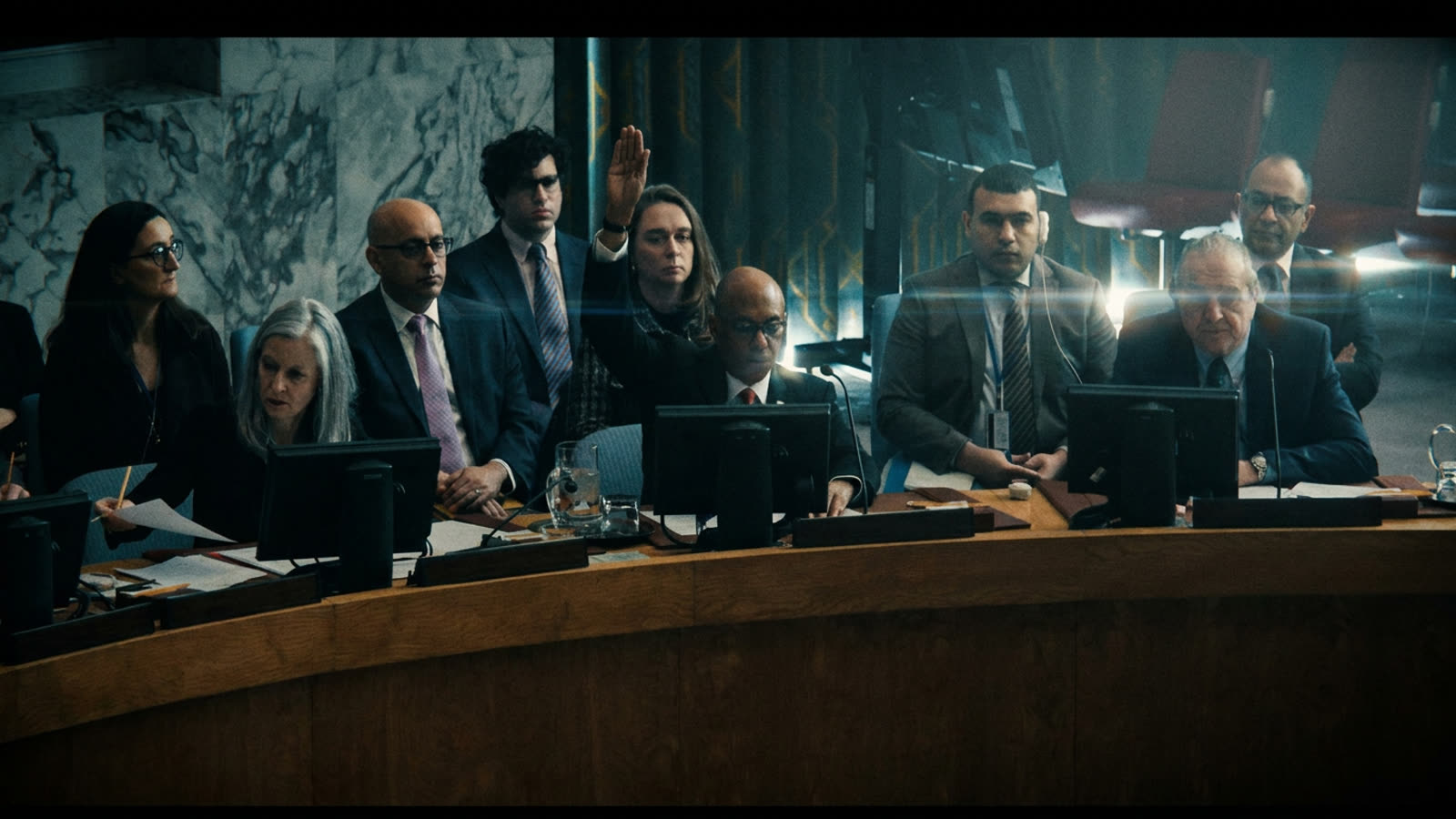
The most consequential word in international diplomacy is often the one that goes unspoken. When Russia or China signals displeasure with a draft resolution, the text simply never reaches a vote. When the United States indicates it will shield an ally, the matter dies in consultations. The veto power held by the Security Council's five permanent members—the United States, Russia, China, France, and the United Kingdom—shapes global affairs less through its exercise than through its shadow.
This is the architecture of the postwar order working exactly as designed, which is precisely the problem.
The logic of 1945
The veto emerged from the wreckage of the League of Nations, which had required unanimity and achieved paralysis. The architects of the United Nations at San Francisco understood that any collective security system lacking the great powers would be meaningless, and any system that could coerce them would be stillborn. The solution was elegant in its cynicism: give the victors of the Second World War permanent seats and absolute blocking power, ensuring they would never face binding resolutions against their interests.
The arrangement reflected the military realities of the era. The five permanent members possessed the preponderance of global military force; without their participation, enforcement was fantasy. The veto was not a flaw but a feature, a pressure valve preventing the organization from attempting actions that would either fail catastrophically or trigger conflict among nuclear-armed states.
The arithmetic of obstruction
Over the decades, the veto has been wielded with revealing consistency. The Soviet Union used it most frequently during the Cold War's early years, blocking Western initiatives with metronomic regularity. The United States has deployed it most often to shield Israel from censure—dozens of times on resolutions concerning the occupied territories. Russia has protected Syria's government from condemnation and sanctions throughout that country's civil war. China has grown more assertive, particularly on matters touching Taiwan, Tibet, and Xinjiang.
The pattern reveals the veto's true function: not preventing bad resolutions but preventing any resolution that inconveniences a permanent member or its clients. Humanitarian interventions, peacekeeping mandates, sanctions regimes—all require the acquiescence of five capitals with frequently divergent interests. The result is a Security Council that can act decisively only when the permanent members' interests align or when they are collectively indifferent.
Reform's graveyard
Proposals to modify or abolish the veto have circulated for decades, each foundering on the same structural barrier: any Charter amendment requires ratification by all five permanent members, who have no incentive to dilute their own privilege. Suggestions range from the modest—a voluntary pledge not to veto resolutions addressing mass atrocities—to the radical, such as expanding permanent membership to include powers like India, Brazil, Germany, or Japan.
The modest proposals have gained some rhetorical support but little practical traction; France has endorsed the atrocity-exception concept, though its position costs nothing while Russia and China remain opposed. The expansion proposals create their own complications, as regional rivals contest who deserves elevation and existing members resist sharing their exclusive status.
Our take
The Security Council veto is neither an accident of history nor a correctable defect—it is the price of having the great powers inside the tent rather than outside it. Critics who decry the veto's obstruction of humanitarian action are correct about the consequences and wrong about the alternative. A United Nations that could override American, Russian, or Chinese objections would not be a more effective United Nations; it would be a former United Nations, abandoned by the powers whose participation gives it whatever limited utility it possesses. The veto is a confession that international law remains, at its core, an agreement among the strong about how to manage the weak. Reformers would do better to acknowledge this than to pretend otherwise.