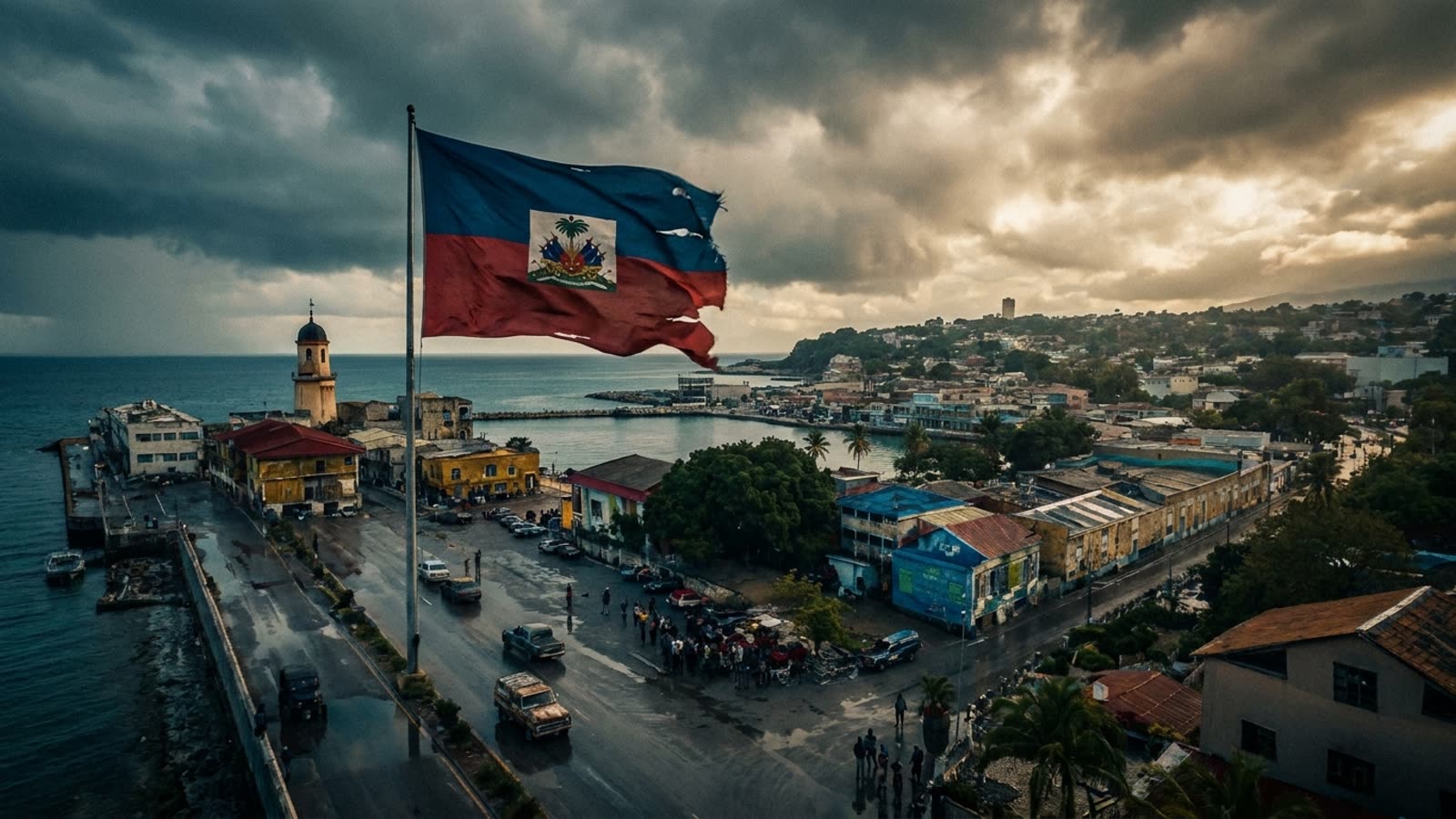
A country cannot hold an election when the state no longer controls its own territory. Haiti's transitional government made that admission explicit this week, announcing the indefinite postponement of presidential elections that were meant to restore democratic legitimacy after years of crisis. The decision is less a strategic retreat than a capitulation to reality: armed gangs now dominate Port-au-Prince and much of the surrounding countryside, and no electoral infrastructure can function under their de facto rule.
The postponement extends a political vacuum that has persisted since the assassination of President Jovenel Moïse in 2021. Since then, Haiti has been governed by a series of unelected councils and interim administrations, none of which has managed to establish basic security. The current transitional government, installed with international backing, had promised elections as the pathway back to constitutional order. That promise now joins a long list of deferred hopes.
The arithmetic of collapse
Gang federations control an estimated 80 percent of Port-au-Prince, according to United Nations assessments. They operate checkpoints, levy taxes on commerce, and wage territorial wars that have displaced hundreds of thousands of Haitians internally. The national police force, underfunded and outgunned, has effectively ceded large swaths of the capital. In this environment, the mechanics of an election—voter registration, polling stations, ballot transport—are logistically impossible without a security apparatus that does not exist.
The international community's response has been halting. A Kenyan-led multinational security mission arrived earlier this year but remains undersized and under-resourced for the scale of the crisis. The United States and other donors have provided funding but stopped short of the robust intervention that might alter the balance of power on the ground. The result is a holding pattern in which Haiti's dysfunction deepens while the world watches.
A democracy in name only
Haiti has not held a successful national election since 2016. Parliament dissolved in 2020 when terms expired without replacements. The judiciary barely functions. What remains is a government that governs little and a population that has learned to survive without the state. The postponement of elections is, in this sense, a formality—an acknowledgment that the rituals of democracy require a functioning state to perform them.
The gangs, for their part, have shown no interest in political legitimacy of the traditional sort. Their power derives from coercion and commerce, particularly control of fuel distribution and kidnapping for ransom. Elections would not threaten their dominance; they would merely create a civilian figurehead with no means to challenge it.
Our take
Haiti's electoral postponement is not a pause but an epitaph for a state that has been dying in public for years. The international community's reluctance to commit serious resources reflects an uncomfortable truth: Haiti has become a problem that no one wants to own. The gangs have filled the vacuum because no one else would. Until that calculus changes—until external actors decide that Haitian stability is worth the cost of imposing it—elections will remain a fantasy, and the gangs will remain the only functioning authority in the land.