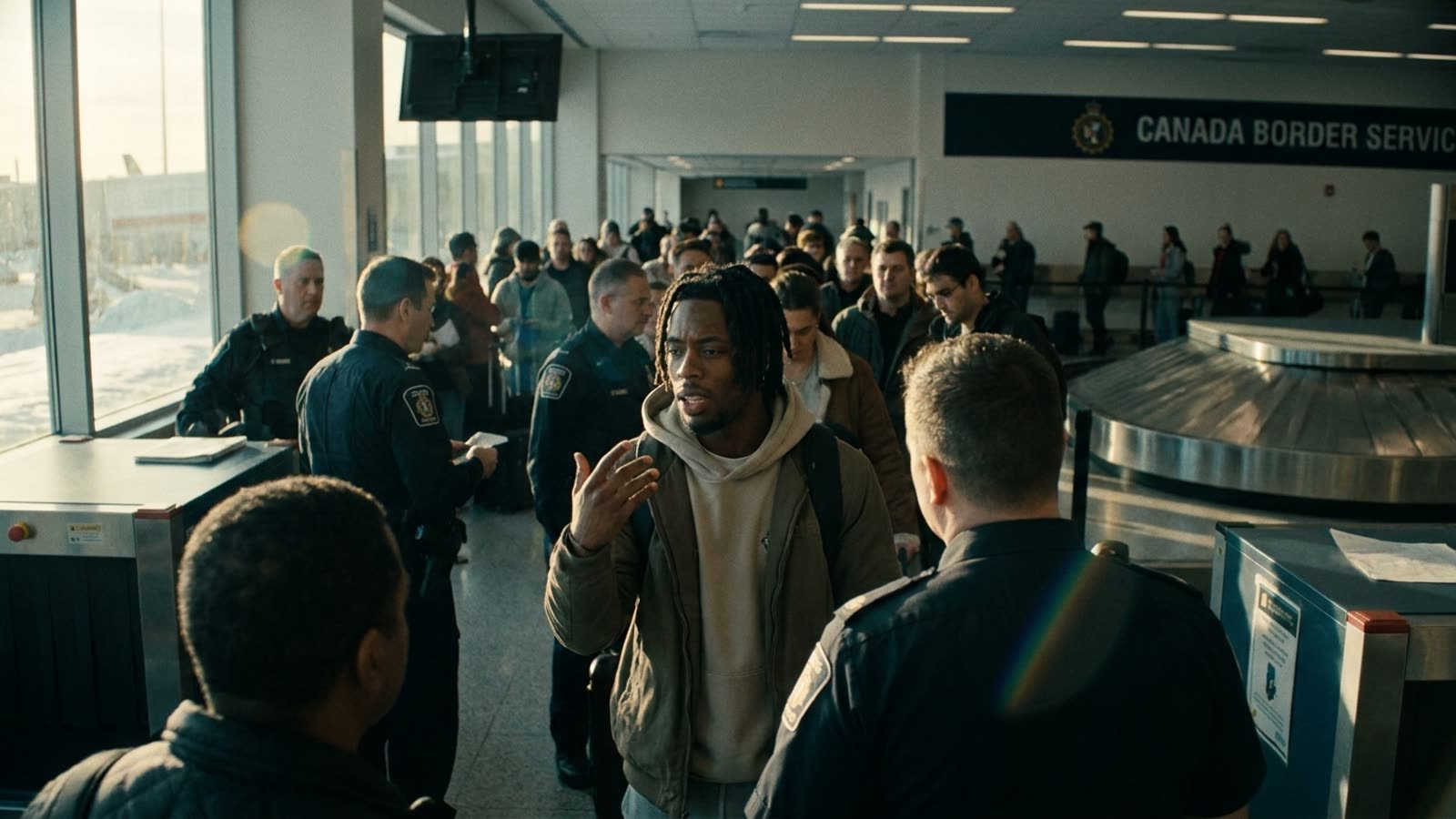
The 2026 World Cup needed only six days to produce its first genuine controversy, and it arrived not on the pitch but at a Canadian airport. Elye Wahi, Ivory Coast's 23-year-old striker, was denied entry to Canada this week while the team traveled for their Group F match, with border officials citing an ongoing betting investigation in France. His tournament is effectively over before it properly began.
The details remain murky in the way football scandals always are at their inception. French authorities have been investigating irregular betting patterns connected to several Ligue 1 matches over the past eighteen months. Wahi, who plays for Marseille, has reportedly been questioned as part of that probe, though he has not been formally charged with any offense. Canadian immigration officials, exercising their considerable discretion, decided that was sufficient reason to refuse him entry.
The timing could not be worse
Wahi had started Ivory Coast's opening 1-1 draw against Panama and was expected to lead the line against Ghana in what shapes up as a critical Group F encounter. The Elephants, African champions just two years ago, now lose their most dynamic forward option at precisely the moment when tournament mathematics begin to matter. Manager Emerse Faé must reshape his attack on forty-eight hours' notice.
For Wahi personally, the situation is devastating regardless of his ultimate culpability. At 23, he was using this World Cup as a shop window, hoping to prove that his inconsistent club form belied genuine international quality. Instead, he returns to France under a cloud that will follow him for years.
Football's gambling problem refuses to stay hidden
The broader context is what makes this incident significant beyond one player's misfortune. European football has spent the past decade pretending that its intimate relationship with gambling sponsors carries no moral hazard, that the betting advertisements plastered across jerseys and stadium boards exist in a separate universe from the players wearing them. That fiction grows harder to maintain with each new investigation.
French football alone has seen multiple betting-related probes in recent years. The pattern is consistent: young players, often from modest backgrounds, allegedly sharing information or influencing minor match events—a yellow card here, a corner kick there—for relatively small payouts. The corruption is banal rather than spectacular, which somehow makes it more troubling.
Our take
Canadian border officials did what FIFA seemingly cannot: enforce a consequence. Whether Wahi is ultimately guilty of anything remains to be determined by French courts, and he deserves that due process. But the speed with which this story moved from rumor to tournament-ending reality should alarm football's governing bodies far more than it apparently does. The sport has built a business model on gambling money while expressing perpetual surprise that gambling corruption follows. Wahi may be innocent, but the system that produced this moment certainly is not.