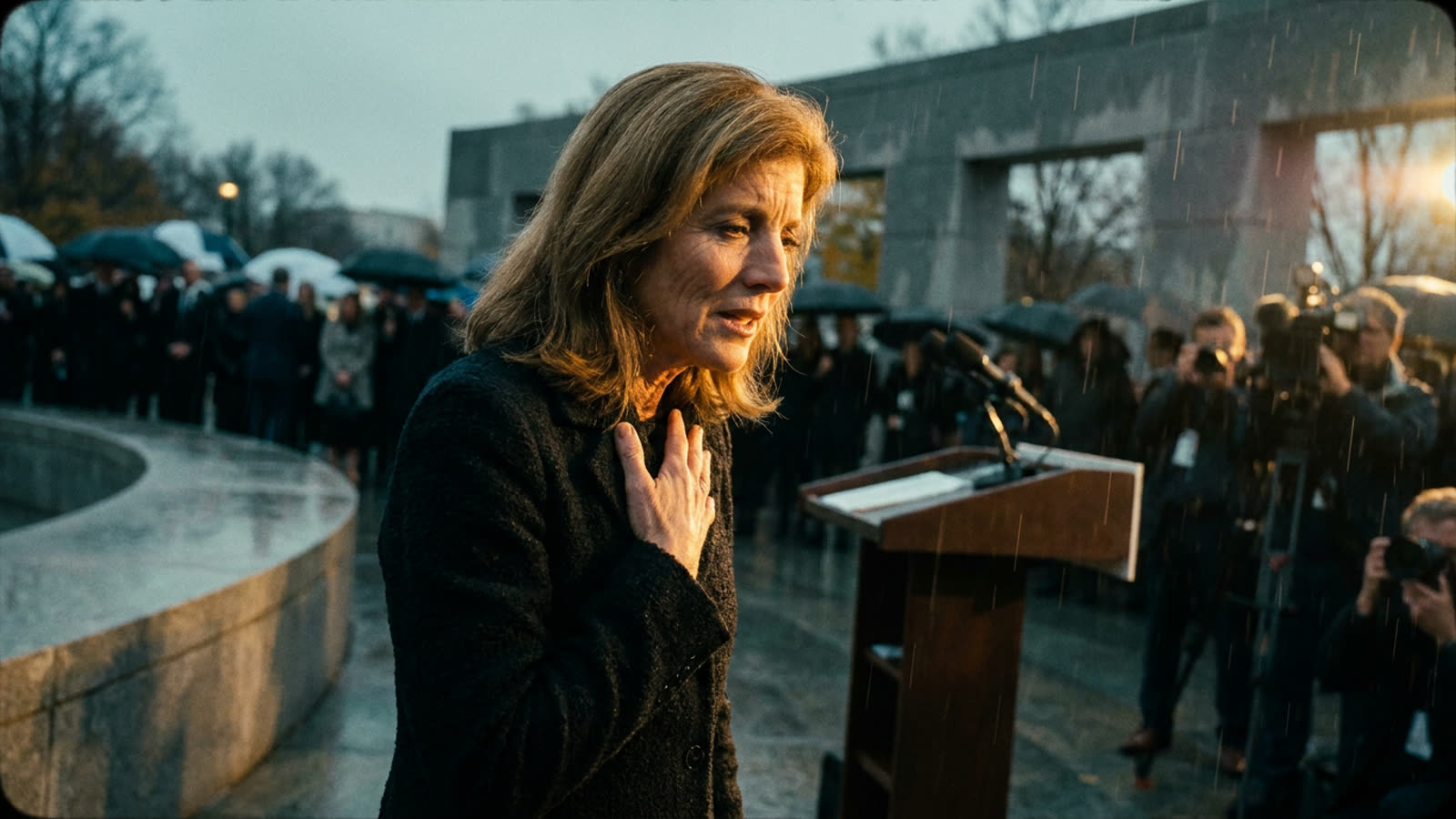
Caroline Kennedy has spent six decades perfecting the art of public silence. The daughter of a slain president, the niece of two more assassinated brothers, the cousin of a plane-crash victim—she has buried more family members in front of cameras than most people bury in private. So when she finally spoke about the death of her daughter Tatiana Schlossberg, the words carried the weight of a woman who has outlived the cruelest odds and now faces the one loss no parent should.
The statement was brief, controlled, and devastatingly Kennedy: gratitude for privacy, acknowledgment of support, nothing that could be clipped into a headline. It was, in other words, exactly what you would expect from the last surviving member of John and Jackie's nuclear family—a woman who learned before she could read that the cameras never stop, and that silence is the only armor that works.
The daughter who chose a different spotlight
Tatiana Schlossberg, who died in circumstances that remain largely private, had carved out an identity deliberately adjacent to her family's legacy. A Yale graduate and former New York Times reporter, she wrote about climate change with the same dogged focus her grandmother brought to historic preservation. Her 2019 book on consumer environmental impact earned praise for making guilt productive rather than paralyzing. She married George Moran in 2017 in a ceremony on Martha's Vineyard that was, by Kennedy standards, almost aggressively normal.
She was 33 when she published that book—the same age her grandmother was when she became a widow in Dallas. The Kennedys have always been haunted by the mathematics of their own mortality.
A dynasty that runs on discretion
Caroline Kennedy's statement arrives at a moment when celebrity grief has become a performance art. Influencers livestream funerals; reality stars monetize mourning. The Kennedys, whatever their flaws, have never participated in this economy. When John Jr.'s plane went down in 1999, Caroline waited three days before releasing a statement. When her mother died in 1994, she delivered a eulogy at St. Ignatius Loyola that ran exactly eight minutes and mentioned the word "private" four times.
This is not coldness. It is the learned behavior of a family that discovered, across three assassinations and countless lesser tragedies, that public grief is a resource others will extract without permission. Caroline Kennedy's silence has always been her inheritance—the one thing her father's death could not take from her.
Our take
There is something almost unbearably poignant about Caroline Kennedy, now 68, standing once again in the posture of mourning. She has been the custodian of Camelot's memory for longer than Camelot itself existed. She has watched her family's tragedies become American mythology, their private pain transformed into public property. That she chose to speak at all about Tatiana suggests the magnitude of this loss; that she said so little confirms she remains, after everything, exactly who she has always been. The Kennedys taught America how to grieve in public. Caroline Kennedy has spent her life teaching us that some grief belongs only to the grieving.