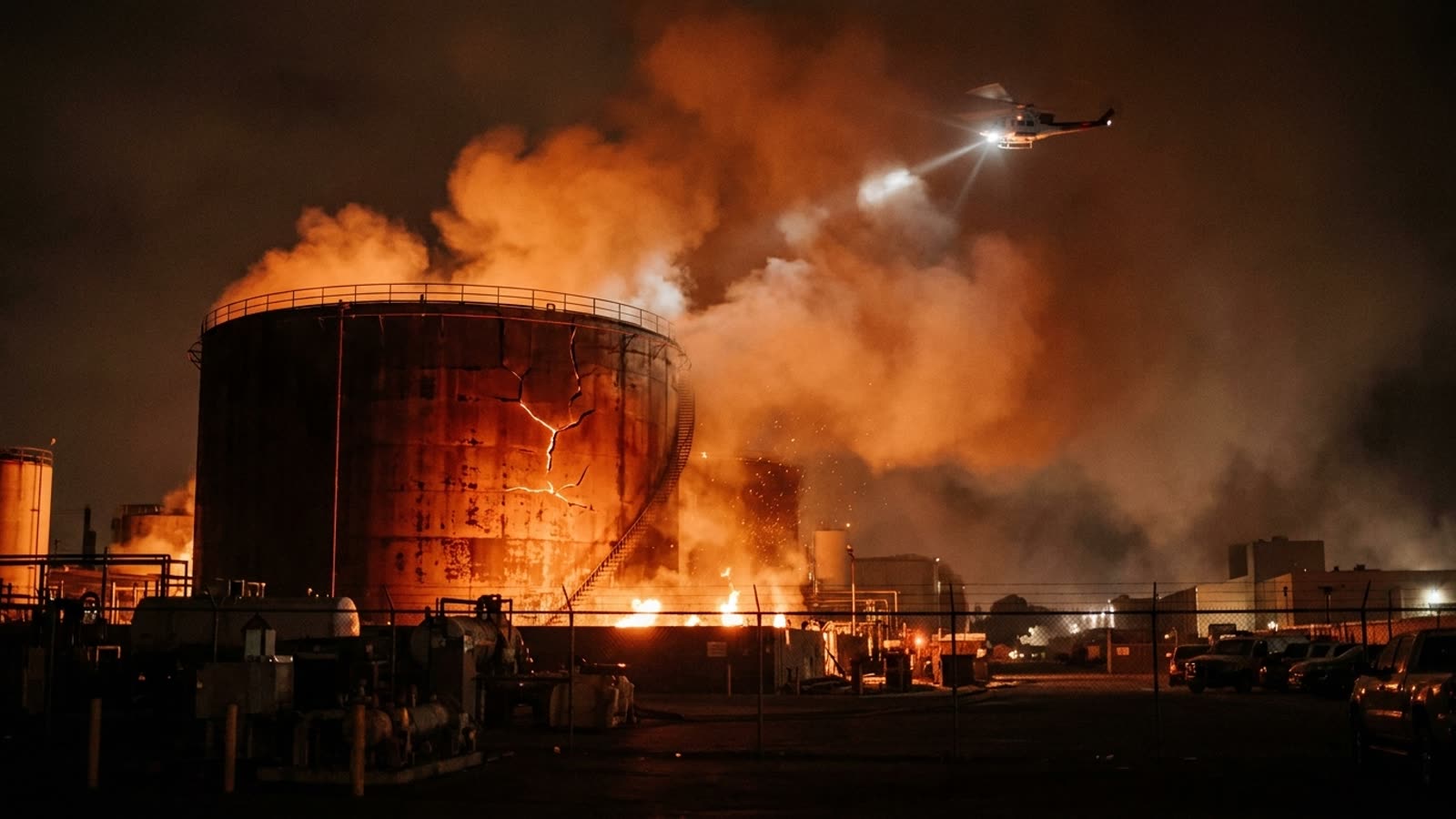
A chemical storage tank threatening to rupture in California has forced 50,000 residents from their homes, but the real story isn't the evacuation — it's what the incident reveals about the fragile state of American industrial infrastructure and its mounting costs to the economy.
Officials are racing to cool a tank containing hazardous materials, deploying emergency protocols that will stretch for days while displaced residents wait in shelters and hotels. The immediate human toll is obvious. Less visible is the economic damage accumulating by the hour: shuttered businesses, disrupted supply routes, emergency response costs, and the longer-term hit to property values and insurance markets in the affected region.
The Maintenance Deficit Comes Due
This isn't an isolated incident. American industrial facilities — chemical plants, refineries, storage terminals, pipelines — are aging faster than they're being upgraded. The American Society of Civil Engineers has repeatedly flagged the nation's hazardous waste infrastructure as deteriorating, with investment lagging far behind what's needed to maintain safety margins.
The economics are perverse: companies face pressure to minimize capital expenditure, regulators lack resources for comprehensive oversight, and local governments depend on industrial tax revenue too much to push for costly upgrades. The result is a system where catastrophic failures become statistically inevitable — not a matter of if, but when and where.
Cascading Costs
Evacuations of this scale carry economic consequences that ripple outward. Fifty thousand displaced people means lost wages, closed storefronts, interrupted schooling, and healthcare systems absorbing surge demand. Insurance claims will follow, potentially affecting premiums across the region. If the tank does fail, cleanup costs could run into hundreds of millions, with litigation stretching for years.
More abstractly, incidents like this erode the implicit subsidy that communities provide to industrial operations — the tolerance for risk in exchange for jobs and tax revenue. Each failure shifts that calculus, making it harder to site new facilities and more expensive to operate existing ones.
Our take
America has spent decades treating industrial maintenance as a cost to be minimized rather than a risk to be managed. The bill is coming due, one evacuation at a time. The California incident will fade from headlines once the tank is stabilized, but the underlying problem — an industrial base running on borrowed time — will remain. The question isn't whether we'll see more of these emergencies, but whether we'll finally price the true cost of deferred maintenance into our economic calculations before the next one forces the issue.