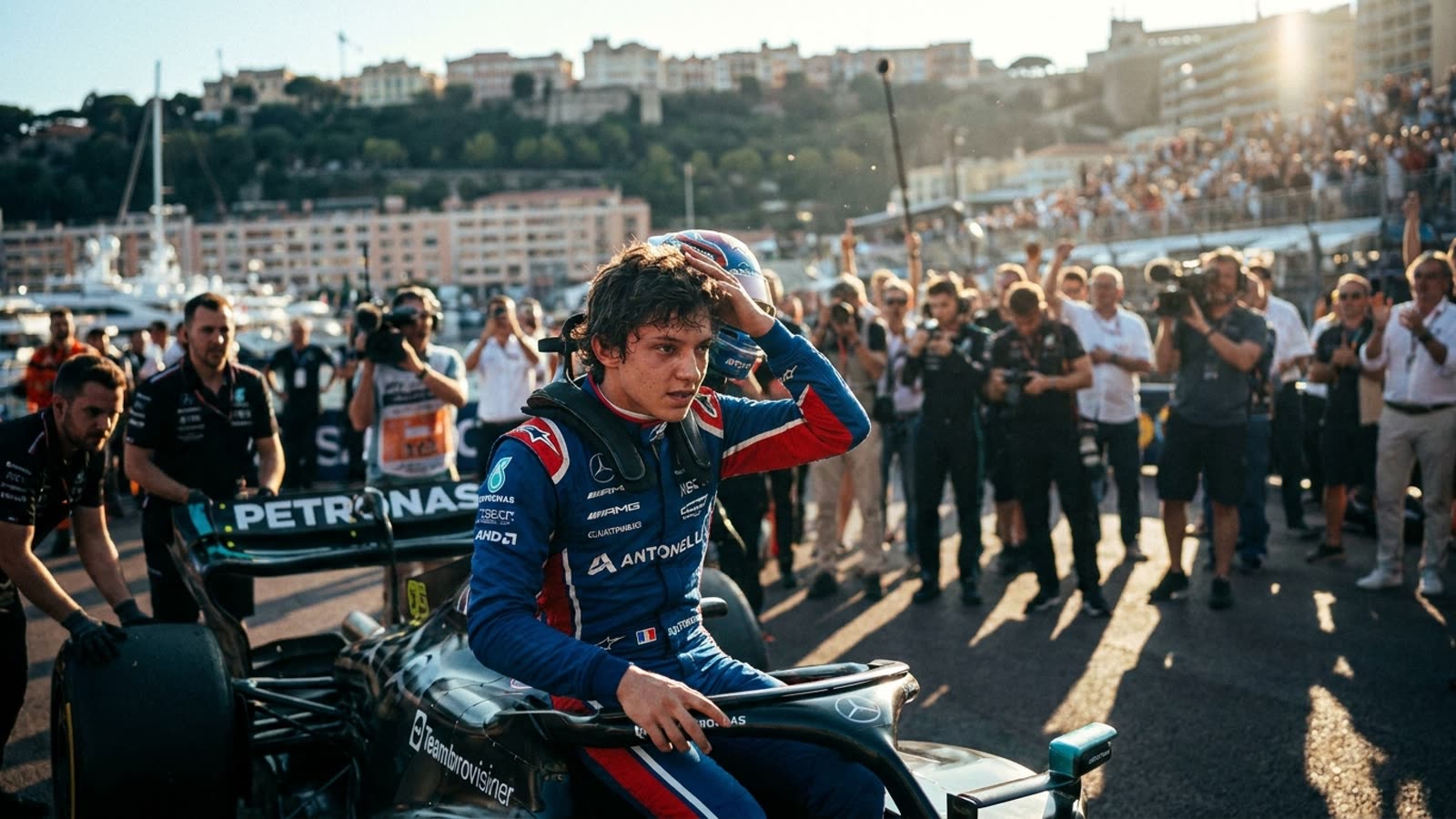
Formula 1 has a new problem, and his name is Kimi Antonelli.
The Italian teenager's victory at Monaco on Sunday marked his fifth consecutive win, a streak of dominance that has transformed the 2026 championship from a competitive battle into something closer to a coronation. At 19, Antonelli is not merely winning races—he is demoralizing the field, turning the most prestigious circuit on the calendar into another routine exercise in Mercedes superiority.
The streak in context
Five consecutive victories is rare air in modern Formula 1. Max Verstappen managed ten straight during his 2023 rampage, but that came after years of development and with a car advantage so pronounced it bordered on the absurd. Antonelli is achieving something arguably more impressive: sustained excellence in his first full season, against regulations designed specifically to tighten the grid.
The new 2026 power unit regulations were supposed to shuffle the deck. Instead, Mercedes appears to have cracked the code on the simplified hybrid systems while rivals scramble. Red Bull has been uncharacteristically slow to adapt; Ferrari's promising pre-season pace has evaporated under race conditions. McLaren remains competitive but cannot match Antonelli's qualifying pace, which has become the foundation of his dominance.
Monaco's particular cruelty
The street circuit's narrow confines typically equalize machinery, rewarding driver skill and team strategy over raw pace. That Antonelli won here—and won comfortably—suggests his advantage is not purely mechanical. His wet-weather qualifying lap on Saturday was described by team principal Toto Wolff as "one of the best I've ever seen," which, from a man who employed Lewis Hamilton for over a decade, carries weight.
The championship standings now show Antonelli with a 67-point lead over his nearest rival. With 16 races remaining, the math is not yet decisive, but the psychological damage may be. Competitors are no longer racing Antonelli; they are racing for second place and hoping for mechanical failures that have not materialized.
Our take
Formula 1 spent years worrying about Verstappen's dominance killing interest in the sport. Now it faces the same question with a different protagonist—one who happens to be young, photogenic, and Italian, which the marketing department will appreciate even if the competition committee does not. The sport's long-term health depends on competitive racing, not coronations. But in the short term, we are watching something genuinely special: a prodigy announcing himself to the world with the kind of authority that suggests this streak may be only the beginning.