Urban planning has always been a discipline caught between competing demands: the quantitative rigor of traffic modeling and the qualitative judgment of what makes a neighborhood feel alive. Now artificial intelligence is inserting itself into this tension, and the results are more interesting than the usual automation-threatens-jobs narrative suggests.
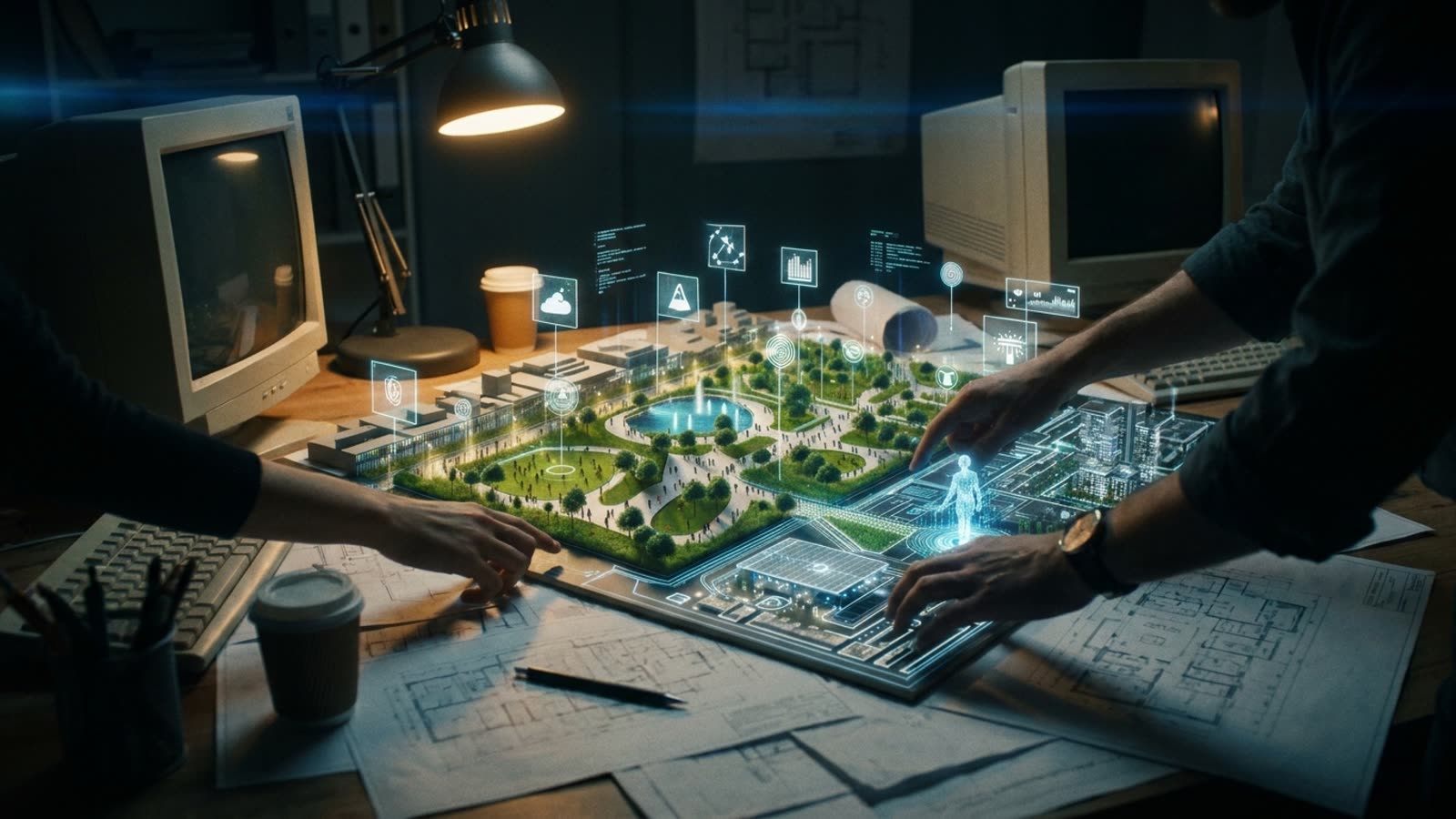
The profession has quietly become one of the most AI-transformed fields in local government. Planning departments from Singapore to Barcelona to smaller American cities are deploying machine learning systems that can simulate decades of urban growth in hours, optimize transit routes against dozens of variables simultaneously, and predict which zoning changes will trigger gentrification cascades. The technology is genuinely impressive. Whether it produces better cities is another question entirely.
The quantifiable city
AI excels at the parts of urban planning that involve optimization against measurable criteria. Given sufficient data about traffic patterns, demographic shifts, and land values, machine learning models can identify sites for affordable housing that minimize commute times while maximizing access to schools and healthcare. They can route bus networks to serve the most riders with the fewest vehicles. They can predict, with unsettling accuracy, which blocks will see property values spike after a new subway station opens.
This computational power addresses a genuine limitation of human planners, who have historically relied on intuition and precedent to make decisions affecting millions of people. A planning department might spend months debating whether to upzone a particular corridor; an AI system can model the consequences of a hundred different zoning scenarios before lunch.
The appeal to cash-strapped municipal governments is obvious. Planning departments are chronically understaffed, and the backlog of environmental reviews, traffic studies, and community impact assessments grows longer each year. AI promises to compress timelines and reduce costs.
What the models cannot see
The trouble begins when you ask what the AI is optimizing for. Urban planning involves tradeoffs that are fundamentally political: Should a city prioritize density or green space? Economic growth or neighborhood stability? The interests of current residents or future ones? These are not technical questions with correct answers discoverable through computation.
AI systems trained on historical data also inherit the biases embedded in decades of discriminatory planning decisions. If past zoning concentrated industrial facilities in low-income neighborhoods, a model trained on that data may learn to treat such placement as normal rather than unjust. The algorithm optimizes; it does not interrogate its own assumptions.
There is also the question of what gets measured. AI is excellent at incorporating data that exists in structured form—traffic counts, property values, census figures. It is less adept at capturing the qualities that make urban spaces beloved: the bakery that anchors a block's social life, the informal gathering spot where teenagers congregate, the view corridor that connects a neighborhood to its history. These things matter enormously to how people experience cities, but they resist quantification.
Our take
The most thoughtful planning departments are treating AI as a tool for expanding the range of options they can consider, not as a replacement for human judgment about which options to pursue. This seems right. The technology is genuinely useful for the computational drudgery that has always consumed planners' time—running traffic simulations, modeling shadow impacts, identifying parcels that meet complex criteria. But the moment AI starts making decisions about what kind of city we want to live in, we have ceded something important. Cities are not optimization problems. They are arguments about how to live together, and those arguments should remain legible to the people who have to live with the results.