The veterinary clinic may be the most consequential place in medicine that nobody is watching. While regulators, ethicists, and hospital administrators engage in elaborate choreography around AI in human healthcare, veterinary practices have been quietly integrating machine-learning diagnostic tools with far less friction — and the results are instructive for anyone wondering how algorithmic medicine actually works in practice.
The logic is straightforward, if uncomfortable to state plainly: the regulatory burden for animal medicine is lighter, the liability calculus different, and the emotional stakes — while real for pet owners — do not carry the same legal and institutional weight as human life. This has made veterinary clinics a kind of soft-launch environment for AI diagnostics.
The radiograph revolution
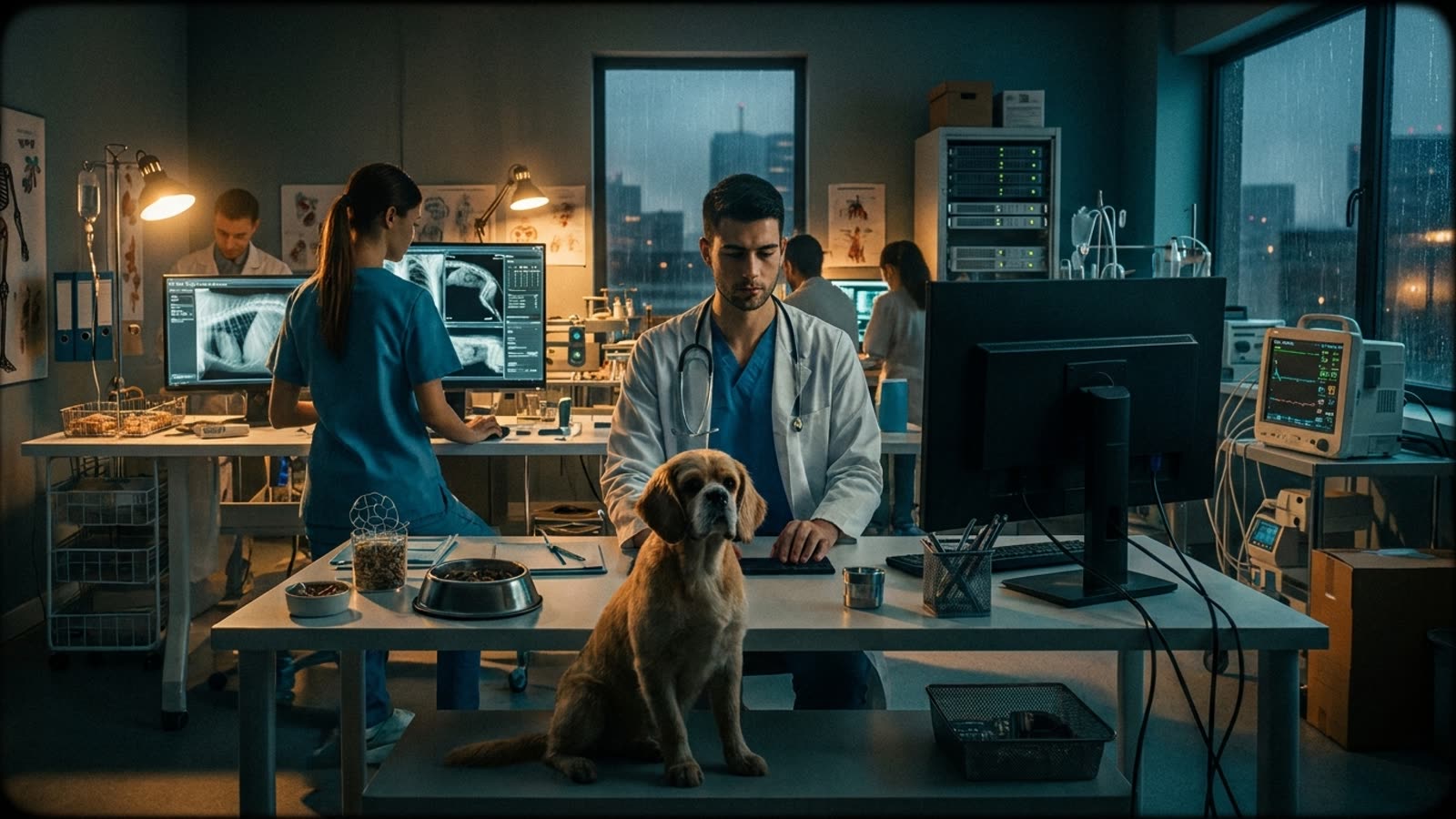
The most visible deployment has been in imaging. Several companies now offer AI-powered analysis of veterinary X-rays and ultrasounds, flagging potential abnormalities in canine chest radiographs or feline abdominal scans. The pitch to veterinarians is compelling: solo practitioners and small clinics often lack access to board-certified radiologists, and even large practices face bottlenecks when specialists are overbooked. An algorithm that can highlight a suspicious mass or a subtle fracture in seconds changes the workflow entirely.
The results have been genuinely useful. Practitioners report catching conditions they might have missed on first pass, particularly in species they see less frequently. The AI does not replace the veterinarian's judgment — it functions more like a second set of eyes, one that never gets tired and has seen more images than any single clinician could review in a lifetime.
What the animals teach us
The veterinary experience exposes both the promise and the limitations of diagnostic AI with unusual clarity. On the promise side: the technology demonstrably helps in settings where specialist access is limited. Rural practitioners, emergency clinics staffing overnight shifts with fewer doctors, and general practices handling exotic species have all found value in algorithmic assistance.
But the limitations are equally visible. AI trained predominantly on Labrador retrievers and domestic shorthairs performs less reliably on Great Danes or Maine Coons, let alone ferrets or iguanas. The systems struggle with unusual presentations and edge cases — precisely the situations where expert judgment matters most. And the black-box nature of many algorithms means veterinarians cannot always explain to a worried pet owner why the machine flagged something, only that it did.
These are the same challenges human medicine will face at scale, but veterinary practice is encountering them first.
Our take
The veterinary clinic is not a perfect analogue for human healthcare, and treating it as a mere testing ground for technologies destined for people would be both instrumentalizing and inaccurate. Animal medicine has its own imperatives and its own patients. But the field's relatively frictionless adoption of AI diagnostics offers a preview of what works, what does not, and what questions remain unresolved. The machines are learning to read your dog's X-ray. What they learn there will eventually matter for yours.