The medical scribe was supposed to be the solution to physician burnout. Hired to follow doctors through their rounds, these trained transcriptionists freed clinicians from the tyranny of electronic health records, allowing them to actually look patients in the eye. The profession barely had time to mature before it began to transform into something unrecognizable.
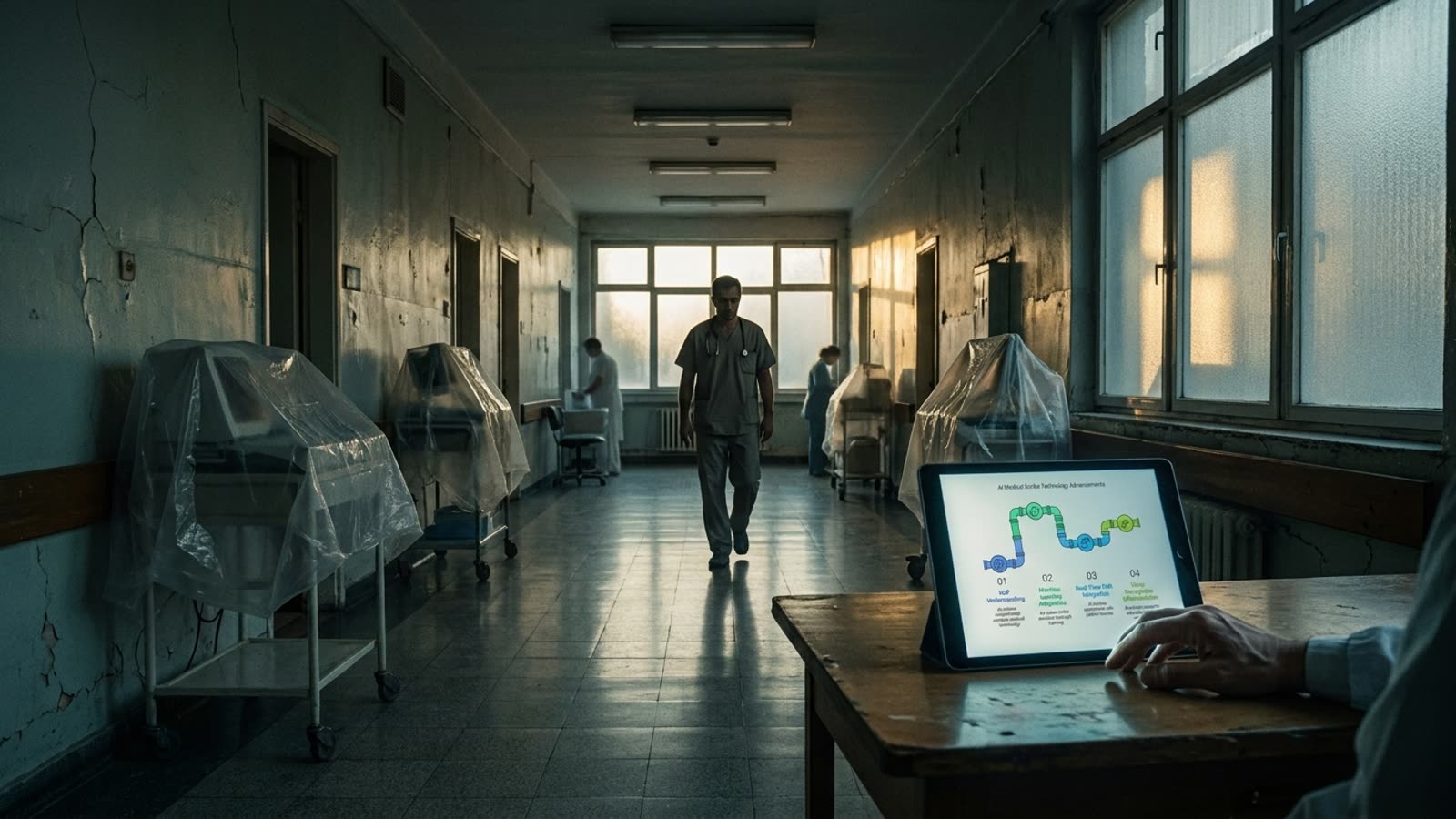
Ambient clinical intelligence — AI systems that listen to doctor-patient conversations and automatically generate structured medical notes — has moved from pilot programs to mainstream adoption with remarkable speed. The technology captures natural dialogue, identifies relevant clinical details, and produces documentation that meets billing and compliance standards. For physicians who once spent two hours on paperwork for every hour of patient care, the appeal is self-evident.
The economics of listening
Human medical scribes typically cost healthcare systems between forty and sixty thousand dollars annually per full-time equivalent, plus training, turnover, and the logistical complexity of placing a third person in sensitive clinical encounters. AI scribing services charge a fraction of that — often a few hundred dollars per physician per month. The math has proven irresistible to hospital administrators facing margin pressure.
But the transformation is not simply about cost reduction. AI scribes can work across multiple exam rooms simultaneously, never call in sick, and maintain perfect consistency in documentation format. They can flag potential drug interactions or missing preventive care in real time. The human scribe's advantage — contextual understanding, the ability to clarify ambiguity, a second set of ears catching important details — is narrowing as the underlying language models improve.
What the technology cannot capture
The limitations remain meaningful. AI systems struggle with heavy accents, multiple speakers talking over each other, and the crucial nonverbal cues that experienced scribes learn to note: the patient who says they're fine while grimacing, the family member whose body language suggests they're withholding information. Privacy concerns persist, particularly around how audio data is stored, processed, and potentially used to train future models.
There is also the question of what happens when the AI makes a subtle error that a human would have caught — misattributing a symptom, confusing medication dosages, or missing the clinical significance of an offhand remark. The physician remains legally responsible for the final documentation, but the review process changes when you're editing AI-generated text rather than watching a human transcribe in real time.
The broader pattern
Medical scribing offers a preview of how AI will reshape many documentation-heavy professions. The pattern is consistent: technology first augments human workers, then handles routine cases independently, then gradually expands its definition of routine. The humans who remain tend to shift toward exception handling, quality assurance, and the irreducibly interpersonal aspects of the work.
For medical scribes, this may mean evolution rather than extinction — becoming clinical documentation specialists who manage AI systems, handle complex cases, and ensure quality across larger patient volumes than any human could document alone.
Our take
The medical scribe's trajectory illuminates something important about AI's impact on professional work: the disruption often arrives not through dramatic replacement but through quiet redefinition. The job title may persist while the job itself becomes unrecognizable. For healthcare, the question is whether we're building systems that genuinely reduce physician burden and improve patient care, or simply shifting the cognitive load from documentation to AI supervision. The answer will depend less on the technology's capabilities than on how thoughtfully health systems choose to deploy it.