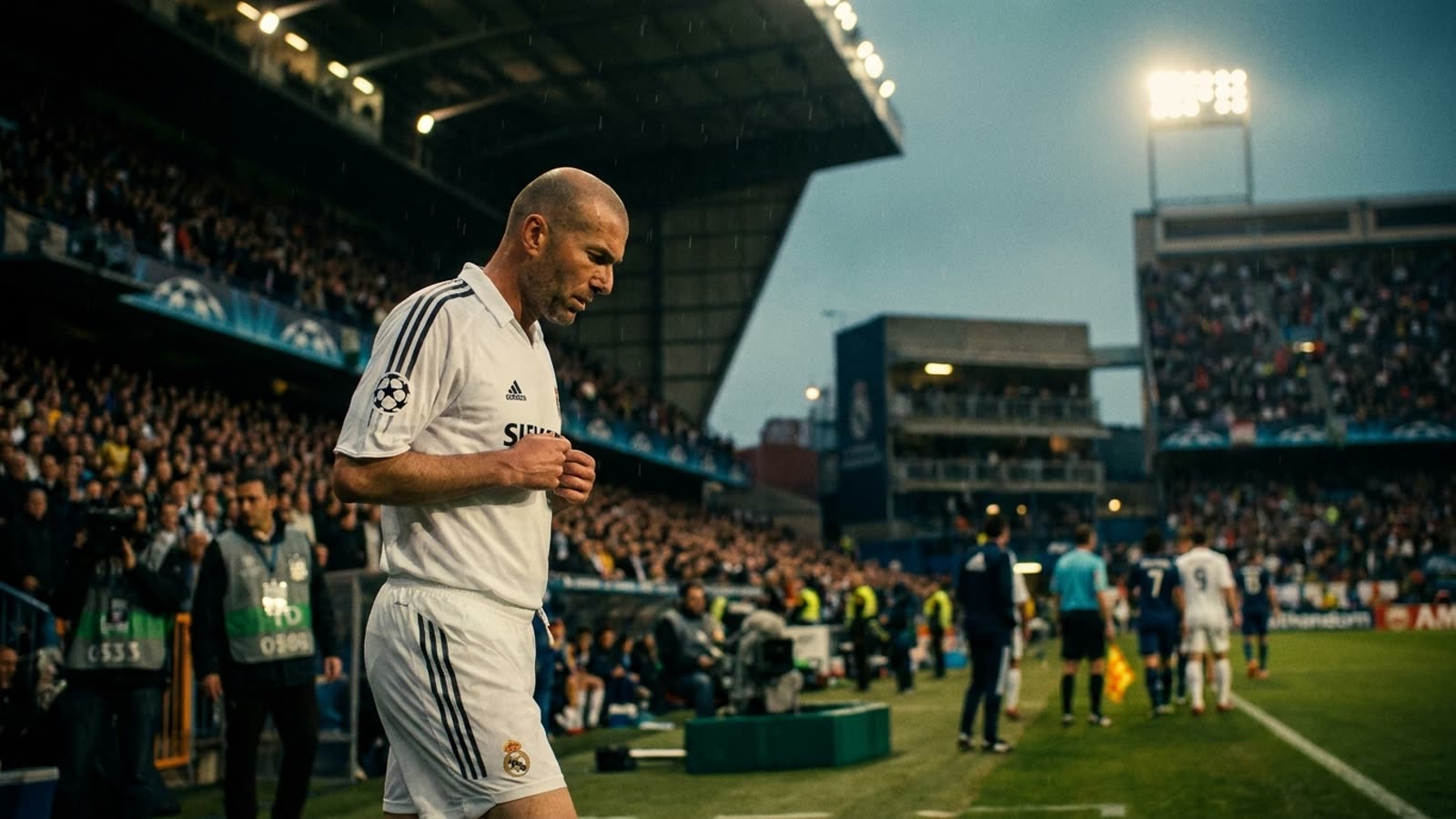
Great careers are supposed to end with coronations, not conflagrations. Zinedine Zidane, the most elegant footballer of his generation, chose a different path entirely — walking past the World Cup trophy in Berlin's Olympiastadion after headbutting Marco Materazzi in the chest, his final act on a football pitch a gesture of primal fury that should have tarnished his legacy but somehow only deepened its mystique.
The facts remain startling even now. France and Italy, deadlocked in extra time. Zidane, playing his final match before retirement, had already scored a nerveless Panenka penalty. He was minutes from either lifting the trophy or departing as a runner-up with dignity intact. Instead, following an exchange of words with Materazzi, he turned and drove his forehead into the Italian defender's sternum with the deliberate force of a man who had made a decision and would live with it.
The impossibility of explanation
What Materazzi said has been endlessly debated and partially confirmed — insults involving Zidane's sister, his mother, or both. The Italian later acknowledged the provocation was personal and crude. But the mystery isn't really about the words. It's about why a man of Zidane's preternatural composure, who had spent two decades mastering the art of making football look effortless, would choose violence at the moment of maximum visibility.
The headbutt wasn't impulsive in the way fouls usually are. Watch the footage: Zidane walks several paces past Materazzi, stops, turns, and strikes. There's a terrible deliberation to it. He had time to reconsider and didn't. This is what makes the moment so resistant to easy moralizing. Zidane wasn't out of control. He was, in some unfathomable way, entirely himself.
The career it couldn't erase
What followed was red card, defeat on penalties, and a retirement that began in disgrace. Except it didn't feel like disgrace, not really. Within months, the headbutt had become something closer to folklore — regrettable, yes, but also weirdly human in a sport increasingly dominated by media-trained automatons. Zidane had reminded everyone that genius and volatility often share the same bloodstream.
His playing record needed no rehabilitation: the 1998 World Cup won on home soil with two headed goals in the final, the 2002 Champions League volley that still defies physics, the single-handed demolition of Brazil in 2006's quarterfinal. The headbutt sits alongside these moments rather than erasing them, a final chapter that was ugly and honest and unmistakably his.
Our take
Sport loves clean narratives — the triumphant farewell, the graceful bow. Zidane's exit was none of these things, and that's precisely why it endures. He showed us that greatness doesn't guarantee wisdom, that composure can coexist with rage, that a man can be both artist and brute in the space of ninety seconds. The headbutt was indefensible and unforgettable, which is to say it was the most Zidane ending possible.