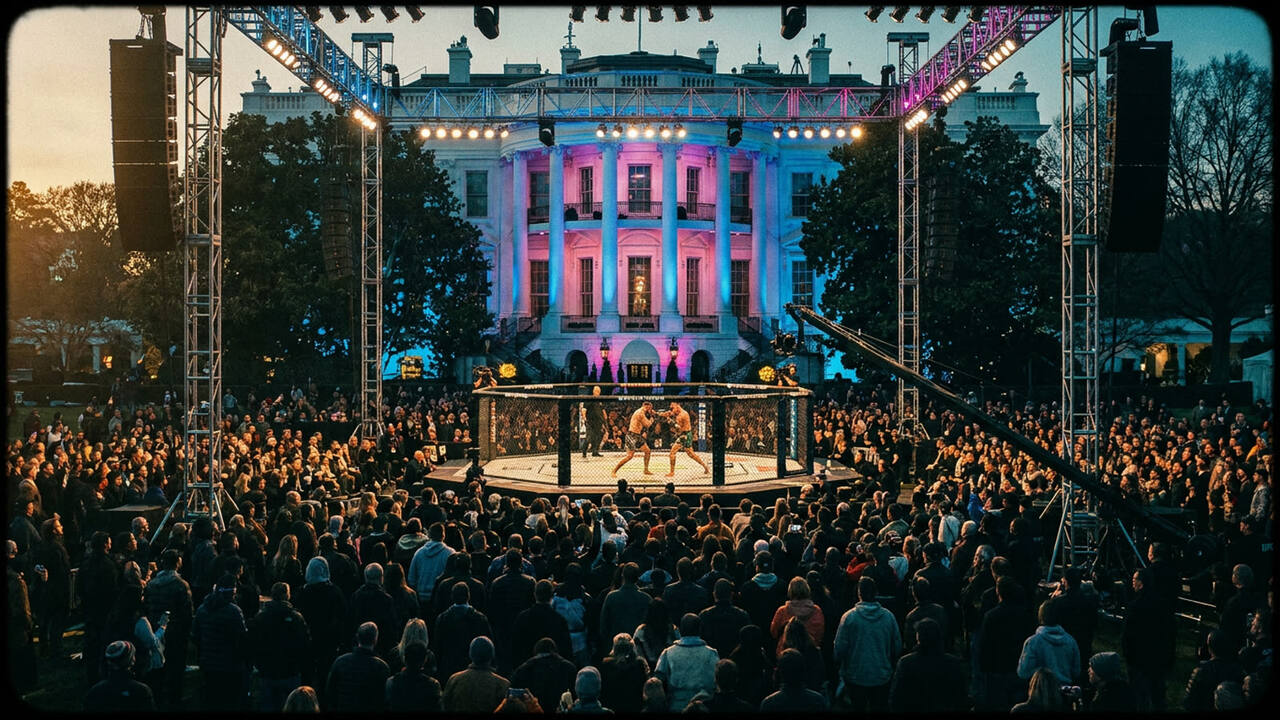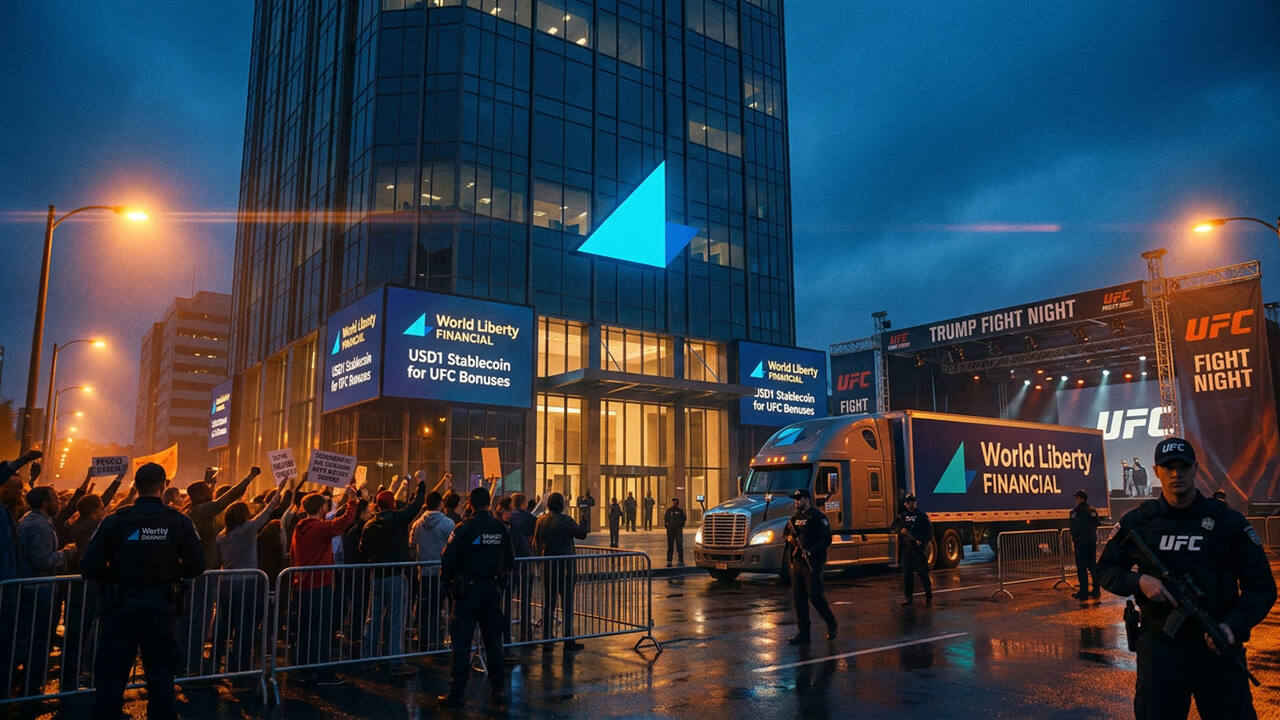
The Trump family's cryptocurrency venture, World Liberty Financial, will distribute fighter bonuses in its USD1 stablecoin at Saturday night's White House UFC event—a transaction that transforms the Executive Mansion into both a marketing platform and payment processor for the president's private business interests.
The arrangement is breathtaking in its directness. Fighters who win performance bonuses at the cage matches staged on the South Lawn will receive their payouts in a digital currency issued by a company in which the sitting president holds substantial financial interest. Every punch thrown, every submission locked, every knockout delivered generates promotional value for a Trump-controlled asset, broadcast to millions from the most symbolically potent address in American politics.
The Architecture of Entanglement
World Liberty Financial launched in late 2024 with the Trump family as its most prominent backers, selling governance tokens and positioning itself as a pro-crypto alternative to traditional finance. USD1, its dollar-pegged stablecoin, entered the market this year amid questions about its reserves and regulatory status. By inserting USD1 into a White House event, the venture gains something no advertising budget could purchase: the implicit endorsement of the American presidency itself.
The UFC's cooperation is unsurprising—the promotion's leadership has cultivated close ties with Trump for years, and the mutual benefits are obvious. But the federal government's role as host creates obligations that private fight promoters do not bear. When the White House becomes a venue for compensating private parties in a currency the president profits from, the distinction between public service and private enrichment dissolves entirely.
Legal Gray Zones and Ethical Black Holes
Constitutional scholars have long debated the Emoluments Clause's application to modern presidential business dealings, but those arguments typically involve foreign payments or licensing arrangements at arm's length. This is something else: a direct, visible, real-time financial transaction benefiting a presidential business, conducted on federal property, at an event the president is hosting. The brazenness may actually provide legal cover—the sheer openness of the arrangement makes it difficult to characterize as hidden corruption, even as it normalizes conduct previous administrations would have considered disqualifying.
The stablecoin angle adds regulatory complexity. USD1 operates in a space the SEC and CFTC have struggled to define, and the Trump administration has signaled hostility toward aggressive crypto enforcement. A president whose personal wealth depends on favorable regulatory treatment of his stablecoin venture is now the ultimate authority over the agencies that regulate it.
Our take
There is no precedent for this because no previous president would have attempted it. The White House UFC bonuses paid in Trump-family stablecoin represent the final collapse of any pretense that the presidency and the president's portfolio are separate concerns. Future historians will mark this weekend as the moment when the conflict-of-interest question stopped being a question at all—not because it was resolved, but because it was rendered irrelevant by sheer repetition. The Republic will survive Saturday's fights. Whether it survives the principle they establish is another matter.