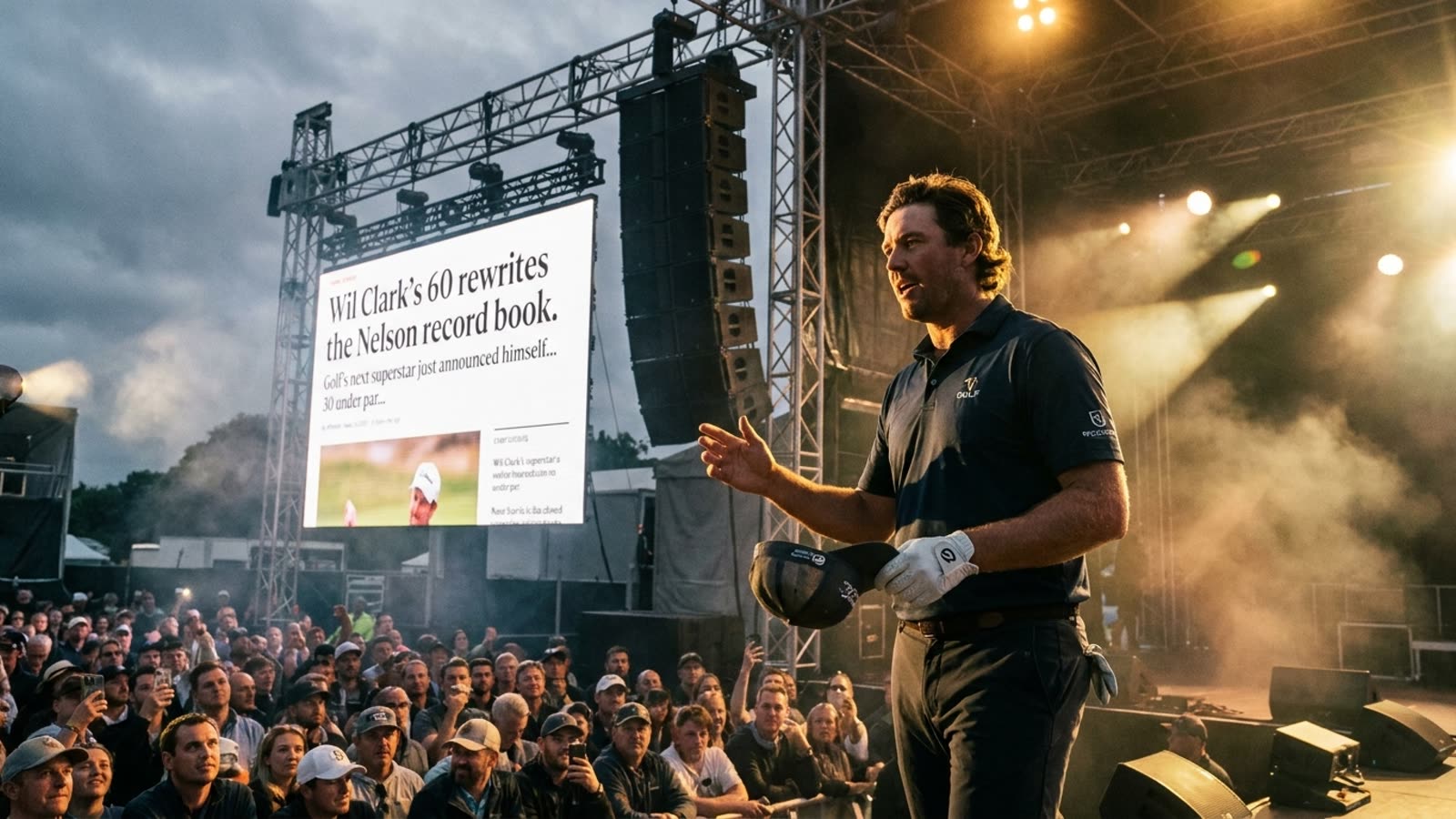
There is a particular quality to rounds of 60 on the PGA Tour: they feel like accidents, like the golfer stumbled into a wormhole where physics temporarily bent in their favor. Wil Clark's final round at the AT&T Byron Nelson did not feel accidental. It felt inevitable, which is far more terrifying for everyone else.
The 24-year-old Texan closed his wire-to-wire victory with a bogey-free 60, matching the lowest round in PGA Tour history and finishing at 30 under par—five clear of the field. The margin would have been larger had he not been playing conservatively down the stretch, content to let the tournament come to him rather than chase unnecessary birdies on a course he had already conquered.
The anatomy of 60
Clark made 10 birdies against zero bogeys, a clean sheet that belies how aggressive he played. His approach shots averaged inside 15 feet on the par-4s, and he converted putts from distances that would make most professionals weep. The back nine, where tournaments are won and lost, saw him go 5-under despite the mounting pressure of history. When the final putt dropped, Clark's reaction was muted—a small fist pump, a nod to his caddie—as if he had merely completed an assignment rather than authored one of the great closing rounds in recent memory.
The 30-under total ties the lowest 72-hole score relative to par in PGA Tour history, joining Ernie Els (2003 Mercedes Championships) and Dustin Johnson (2020 Northern Trust) in that rarefied air. Clark, however, did it on a course that played considerably harder than those resort setups, with TPC Craig Ranch's winds providing genuine resistance.
What this means for the summer
The PGA Championship is two weeks away, and Clark just served notice that he intends to compete for majors immediately. His game—a high ball flight that holds greens, a putting stroke that looks almost mechanical in its consistency, and a temperament that reads as preternatural calm—translates to any venue. The question is no longer whether Clark can contend at the highest level but whether anyone can stop him when he's playing like this.
The established order should be concerned. Clark's win pushes him inside the top 15 in the world rankings, and his trajectory suggests he won't stop there. He has now won twice in his last six starts, with three other top-10 finishes. This is not a heater; this is a baseline.
Our take
Golf periodically produces players who make the game look like a different sport than the one everyone else is playing. Tiger did it. Rory has done it in bursts. Clark's Nelson performance belongs in that conversation, not because of the number—though 30 under is absurd—but because of the manner. He looked bored. He looked like he was playing a practice round while everyone else was fighting for their lives. That combination of talent and composure, at 24, is the most dangerous thing in professional golf. The sport just got more interesting.