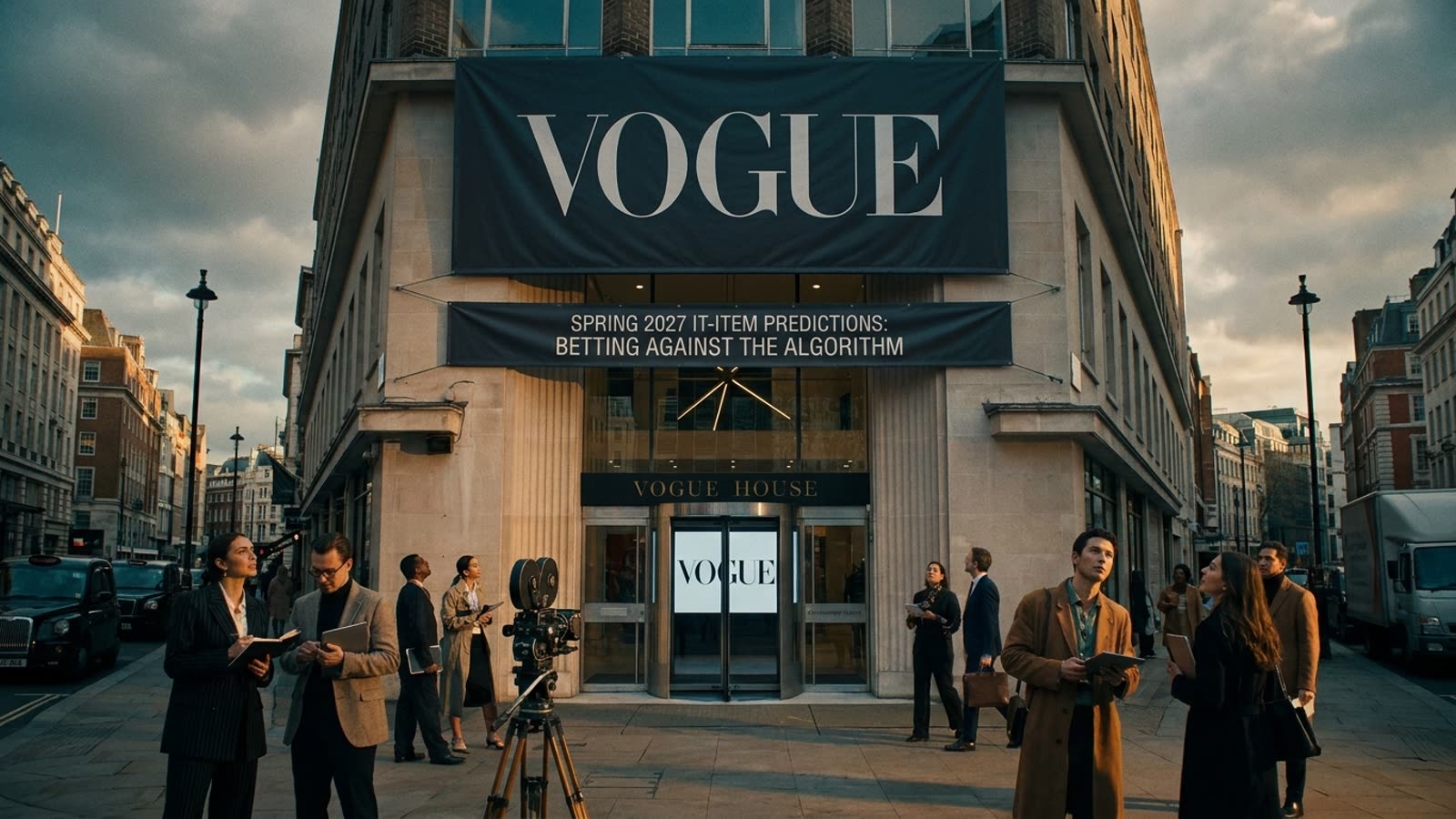
The fashion industry has spent the better part of two years genuflecting before algorithmic trend prediction, feeding runway images into neural networks and treating the output as gospel. So there is something almost quaint about Vogue's editors convening, as they do each season, to make their personal bets on what will define the coming months—a ritual that relies on nothing more sophisticated than taste, experience, and the accumulated instinct of people who have spent decades watching hemlines rise and fall.
Their Spring 2027 picks, released this week, are notable less for any single item than for what they collectively reject: the disposable, the viral, the algorithmically optimized. In a season where AI trend-forecasting platforms have been pushing oversaturated color palettes and exaggerated silhouettes—the kind of visual noise that performs well in thumbnail form—the Vogue selections trend toward restraint, materiality, and pieces that reward proximity rather than the scroll.
The case for the anti-viral
Among the highlighted items are sculptural leather bags that photograph poorly but feel extraordinary, linen suiting that wrinkles immediately, and jewelry so subtle it barely registers on camera. These are not contrarian picks for the sake of provocation; they reflect a growing fatigue with fashion's content-industrial complex, where garments are increasingly designed to generate engagement rather than to be worn.
The editors' choices also suggest a bet on the return of in-person retail. Several picks—textured knits, hand-finished details, garments with unusual weight or drape—are items that must be touched to be understood. After years of e-commerce dominance, this is either wishful thinking or a leading indicator that the pendulum is swinging back toward the physical.
What the machines missed
AI trend forecasters have been remarkably good at predicting what will sell in volume at fast-fashion price points. They have been less successful at identifying what will matter—the pieces that define a cultural moment, that get referenced in retrospectives, that end up in museum collections. The Vogue editors' picks are, implicitly, a bet that fashion's most valuable currency remains the unquantifiable: the frisson of recognition when something is right, the pleasure of discovery, the social capital of being early to something that cannot be reverse-engineered from data.
This is not to suggest that human curation will triumph over algorithmic prediction in the marketplace. The math favors the machines. But fashion has always been a two-track industry: one track optimized for volume, another for meaning. The Vogue picks are a reminder that the second track still exists, even if it is increasingly difficult to find.
Our take
There is something almost defiant about a group of editors sitting in a room and declaring, on the basis of nothing but conviction, that this bag and this coat and this ring will matter. It is a form of cultural authority that feels anachronistic in an age of democratized taste and real-time trend data. And yet the picks themselves—quiet, tactile, resistant to the scroll—suggest that the editors understand something the algorithms do not: that fashion's power lies precisely in what cannot be predicted, only recognized. Whether the market agrees is another question entirely.