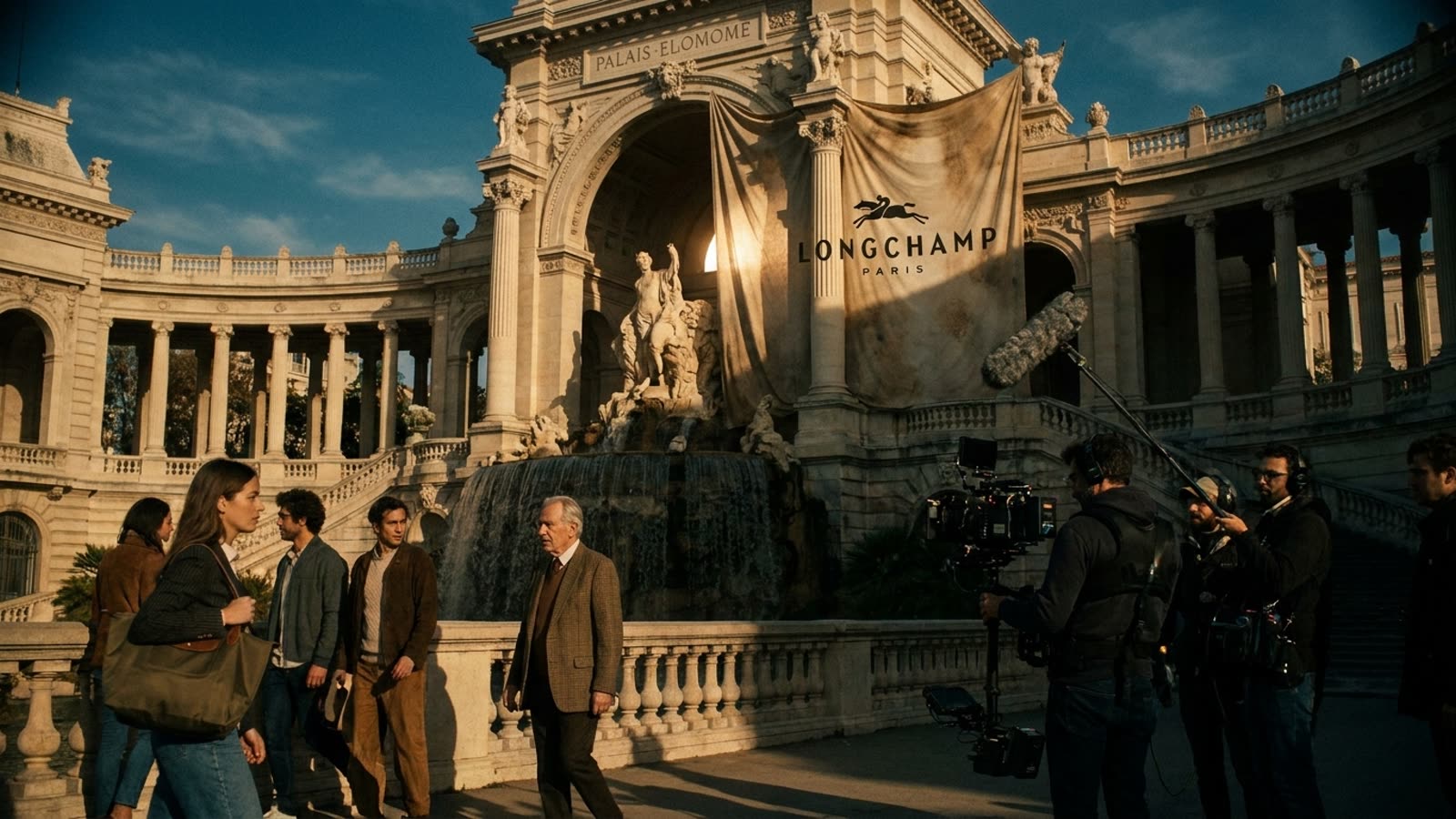
In an era when luxury brands treat Gen Z like a riddle wrapped in an algorithm, Longchamp's strategy is almost perversely simple: make good bags, price them honestly, and resist the urge to be embarrassing about it. The approach is working. The family-owned house, founded in Paris in 1948 as a leather goods workshop for pipe covers, has quietly become one of the most resilient mid-market luxury players in the world—growing revenues, expanding retail, and attracting younger consumers without a single cringe-inducing metaverse activation.
Jean Cassegrain, the third-generation CEO who took the helm in 2013, has articulated the philosophy with characteristic French understatement: trying too hard with the kids doesn't land. It's a lesson that eludes many of his competitors, who have spent the past five years contorting themselves into content creators, meme accounts, and collaborators with whoever happens to be trending. Longchamp, by contrast, has leaned into what it already does well—the Le Pliage nylon tote, the expandable travel bags, the understated leather goods that look expensive but cost a fraction of a Birkin.
The anti-hype playbook
The numbers suggest Cassegrain is onto something. While conglomerates like Kering have struggled with softening demand for Gucci and Saint Laurent, Longchamp has posted consistent growth across its directly operated stores and wholesale channels. The brand's sweet spot—bags priced between €100 and €600—hits a demographic that wants quality but isn't ready to drop four figures on a handbag. That demographic skews younger than you might expect. Le Pliage, the foldable nylon bag that has been Longchamp's signature since 1993, has become a genuine campus staple, passed down from mothers to daughters and rediscovered by a generation that prizes durability over disposability.
Crucially, Longchamp hasn't cheapened the product to chase volume. The brand still manufactures in France, still uses vegetable-tanned leather for its hardware, still offers repairs. In a market flooded with "accessible luxury" that is neither accessible nor luxurious, the value proposition is unusually clear.
Humor as differentiator
Cassegrain has also permitted the brand a sense of humor that most luxury houses would find beneath them. Recent campaigns have featured self-aware copy, playful collaborations with artists, and a willingness to acknowledge that a nylon tote is not, in fact, a sacred object. The tone reads as confident rather than desperate—a brand secure enough in its identity to laugh at the absurdities of the industry it inhabits.
This is harder than it sounds. Luxury marketing has become so relentlessly serious, so laden with "heritage" and "savoir-faire," that any deviation risks looking unserious. Longchamp has threaded the needle by staying visually elegant while allowing the messaging to breathe. The result is a brand that feels approachable without feeling cheap.
Our take
Longchamp's longevity is a quiet rebuke to the growth-at-all-costs mentality that has distorted much of the fashion industry. Jean Cassegrain has understood something that eludes many of his peers: young consumers are not stupid, and they can smell desperation. By focusing on product, price, and a personality that doesn't try to be 22, Longchamp has built something more durable than hype—actual loyalty. In a market where every brand claims to be "timeless," it's refreshing to see one that might actually deserve the word.