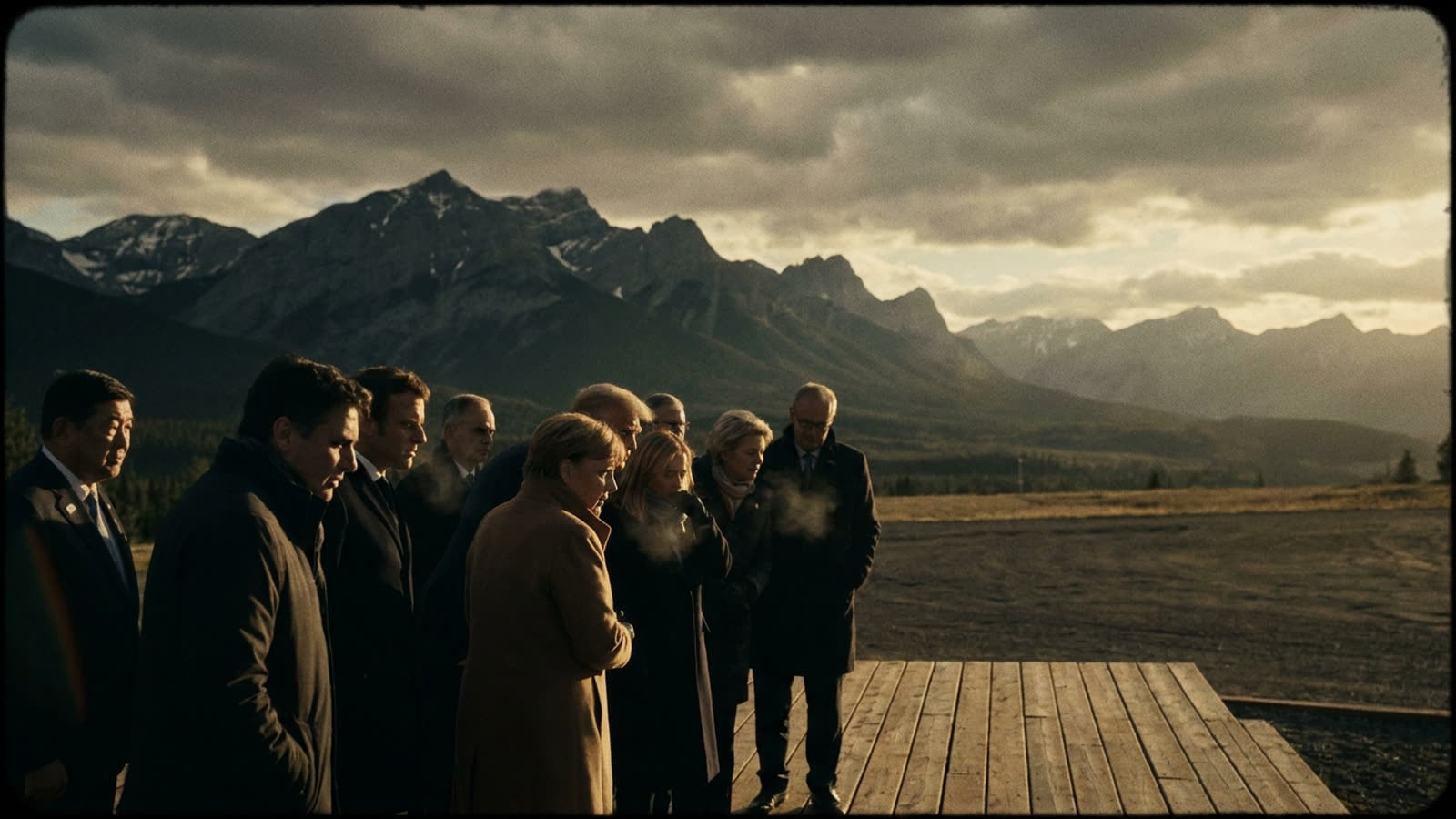
The calculus in Kyiv has always been brutally simple: compete for attention or lose the war. For months, Ukraine watched American diplomatic energy drain toward Tehran while Russian forces pressed advantages in the Donbas. Now, with the US-Iran accord signed and the immediate crisis defused, Ambassador Olga Stefanishyna is making the case that the G7 summit opening this week represents Ukraine's clearest window for substantive Western commitment since early 2025.
The argument is not without merit. The Trump administration's foreign policy bandwidth is finite, and the Iran file consumed most of it through the spring. European allies who might have pushed harder on Ukraine aid were themselves absorbed by the Middle East conflagration's energy implications. With that chapter closing—however provisionally—the institutional attention of the Western alliance can theoretically pivot eastward.
The Attention Economy of Geopolitics
Stefanishyna's framing is shrewd because it acknowledges an uncomfortable truth: Ukraine's cause has suffered not from Western opposition but from Western distraction. The Biden-era coalition that funneled hundreds of billions in military aid operated in a different strategic environment. Trump's second term has been marked by a preference for bilateral deals over alliance maintenance, and the Iran negotiations exemplified that approach.
The question now is whether the same dealmaking instinct can be redirected toward Moscow. Trump has repeatedly signaled interest in a negotiated settlement to the Ukraine war, and his team views the Iran accord as proof of concept. But the situations differ fundamentally. Iran wanted sanctions relief and got it; Putin wants territorial recognition and security guarantees that no Western leader can credibly offer without abandoning the post-1945 order.
What Kyiv Actually Needs
The G7 wish list from Ukraine remains consistent: accelerated weapons deliveries, sustained economic support, and—most critically—a credible path to NATO membership or equivalent security guarantees. The last item has been the sticking point for years, with Germany and the United States both reluctant to extend Article 5 protections to an active war zone.
Stefanishyna's team is reportedly pushing for a formalized "bridge to membership" framework that would stop short of immediate accession but provide enough commitment to deter future Russian aggression. Whether the G7 delivers anything beyond communiqué language remains uncertain, but the mere fact that Ukraine can command agenda space is itself a diplomatic victory after months of being crowded out.
The Netanyahu Wildcard
Israel's refusal to withdraw forces from Lebanon despite the US-Iran deal creates a secondary complication. If the Middle East ceasefire unravels because of Israeli actions, American attention snaps back westward, and Ukraine loses its window. Kyiv's diplomats are acutely aware that their fortunes are now partially tied to decisions made in Jerusalem—an uncomfortable dependency for a country fighting its own existential battle.
Our take
Stefanishyna is playing the hand she has, and playing it well. Ukraine cannot manufacture Western resolve; it can only position itself to capture whatever resolve exists. The Iran deal's completion creates genuine opportunity, but opportunity is not commitment. The G7 will produce warm words and perhaps incremental aid increases. The harder question—whether the West will sustain support through a potential second Trump term and beyond—remains unanswered. Kyiv's best argument has always been that abandoning Ukraine invites larger catastrophes. That argument has not changed. What has changed is that, for the first time in months, someone in Washington might actually be listening.