The champagne corks popped in Washington over the weekend, but European capitals greeted the U.S.-Iran ceasefire with something closer to a polite golf clap and a pointed follow-up question: What about Ukraine?
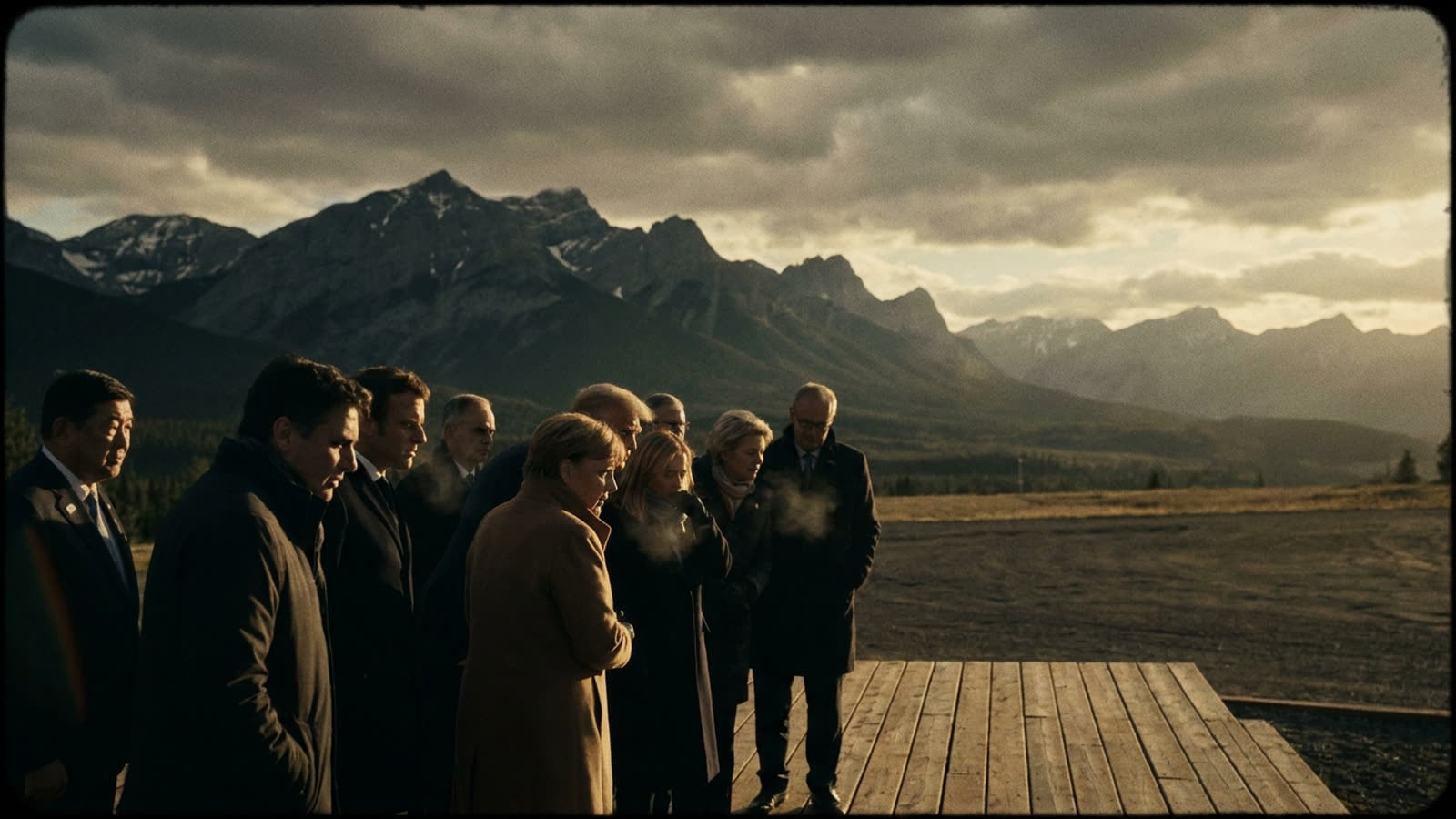
President Trump's surprise accord with Tehran — halting direct hostilities and freezing Iran's enrichment program in exchange for phased sanctions relief — is, by any measure, a diplomatic achievement. It ends eighteen months of escalating strikes that had pushed oil past $120 a barrel and rattled global shipping lanes. Yet for allies gathering at this week's G7 summit in Canada, the deal also exposes an uncomfortable asymmetry in American priorities. Trump moved heaven and earth to extract the United States from a Middle Eastern quagmire that threatened his domestic approval ratings. Ukraine, which has been grinding through its fourth year of full-scale war with Russia, has received no comparable presidential attention.
The leverage question
European leaders — particularly France's Emmanuel Macron and Germany's Friedrich Merz — intend to test whether Trump's Iran playbook can be repurposed for Eastern Europe. The logic is seductive: if Washington can negotiate directly with an adversary it was bombing six weeks ago, why not apply the same transactional energy to Moscow? The answer, administration officials privately concede, is that Trump sees the two conflicts through entirely different lenses. Iran threatened American assets and American lives; Ukraine, in the president's framing, is a European problem that Europe has failed to solve. The Iran deal also delivered a tangible political win — falling gas prices — just as midterm positioning begins. A Ukraine settlement offers no such immediate domestic dividend.
Zelenskyy's gambit
Ukrainian President Volodymyr Zelenskyy, sensing the shifting winds, made his own dramatic offer over the weekend: a face-to-face meeting with Vladimir Putin, hosted either at the G7 or on American soil. The proposal is part genuine outreach, part public-relations judo. By volunteering to negotiate, Zelenskyy puts the onus on Moscow to refuse — and on Washington to facilitate. Trump has not publicly responded, but aides say he is wary of being drawn into a process he cannot control. The president prefers deals he can claim as his own; brokering someone else's peace holds less appeal.
The Netanyahu complication
Meanwhile, the Iran accord is already generating friction with Israel. Prime Minister Benjamin Netanyahu announced Monday that Israeli forces will remain in southern Lebanon regardless of the ceasefire's terms, a direct rebuff to the deal's implicit expectation of regional de-escalation. Netanyahu's defiance puts Trump in an awkward spot: the president sold the agreement as a comprehensive off-ramp, but Israel's continued military posture suggests the region's underlying tensions remain unresolved. European leaders will likely use Netanyahu's stance to argue that half-measures beget half-results — and that Ukraine deserves the same full-court diplomatic press that Tehran received.
Our take
Trump's Iran deal is real, and it matters. But it also reveals the administration's hierarchy of concerns with uncomfortable clarity. Wars that affect American gas prices get presidential attention; wars that merely destabilize the European continent do not. The G7 will be an exercise in allies trying to change that calculus — and in Trump trying to pocket his win without signing up for another negotiation he cannot guarantee. Expect warm handshakes, vague communiqués, and the distinct sound of a can being kicked down a very long road.