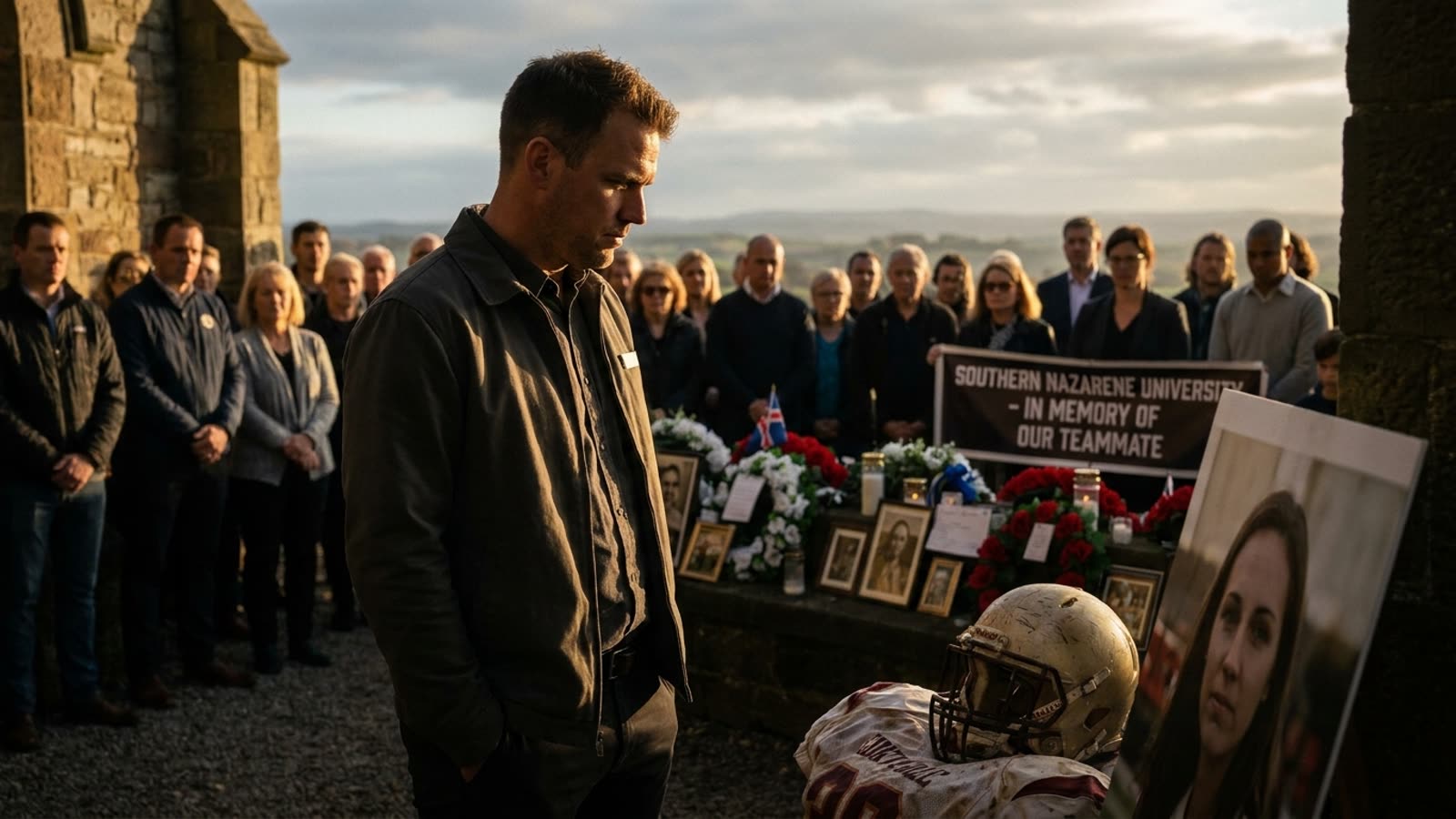
A young man went to play football and did not come home. Tyler Ulrich, a sophomore safety at Southern Nazarene University in Oklahoma, died on Thursday, five days after sustaining what the school described as a "traumatic injury" during a game. He was treated on the field. He never recovered. He was 21 years old.
The details remain sparse — the university has not disclosed the precise nature of Ulrich's injury — but the outcome is grimly familiar. College football, a multi-billion-dollar enterprise built on the labor of athletes who until recently received no direct compensation, continues to exact a physical toll that would be unconscionable in almost any other American industry.
The economics of expendability
Southern Nazarene competes in the NCAA's Division II, far from the television contracts and NIL deals that dominate headlines. At this level, the infrastructure is thinner: smaller medical staffs, older equipment, less comprehensive insurance. The players are no less committed, but the resources protecting them are demonstrably fewer. Ulrich was not chasing NFL millions; he was playing because he loved the game, at a Christian university in Bethany, Oklahoma, population 20,000.
His coach spoke of Ulrich's "quiet strength." That phrase will resonate with anyone who has watched young men sacrifice their bodies for programs that will forget their names within a decade. The quiet ones rarely make SportsCenter. They make the tackle, take the hit, and trust the system to look after them.
What the system actually provides
The NCAA has made incremental improvements to concussion protocols and sideline medical standards over the past decade, largely in response to litigation and public pressure rather than proactive concern. But catastrophic injuries — the ones that end careers or lives — remain a statistical inevitability in a collision sport played by hundreds of thousands of athletes each fall. The question is not whether these tragedies will occur, but whether the institutions profiting from the spectacle are doing everything possible to prevent them.
Division II schools operate under the same NCAA umbrella as Alabama and Ohio State, but with a fraction of the budget. The gap between what the sport demands and what smaller programs can provide is a structural flaw the governing body has never adequately addressed.
Our take
Tyler Ulrich deserved better than to become a cautionary statistic. Every player at every level deserves medical infrastructure commensurate with the violence inherent to the game. The NCAA collects billions; it can afford to mandate minimum standards that treat athlete safety as non-negotiable rather than aspirational. Until it does, we will keep writing these obituaries, and coaches will keep praising quiet strength, and nothing will change.