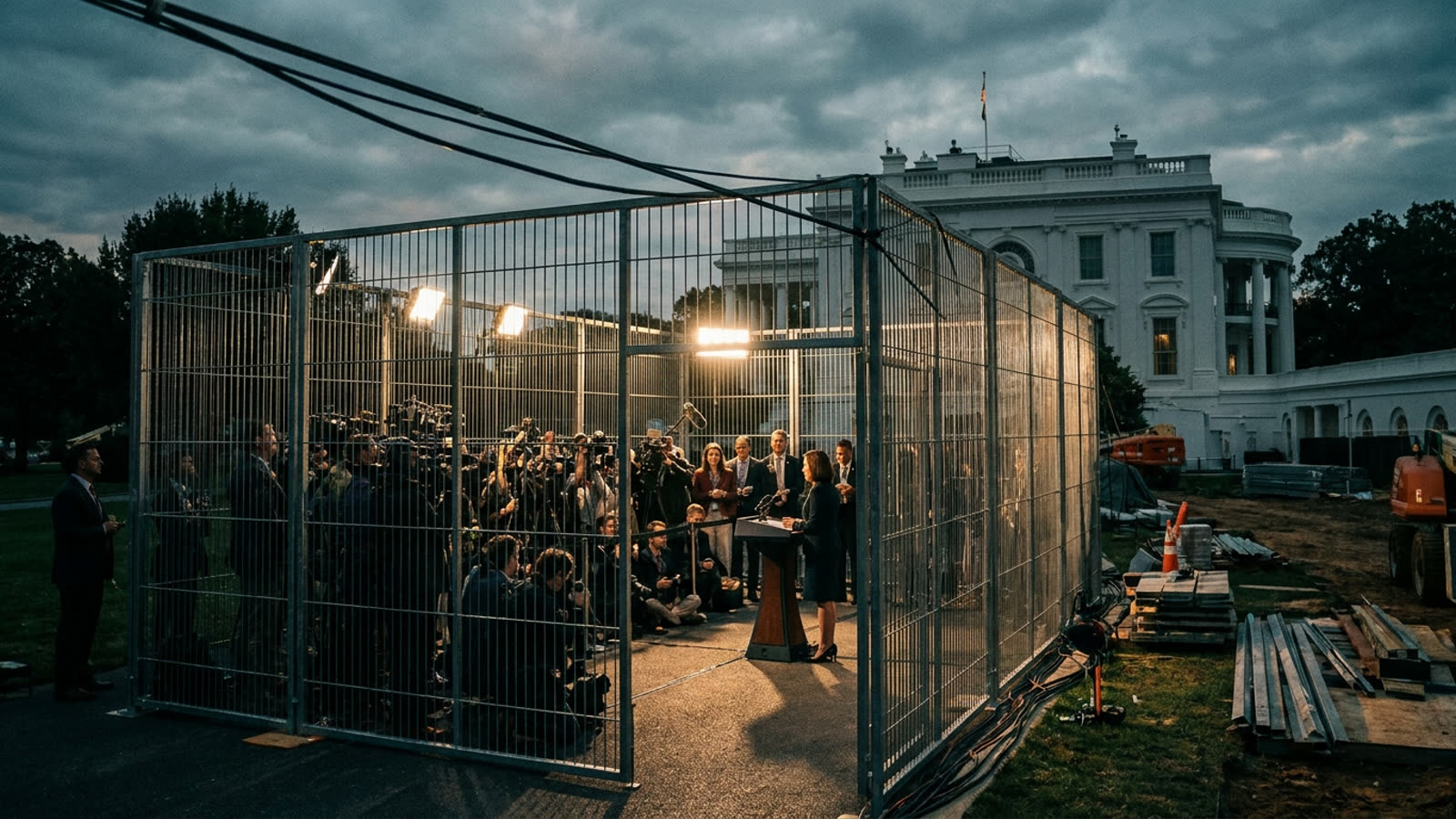
The Trump administration has begun constructing what officials are calling an outdoor briefing pavilion on the White House South Lawn — and what everyone else is calling a cage. The timing, design, and deliberate ambiguity of the project suggest this is less about logistics than about sending a message.
White House sources describe the structure as a semi-enclosed space with metal framework, intended to host press conferences and ceremonial events in warmer months. Critics note the design bears an uncomfortable resemblance to the temporary detention facilities that became synonymous with the administration's first-term immigration policies. The White House has declined to release architectural renderings or explain why existing outdoor spaces — the Rose Garden, the South Lawn itself — are insufficient.
Architecture as provocation
Presidential administrations have long understood that buildings communicate. The Eisenhower Executive Office Building's ornate Second Empire style projected post-Civil War ambition. The brutalist FBI headquarters embodied mid-century federal authority. But the Trump White House has shown a particular fondness for structures that double as political statements — from the border wall prototypes displayed like sculpture to the hastily erected fencing around Lafayette Square in 2020.
The lawn cage fits this pattern. Its purpose may be mundane, but its visual language is unmistakable: reporters will stand inside a metal enclosure while the president addresses them from outside it. Whether this inversion of the traditional briefing-room dynamic is intentional or merely convenient, the optics are difficult to ignore.
The press corps responds
The White House Correspondents' Association has requested a meeting with administration officials to discuss the structure's design and intended use. Several outlets have already indicated they may decline to participate in briefings held within the enclosure, though such boycotts have historically proved difficult to sustain when access is at stake.
Administration allies dismiss the criticism as overwrought. "It's a pavilion," one senior aide told reporters. "The media's obsession with symbolism says more about them than about us." This response itself is revealing — the administration understands exactly how the structure reads and appears content to let critics make the argument for them.
Our take
The cage is a test. Not of engineering or climate control, but of how much visual provocation the press will absorb before it becomes the story rather than the briefing itself. The Trump White House has always understood that controversy is a form of attention, and attention is a form of power. Whether reporters stand inside the structure or refuse to enter it, the administration wins either way — it has already succeeded in making the container more interesting than anything likely to be said within it.