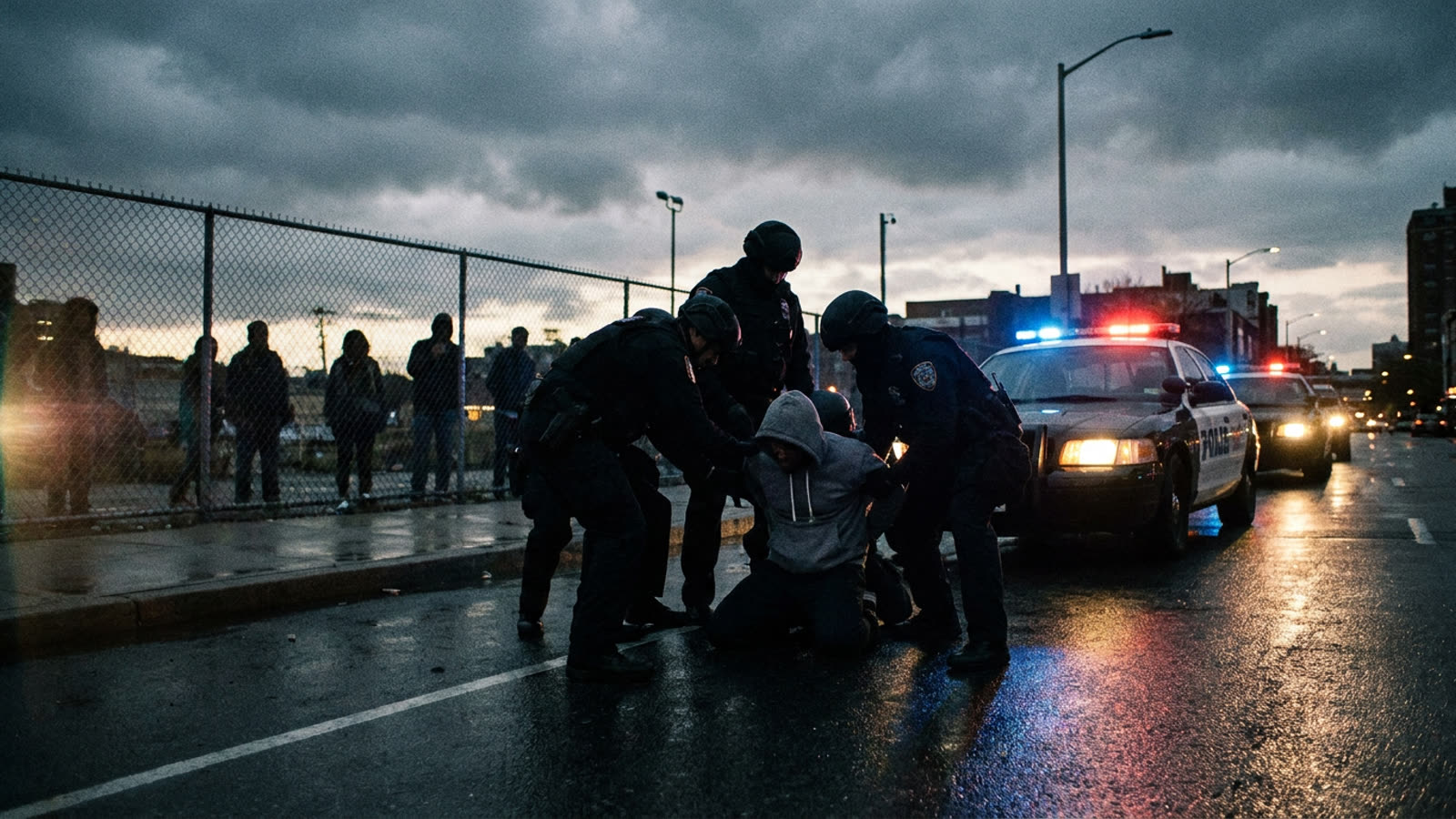
A sitting American president has now used artificial intelligence to fabricate criminal imagery of his predecessor and broadcast it to millions. On Sunday, Donald Trump shared an AI-generated mugshot of Barack Obama on Truth Social—a synthetic photograph depicting the 44th president in the visual language of arrest and disgrace. The image is, of course, entirely fake. Obama has never been arrested. But the post remains live, and the White House has offered no clarification that the image is fabricated.
This is not a meme account or a fringe provocateur. This is the official communication channel of the President of the United States, now indistinguishable from the darkest corners of synthetic disinformation.
The deepfake threshold
For years, election security experts have warned that AI-generated imagery would eventually be deployed as a political weapon. The concern was typically framed around foreign actors—Russian troll farms, Chinese influence operations—manufacturing fake videos of candidates saying things they never said. The scenario that few anticipated was that the call would come from inside the house.
Trump's post represents something qualitatively different from his history of inflammatory rhetoric. A mugshot carries specific legal and cultural weight: it implies arrest, booking, criminal processing. To fabricate one and attach it to a named individual—particularly a former president—is to manufacture false evidence of criminality. In most contexts, this would raise questions of defamation. From the Oval Office, it raises questions about the nature of presidential communication itself.
The platform problem
Truth Social, Trump's own platform, faces no external content moderation pressure and has no apparent policy against synthetic media depicting real people in false scenarios. The image has been shared and screenshotted across every major platform, where it continues to circulate without consistent labeling as AI-generated. Meta's and X's policies on synthetic media remain patchwork; neither company has commented on whether the image violates their terms.
The technical quality of AI-generated imagery has improved dramatically since Trump's first term. What would have been obviously fake in 2020 now requires forensic analysis to debunk. The average social media user scrolling past the image has no reliable way to distinguish it from an authentic photograph.
Precedent and escalation
The Obama mugshot follows a pattern of Trump using AI-generated imagery for political purposes, but previous instances—stylized campaign graphics, exaggerated crowd sizes—maintained some plausible deniability as artistic license. A fabricated arrest photo of a specific living person occupies different territory. It is not satire. It is not commentary. It is a synthetic artifact designed to be mistaken for documentary evidence.
Democratic officials have called for platform action and FEC review, though neither avenue offers obvious remedy. The First Amendment provides wide latitude for political speech, and no federal law explicitly prohibits elected officials from sharing deepfakes of their opponents.
Our take
The damage here is not primarily to Obama, whose supporters will recognize the fake and whose detractors were already unreachable. The damage is to the evidentiary value of images themselves. When the President of the United States treats synthetic propaganda as acceptable political communication, he licenses everyone else to do the same. We are now in a media environment where any photograph of any public figure can be dismissed as AI or embraced as real depending solely on the viewer's prior commitments. The epistemological commons has been privatized, and the president just hung up a "no trespassing" sign.